Listen to this Post
Introduction:
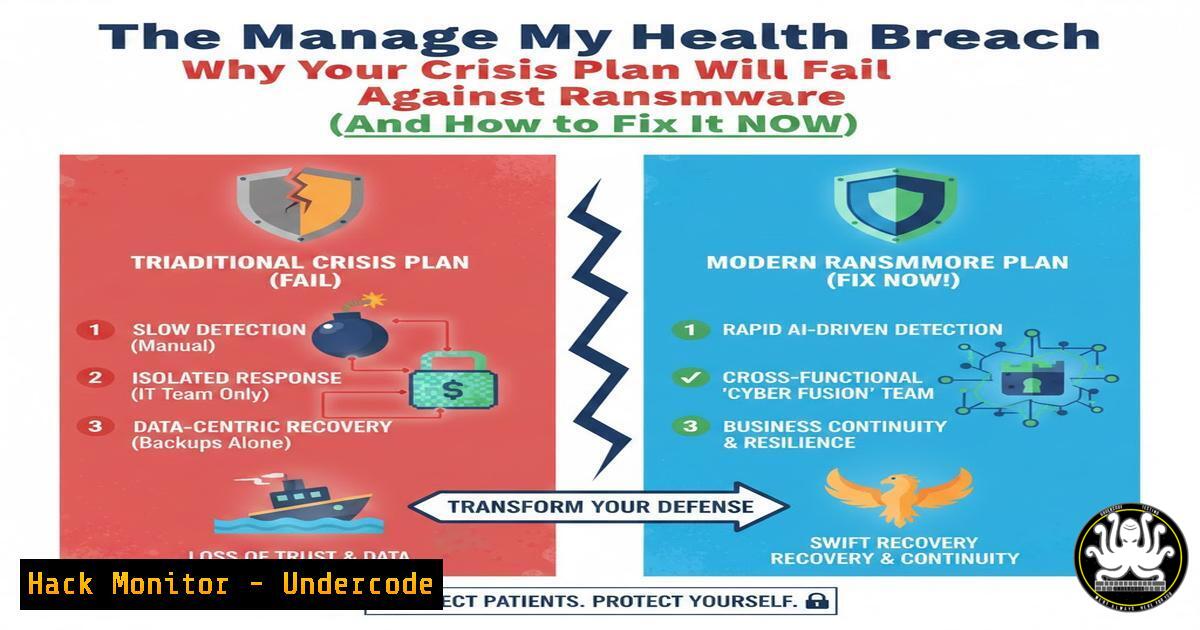
The recent ransomware attack on Manage My Health exposed a critical vulnerability far beyond encrypted data: a systemic failure in crisis communication. In today’s threat landscape, a cybersecurity incident is simultaneously a technical disaster and a public relations emergency. This breach underscores that without a plan integrating IT response and public messaging, organizations risk catastrophic damage to trust and operational stability, especially in sensitive sectors like healthcare.
Learning Objectives:
- Understand the unique communication challenges posed by modern ransomware and data breach incidents.
- Learn to integrate technical incident response with stakeholder communication protocols.
- Build a resilient communication infrastructure capable of surviving a crisis surge.
You Should Know:
1. Building a Cyber-Specific Crisis Communication Playbook
A generic crisis plan collapses under the technical, legal, and velocity pressures of a ransomware attack. Your plan must be pre-approved, role-specific, and integrated with your Security Operations Center (SOC).
Step‑by‑step guide:
- Form a Cross-Functional Team: Assemble a permanent crisis unit comprising Communications, Legal, IT/Security, and Executive Leadership. Define clear decision-making chains.
- Pre-Draft Templated Communications: Draft holding statements, patient/consumer notifications, and internal advisories for various scenarios (e.g., “confirmed breach,” “services restored”). Use placeholders for dynamic information.
- Establish Legal-Review Protocols: Define a fast-track process for legal review of all external communications to balance transparency with liability.
- Technical Integration: Mandate that the comms lead is included in critical IT incident response bridges from the moment a breach is declared.
2. Hardening Your Communication Infrastructure Against Surge
The reported downtime of the Manage My Health website under patient traffic is a classic failure point. Your public-facing status portals and communication channels must be as resilient as your primary infrastructure.
Step‑by‑step guide:
- Deploy a Static Status Page: Use a service like Atlassian Statuspage, GitLab Pages, or a Cloudflare Workers site hosted separately from your main infrastructure. This page should be IP whitelisted and serve only static HTML.
Example Linux Command to Deploy a Simple Page via S3/CloudFront (AWS):Create a bucket with public read access for static hosting aws s3 mb s3://your-status-page-bucket aws s3 website s3://your-status-page-bucket --index-document index.html Create and sync a basic index.html echo "<html><body></li> </ol> <h1>Service Status</h1> Operational </body></html>" > index.html aws s3 cp index.html s3://your-status-page-bucket/
2. Leverage Cloud Scaling: Ensure your corporate website and key communication channels are behind a Content Delivery Network (CDN) with DDoS protection and auto-scaling compute resources.
3. Pre-Configure Alternative Channels: Designate and pre-authorize accounts on alternative platforms (e.g., Twitter/X, LinkedIn) as official backup channels.3. Technical Command & Control: Securing Communications Internally
During an active incident, secure, auditable, and reliable internal communication is paramount to avoid conflicting messages.
Step‑by‑step guide:
- Move Off Compromised Systems: Immediately shift crisis coordination to a platform outside your potentially compromised network (e.g., a pre-established, secure Slack workspace, Microsoft Teams tenant, or even a hardened Signal group).
- Implement Logging: All crisis-related decisions and communications must be logged for post-incident review and legal discovery. Use tools with built-in audit trails.
- Windows/Linux Example: Secure Internal Broadcast: Use pre-configured, secure scripts to push verified updates to internal staff via trusted channels.
Example (Linux – using a secure API call to a Slack channel):Using curl to post a pre-formatted message to a Slack webhook (token stored in env var) MESSAGE="ALERT 1: Confirmed incident. Execute Phase 1 Comms. Do not use internal email." curl -X POST -H 'Content-type: application/json' \ --data "{\"text\":\"$MESSAGE\"}" \ $SLACK_WEBHOOK_URL_CRISIS
4. Vulnerability Mitigation: Patching the Human Element
Leadership statements, as noted in the post, can inadvertently erode trust. Spokesperson training for cyber incidents is non-negotiable.
Step‑by‑step guide:
- Conduct Cyber-Specific Media Training: Train all potential spokespeople on how to explain technical concepts (encryption, data exfiltration) in clear, honest, and non-alarmist terms.
- Simulate Tabletop Exercises: Run quarterly simulations that fuse a technical ransomware scenario (e.g., “Simulated encryption of patient records”) with a communications scenario (e.g., “Managing a reporter’s call during system recovery”).
- Develop Key Message Documents (KMDs): For each potential incident type, create a KMD with three key messages, supported by proof points, and anticipated Q&A with approved technical explanations.
5. The Post-Incident Autopsy: Restoring Trust with Evidence
Trust is rebuilt through demonstrable action, not just apology. Your communication must detail the technical remediation undertaken.
Step‑by‑step guide:
- Coordinate the Narrative: Work with IT to translate their technical remediation steps (e.g., “eradicated threat actor, rebuilt systems from immutable backups, implemented endpoint detection and response (EDR) on all servers”) into public-facing action items.
- Publish a Technical Transparency Report: Create a summarized, non-sensitive report outlining the root cause, steps taken to contain, and specific security improvements implemented (e.g., “enforced multi-factor authentication (MFA) globally, segmented network per NIST guidelines”).
- Provide Actionable Guidance to Stakeholders: Tell patients exactly what you are doing for them, such as offering free credit monitoring, and give them clear steps to protect themselves if their data was exposed.
What Undercode Say:
- Integrated Response is Non-Negotiable: The Manage My Health incident is a textbook case of a disconnected response. Technical containment and public communication are two fronts of the same battle; losing the communication front loses the war for public trust.
- Proactive Hardening of Comms Infrastructure: Treat your status pages, websites, and social channels as critical, revenue-impacting infrastructure. Their resilience during a surge is a direct reflection of your overall security posture. Failure here amplifies the crisis.
Prediction:
The convergence of cybersecurity and crisis communication will birth a new executive role: the Chief Cyber Resilience Officer, blending technical oversight with public engagement. Regulatory bodies will soon mandate not just breach disclosure, but evidence of tested communication and stakeholder support plans as part of compliance frameworks (e.g., extensions to HIPAA, GDPR). Organizations that fail to merge their IR and PR plans will face exponentially higher reputational costs, customer attrition, and legal penalties than those solely suffering the technical breach. The next major ransomware wave will target organizations perceived as communicatively vulnerable, as causing public panic and eroding trust becomes a primary attack vector in itself.
▶️ Related Video (70% Match):
🎯Let’s Practice For Free:
IT/Security Reporter URL:
Reported By: Thobias Almeida – Hackers Feeds
Extra Hub: Undercode MoN
Basic Verification: Pass ✅🔐JOIN OUR CYBER WORLD [ CVE News • HackMonitor • UndercodeNews ]
📢 Follow UndercodeTesting & Stay Tuned:


