Listen to this Post
Introduction:
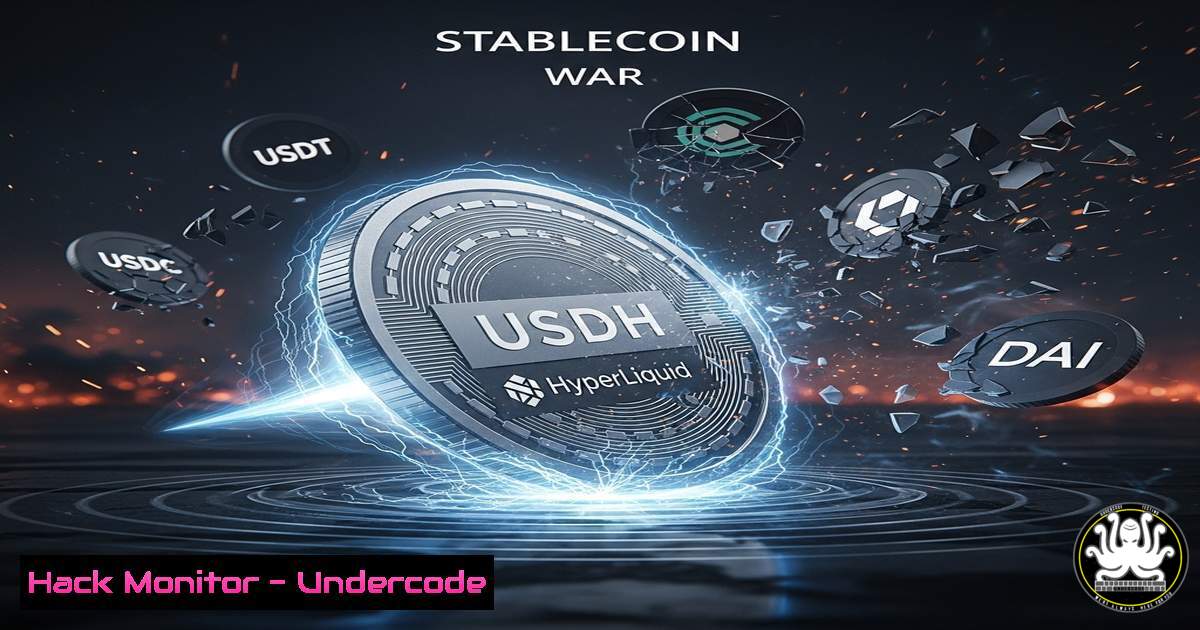
The rise of decentralized finance (DeFi) has irrevocably linked cryptocurrency with cybersecurity, where the integrity of a protocol’s code and the soundness of its economic model are its primary defenses. Hyperliquid’s declaration of war on USDC by launching its own stablecoin, USDH, is not merely a financial power play; it represents a massive, real-world stress test of smart contract security, key management, and on-chain governance that will have profound implications for every user’s digital assets.
Learning Objectives:
- Understand the critical cybersecurity risks associated with new stablecoin deployments, including smart contract vulnerabilities and governance attacks.
- Learn essential command-line and tool-based techniques for auditing smart contracts and monitoring on-chain activity.
- Develop a security-first framework for evaluating the safety of new DeFi protocols and assets before committing capital.
You Should Know:
1. Smart Contract Vulnerability Scanning
`slither ./hyperliquid_usdh_contract/ –exclude-dependencies –filter-paths “@openzeppelin”`
Slither is a static analysis framework for Solidity. This command runs a scan on a target contract directory, excluding common OpenZeppelin libraries to focus on the project’s unique code. It will output a list of potential vulnerabilities like reentrancy, integer overflows, and improper access controls. Step-by-step: 1. Install Slither via pip: pip install slither-analyzer. 2. Clone or download the target smart contract repository. 3. Navigate to the root directory of the contracts. 4. Run the command to generate a detailed security report.
2. On-Chain Transaction Monitoring with Etherscan API
`curl “https://api.etherscan.io/api?module=account&action=txlist&address=0xHYPERLIQUID_TREASURY&startblock=0&endblock=99999999&sort=asc&apikey=YOUR_API_KEY” | jq ‘.result[] | select(.value > “0”)’`
This curl command fetches all transactions for a specified Ethereum address (e.g., a protocol treasury) from the Etherscan API, piping the output to `jq` to filter and display only transactions with a value greater than 0. This is crucial for monitoring fund movements from treasury contracts. Step-by-step: 1. Get a free API key from Etherscan. 2. Replace the address placeholder with the contract address you want to monitor. 3. Run the command in a terminal or script to audit fund flows.
3. Simulating Governance Attacks with Brownie
`brownie test tests/test_governance.py::test_single_actor_proposal -s –network mainnet-fork`
Brownie is a Python-based development and testing framework. This command executes a specific test that simulates a governance proposal on a forked version of the mainnet. This allows security researchers to test the outcome of a proposal without spending real gas or funds. Step-by-step: 1. Install Brownie: pip install eth-brownie. 2. Create a test that deploys a governance proposal. 3. Use the `mainnet-fork` network to mimic real-world conditions. 4. Run the test to identify any flaws in the proposal or voting mechanism.
4. Hardening Node Security for Validators
`sudo ufw enable && sudo ufw default deny incoming && sudo ufw default allow outgoing && sudo ufw allow from 192.168.1.0/24 to any port 26656 && sudo ufw allow ssh`
For protocols moving to their own chain or validators, node security is paramount. This series of Uncomplicated Firewall (UFW) commands configures a basic host-based firewall on a Linux server. It denies all incoming traffic by default, allows all outgoing, then specifically allows traffic from a trusted local network (192.168.1.0/24) to the common consensus port (26656) and permits SSH. Step-by-step: 1. Ensure UFW is installed (sudo apt install ufw). 2. Run each command sequentially. 3. Always ensure your SSH key authentication is configured before denying all incoming connections.
5. Auditing Rust-based Blockchain Clients (Hyperliquid uses Rust)
`cargo audit && cargo clippy –all-targets –all-features — -D warnings`
Hyperliquid is built with Rust. These Cargo commands are essential for auditing its node client software. `cargo audit` checks the dependency graph for crates with known security vulnerabilities listed in the RustSec database. `cargo clippy` is a linter that catches common mistakes and improves code quality; the flags make it exhaustive and treat warnings as errors. Step-by-step: 1. Navigate to the root of the Rust project. 2. Run the commands to generate a report of security and code quality issues.
6. Monitoring for Front-Running Bots and MEV
`tcpdump -i any -s 0 -w mempool_dump.pcap port 30303 or port 8545`
In the high-stakes environment of a new stablecoin launch, Maximum Extractable Value (MEV) and front-running bots will be active. This command uses `tcpdump` to capture all network traffic on common Ethereum client P2P (30303) and RPC (8545) ports. The resulting `.pcap` file can be analyzed in tools like Wireshark to detect unusual network activity that might indicate bot behavior. Step-by-step: 1. Requires sudo/root privileges. 2. Run the command on a node. 3. Reproduce the activity you want to monitor. 4. Stop the capture (Ctrl+C) and analyze the file.
7. API Security Hardening for Centralized Components
`nginx -t && sudo systemctl reload nginx`
Content of /etc/nginx/sites-available/your_domain
`server {
…
location /api/ {
limit_req zone=one burst=10 nodelay;
add_header X-Frame-Options “SAMEORIGIN” always;
add_header X-Content-Type-Options “nosniff” always;
add_header Strict-Transport-Security “max-age=63072000” always;
}
…
}`
Even decentralized protocols rely on web APIs for front-ends and oracles. This Nginx configuration snippet implements critical security headers and rate limiting on an API endpoint. The command tests the configuration before safely reloading the web server. Step-by-step: 1. Edit your Nginx site configuration file. 2. Add the `location` block and headers. 3. Define a `limit_req_zone` (not shown) for the rate limiting. 4. Test and reload to mitigate DDoS and common web attacks.
What Undercode Say:
- The transition from battle-tested, audited stablecoins like USDC to new, complex algorithmic or multi-collateral models represents the single greatest point of failure and opportunity for threat actors. The attack surface expands exponentially.
- This is not just a financial experiment; it is the largest crowdsourced penetration test of novel financial smart contracts ever conducted, with billions in user funds acting as the bait.
The security of USDH and its competitors won’t be proven by whitepapers or audits alone, but by surviving the relentless onslaught of hackers who will immediately reverse-engineer every line of code the moment it deploys. The involved teams’ response to these inevitable vulnerability discoveries—their patching speed, communication transparency, and governance fairness during a crisis—will be the true measure of their longevity. Users must prioritize protocols that have bug bounty programs, crisis plans, and a proven track record of secure development.
Prediction:
The “Stablecoin War” will trigger a wave of sophisticated cyber attacks targeting the nascent USDH and similar competitor coins. We predict a major exploit within the first 12 months of USDH’s existence, likely resulting from a logic error in its minting/redemption mechanism, an oracle manipulation attack, or a compromised governance key. This event will not only cause massive financial loss but will also serve as a catalyst for regulatory intervention, forcing a global reckoning on security standards for algorithmically stabilized assets and potentially freezing the entire sector’s innovation for years.
🎯Let’s Practice For Free:
IT/Security Reporter URL:
Reported By: Arammughalyan Hyperliquid – Hackers Feeds
Extra Hub: Undercode MoN
Basic Verification: Pass ✅


