Listen to this Post
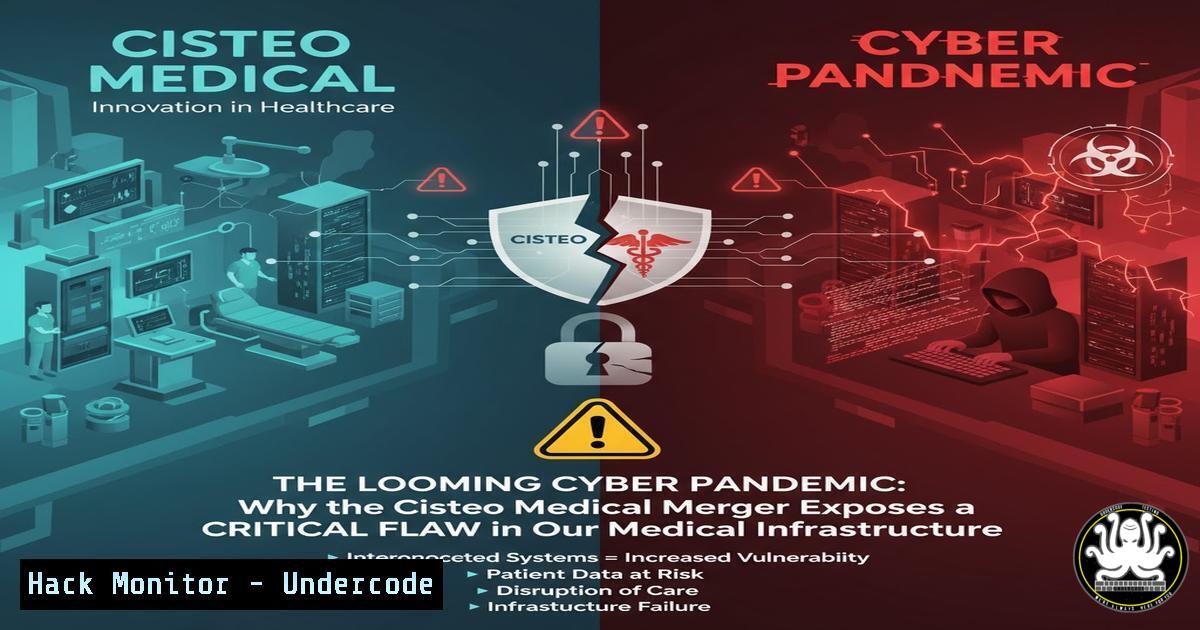
Introduction:
The strategic merger between Cisteo Medical and Agôn Electronics represents a significant consolidation of expertise in active medical implants and advanced surgical robotics. However, this fusion of complex medical device design with high-value electronics manufacturing creates an expanded and highly attractive attack surface for cybercriminals. The security of these interconnected, life-sustaining technologies is no longer just a data privacy issue but a fundamental matter of patient safety and public health.
Learning Objectives:
- Understand the critical vulnerabilities inherent in interconnected medical devices and surgical robotics.
- Learn to implement security hardening for Linux-based embedded systems commonly used in medical technology.
- Develop a strategy for securing the API and data transmission channels between devices and hospital networks.
You Should Know:
- The Expanded Attack Surface of Modern Medical Devices
The convergence of Cisteo’s medical encapsulation with Agôn’s electronics creates systems that are software-defined and network-connected. These devices, from programmable insulin pumps to neural implants, often run on lightweight operating systems and communicate via wireless protocols, making them susceptible to remote exploitation.
Step-by-step guide:
Identify Listening Services: The first step is to map all network-facing services. On a Linux-based embedded system, use `netstat` or ss.
 List all listening TCP and UDP ports
ss -tuln
 For more detailed process information
netstat -tulnp
Harden the Kernel: Disable unnecessary kernel features that could be exploited.
 Make kernel pointers non-readable (KPTI) - mitigates Meltdown
echo 1 > /proc/sys/kernel/randomize_va_space
 Restrict kernel dumps
sysctl -w kernel.dmesg_restrict=1
Implement Mandatory Access Control: Use AppArmor or SELinux to confine device services, preventing a compromise in one service from affecting the entire system.
 Check AppArmor status
sudo apparmor_status
 Enforce a profile for a specific service
sudo aa-enforce /path/to/service_profile
2. Securing the Device-to-Cloud Data Pipeline
Medical devices transmit sensitive patient telemetry to central monitoring systems. This data pipeline, if unencrypted or weakly authenticated, is a prime target for interception and manipulation.
Step-by-step guide:
Enforce TLS 1.3 Encryption: Ensure all data in transit uses modern encryption. Use tools like `openssl` to verify.
 Test a server's TLS support
openssl s_client -connect example.com:443 -tls1_3
Certificate Pinning: Implement certificate pinning on the device to prevent man-in-the-middle attacks. This ensures the device only communicates with servers possessing a specific, expected TLS certificate.
API Security Hardening: For the APIs that receive this data, implement strict rate limiting, input validation, and use OAuth 2.0 with JWT tokens for authentication instead of basic API keys.
3. Vulnerability Management in Embedded Linux Systems
Medical devices often have long lifecycles and do not receive frequent software updates, leaving known vulnerabilities unpatched for years.
Step-by-step guide:
Automated Vulnerability Scanning: Integrate tools like Trivy or Grype into the CI/CD pipeline to scan container images and filesystems for known CVEs during the build process.
 Scan a Docker image with Trivy
trivy image yourcompany/medical-device-firmware:latest
Create a Software Bill of Materials (SBOM): Generate an SBOM using SPDX or CycloneDX format for every firmware release. This provides a clear inventory of all components, making it easier to identify affected systems when a new vulnerability is disclosed.
Patch Management Policy: Establish a strict policy for applying security patches from the underlying OS (e.g., Yocto Linux, Buildroot) and all open-source libraries, with testing protocols that ensure patches do not impact device functionality.
4. Hardening Network Segmentation for Clinical Environments
A compromised medical device must not become a pivot point into the broader hospital network.
Step-by-step guide:
Implement Microsegmentation: Use VLANs and firewall rules to create strict network zones. Medical devices should reside in their own isolated VLAN with rules that only permit essential communication to specific hosts on specific ports.
 Example iptables rule to drop all forward traffic from device VLAN (192.168.10.0/24)
iptables -A FORWARD -s 192.168.10.0/24 -j DROP
 Allow only specific NTP server
iptables -I FORWARD -s 192.168.10.0/24 -d 203.0.113.1 -p udp --dport 123 -j ACCEPT
Deploy Intrusion Detection: Use a tool like Suricata or Zeek on the network segment monitoring for anomalous traffic patterns that could indicate a device has been compromised.
5. Penetration Testing a Medical Device Ecosystem
Proactive testing is non-negotiable. This involves assessing the device itself, its communication channels, and the backend infrastructure.
Step-by-step guide:
Firmware Analysis: Extract and analyze device firmware to find hardcoded credentials and vulnerabilities.
 Use binwalk to extract a firmware image
binwalk -e firmware.bin
 Search for hardcoded strings, including passwords
strings -n 8 firmware.bin | grep -i pass
Radio Frequency (RF) Analysis: For wireless devices (e.g., Bluetooth Low Energy), use tools like GNU Radio and a software-defined radio (SDR) to analyze the proprietary communication protocols for weaknesses like replay attacks or a lack of encryption.
Simulated Attack on Clinical Workstation: With authorization, attempt to move laterally from a simulated compromised device to a workstation running the clinician’s software, exploiting weak file shares or unpatched software.
What Undercode Say:
- Key Takeaway 1: The drive for innovation and market consolidation in the MedTech sector is dramatically outpacing the implementation of foundational cybersecurity controls. The focus is on functionality and time-to-market, not resilience.
- Key Takeaway 2: A compromised medical device is not just a data breach; it is a potential kinetic attack on the human body. The threat model shifts from confidentiality to integrity and availability, where manipulated data or a disabled device can have immediate, physical consequences.
The merger between Cisteo and Agôn is a bellwether for the industry’s direction. While it promises remarkable medical advancements, it also consolidates risk. The complex supply chain—from chip design to encapsulation to cloud software—creates a “weakest link” security problem. An attacker need not target the implant directly; they can target the less-secure manufacturing software at Agôn or the clinical management platform at a hospital to achieve the same destructive effect. The industry is building a critical dependency on a foundation that has not yet been universally hardened to a life-critical standard.
Prediction:
Within the next 3-5 years, we will witness the first publicly disclosed, fatal cyberattack directly attributable to a compromised active medical implant or surgical robot. This event will not be a sophisticated state-level exploit but will likely result from the exploitation of a known, unpatched vulnerability in a widely deployed device. The fallout will trigger catastrophic financial liability for the manufacturer, force draconian new regulatory frameworks from bodies like the FDA and EMA, and create a “cyber-physical” health crisis that erodes public trust in medical technology, ultimately slowing the adoption of life-saving innovations. The time to build security into the design (SecByDesign) is now, not after the crisis occurs.
🎯Let’s Practice For Free:
IT/Security Reporter URL:
Reported By: Jordan Jablonka – Hackers Feeds
Extra Hub: Undercode MoN
Basic Verification: Pass ✅


