Listen to this Post
Introduction:
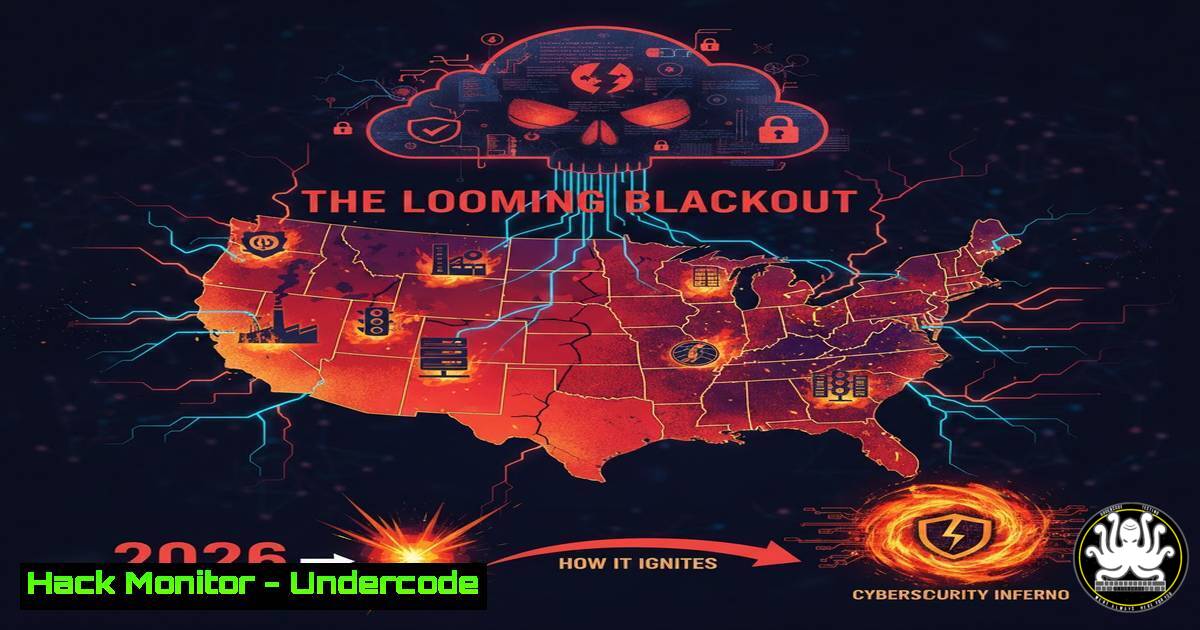
The stability of the U.S. electrical grid is the bedrock of national security and economic function, yet projections show a dangerous shortfall in reliable generation capacity. As demand from data centers and infrastructure skyrockets, the convergence of physical grid strain and sophisticated cyber threats creates a perfect storm. This article explores the impending reliability crisis, its direct implications for cybersecurity professionals, and the critical hardening required to protect Operational Technology (OT) environments from inevitable attacks during periods of systemic stress.
Learning Objectives:
- Understand the link between grid physical reliability and increased cyber attack surfaces in IT/OT systems.
- Learn key mitigation strategies and commands for securing industrial control systems (ICS) and SCADA networks against blackout-exploitative threats.
- Develop incident response playbooks tailored for prolonged power outage scenarios and cascading infrastructure failures.
You Should Know:
- The Grid Reliability Gap: A Hacker’s Golden Opportunity
The Department of Energy’s warnings are not merely about brownouts; they signal periods of extreme operational fragility. Cyber adversaries, from state-sponsored actors to ransomware gangs, study these assessments. A grid operating at its physical limits has diminished redundancy. A successful cyber-attack during a peak demand period could shift a manageable strain into a catastrophic, prolonged blackout. The projected retirement of 104 GW of firm generation removes inertial stability and backup capacity, making the system more digitally brittle.
Step‑by‑step guide: Network Segmentation for IT/OT Convergence.
The first line of defense is enforcing a strong demilitarized zone (DMZ) between corporate IT networks and operational OT networks to limit lateral movement.
On a Windows Domain Controller (IT Side), create a dedicated security group for OT jump hosts:
New-ADGroup -Name "OT_JumpHost_Users" -GroupScope Global -GroupCategory Security
On OT Network Firewall (e.g., Palo Alto, Cisco), enforce one-way communication rules:
1. Permit IT -> OT only for specific, whitelisted IPs of jump hosts on specific ports (e.g., 22 for SSH, 3389 for RDP via a gateway).
2. Explicitly block ALL traffic originating from the OT network destined for the IT network, except for patch management servers on a defined schedule.
3. Log all denied packets for audit.
- Hardening SCADA and ICS Protocols Against Power-State Probing
Protocols like Modbus TCP, DNP3, and IEC 60870-5-104 were designed for reliability, not security. During grid instability, attackers may probe for system state data to plan disruptive attacks. Hardening involves encryption, authentication, and network monitoring.
Step‑by‑step guide: Implementing Encrypted Tunnel for DNP3 Communication.
Use Stunnel to create a secure TLS wrapper for cleartext SCADA protocols.
On a Linux-based protocol gateway (Ubuntu/Debian):
 Install stunnel
sudo apt-get update && sudo apt-get install stunnel4 -y

Create stunnel configuration for DNP3
sudo nano /etc/stunnel/dnp3_secure.conf

Insert configuration:
[bash]
client = yes
accept = 127.0.0.1:20000
connect = <Remote_OT_Server_IP>:20000
verify = 2
CAfile = /etc/stunnel/ca-certs.pem
cert = /etc/stunnel/client_cert.pem
key = /etc/stunnel/client_key.pem

Enable and start stunnel
sudo systemctl enable stunnel4
sudo systemctl start stunnel4
The local SCADA client now connects to localhost:20000, and traffic is encrypted to the remote outstation.
- Detecting Reconnaissance in OT Networks with Passive Monitoring
Tools like RIPE (Robust Intelligence Platform for Engineering) or Security Onion can be deployed in tap/span mode on OT network segments to detect anomalous traffic patterns that precede an attack, especially during grid stress events.
Step‑by‑step guide: Setting Up a Suricata IDS in OT Passive Mode.
 On Security Onion or a dedicated monitoring host
sudo apt-get install suricata -y

Edit the Suricata configuration for OT protocols
sudo nano /etc/suricata/suricata.yaml

Under 'app-layer.protocols'
dnp3:
enabled: yes
detection-ports:
dp: 20000  Port for DNP3

Start Suricata on the monitoring interface (e.g., eth1)
sudo suricata -c /etc/suricata/suricata.yaml -i eth1
Review alerts in `/var/log/suricata/fast.log` for DNP3 function codes indicative of reconnaissance, like reading system time or freezing counters.
- Preparing for Prolonged Outages: Secure Alternative Comms and Backup Power
When primary grid power fails, secondary systems must activate without introducing new vulnerabilities. This includes securing satellite communication links and ensuring backup generators cannot be remotely disabled.
Step‑by‑step guide: Hardening Satellite Modem Configurations.
Change all default credentials on VSAT terminals and satellite modems.
Disable unused management services (HTTP, Telnet). Enable only HTTPS and SSH with key-based authentication.
Implement firewall rules on the terminal to only allow traffic from specific, pre-authorized OT host IPs.
Command to check open ports on the modem (from a connected Linux host):
nmap -sS -Pn <SAT_Modem_IP>
Ensure only necessary ports (e.g., 443, 22) are open.
- Incident Response in a Blackout: Operating Without Enterprise IT
Assume corporate networks, SIEMs, and cloud services are unavailable. IR must be possible from local, hardened kits.
Step‑by‑step guide: Building a Self-Contained IR Kit.
Hardware: Rugged laptop, portable network tap, cellular hotspot, external storage.
Software: Pre-installed volatile memory analysis (FTK Imager, Volatility), network analysis (Wireshark), and log analysis tools.
Scripts: Have pre-loaded scripts for triage. Example: Collect process and connection info from a Windows OT server.
 On the compromised OT host (run from USB)
ps aux > C:\IR_Capture\processes.txt
netstat -ano > C:\IR_Capture\network_connections.txt
wevtutil qe System /rd:true /f:text > C:\IR_Capture\system_events.txt
6. Vulnerability Mitigation: Patching Air-Gapped and Sensitive Systems
Patching OT systems is high-risk. A tested, incremental methodology is required, especially before predicted high-stress periods.
Step‑by‑step guide: Staged Patching for Windows-Based HMI/SCADA Servers.
- Stage: Download patches on an isolated IT server. Use hashes to verify integrity.
- Test: Apply patches to an identical, offline test system. Run full operational regression tests for 72+ hours.
- Deploy: During a planned maintenance window, transfer patches via write-only USB media.
Use PowerShell to apply multiple patches from a directory:Get-ChildItem -Path D:\Patches.msu | ForEach-Object { Start-Process wusa.exe -ArgumentList "$($_.FullName) /quiet /norestart" -Wait } - Validate: Reboot and confirm system functionality before returning to operation.
7. Human Factor: Social Engineering During Crisis
During blackouts, confusion is high. Adversaries will intensify phishing and vishing campaigns targeting stressed grid operators and IT staff.
Step‑by‑step guide: Implementing a Crisis Communication Verification Protocol.
Establish a pre-shared codeword system for verbal orders over phone or radio.
Mandate that any instruction to change system configuration or bypass a security control must be verified via a secondary, independent channel (e.g., a secure messaging app on a separate network) using the codeword.
Conduct table-top exercises that simulate these high-pressure social engineering attempts.
What Undercode Say:
- The Grid’s Physical Weakness is a Cybersecurity Parameter. The projected 800+ annual outage hours are not just a utility problem; they represent a massive expansion of the attack window and system recovery attack surface. Defenders must now plan for persistent threat activity in an environment where traditional detection (reliant on stable power) may fail.
- 2026 is the Convergence Point. The alignment of peak grid strain, accelerated OT digitalization, and mature adversary toolkits targeting energy will create a landmark year for cyber-physical attacks. Preparedness must move beyond compliance checklists to active resilience engineering.
Analysis: The post’s alarm is justified but framed as a spectator warning. For cybersecurity professionals, this is a direct call to arms. The “blast” referenced will be a multivariate crisis combining advanced persistent threats (APTs) exploiting physical instability with opportunistic ransomware hitting already-strained asset owners. Mitigation requires a dual-track approach: advocating for physical grid investment while implementing the technical controls detailed above. The focus must shift from preventing intrusion entirely—an impossible goal—to designing systems that can maintain core functions and fail securely during prolonged, contested outages. The time to implement these architectural changes is now, before the lights flicker.
Prediction:
By 2026, we will witness the first nationally significant cyber-attack successfully executed to exacerbate a pre-existing grid reliability event, causing a multi-state blackout lasting days. This will trigger a paradigm shift in national policy, moving from voluntary cybersecurity standards for the energy sector to mandatory, auditable, and technically prescriptive regulations akin to NERC CIP but with greater scope and severity. Investment in fully air-gapped backup control systems and decentralized microgrids with embedded security will surge, creating a new subspecialty within OT cybersecurity focused on dark-site operations and secure autonomic recovery.
▶️ Related Video (76% Match):
🎯Let’s Practice For Free:
IT/Security Reporter URL:
Reported By: Luther Chip – Hackers Feeds
Extra Hub: Undercode MoN
Basic Verification: Pass ✅


