Listen to this Post
Introduction:
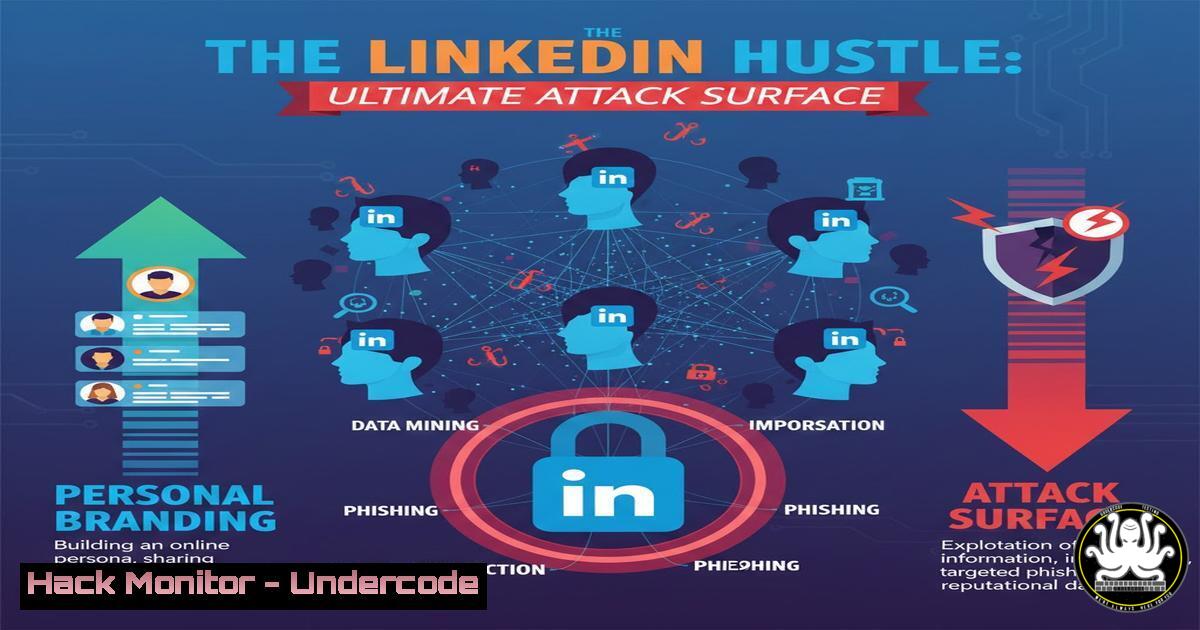
The inspirational LinkedIn post celebrating Poovra Choudhary’s career transition highlights a critical, modern cybersecurity and IT governance blind spot: the human attack surface. In an era where personal and professional narratives are weaponized for social engineering, understanding the digital footprint of public figures and employees is no longer optional for organizational defense. This article dissects the technical implications of curated online personas.
Learning Objectives:
- Understand how publicly shared personal journey data can be weaponized for sophisticated phishing and pretexting attacks.
- Learn to audit and secure organizational exposure stemming from employee social media activity.
- Implement technical monitoring for brand impersonation and credential harvesting campaigns linked to trending personal stories.
You Should Know:
- The Data Harvesting Pipeline: From Inspiration to Exploitation
A trending personal story, like a model-turned-civil-servant, creates a goldmine for attackers. Malicious actors swiftly build phishing campaigns using harvested details. They scrape LinkedIn posts, comments, and related profiles to build convincing pretexts.
Step‑by‑step guide explaining what this does and how to use it.
Reconnaissance Phase (OSINT): Attackers use tools to collect data.
Command Example (Using `theHarvester` for OSINT):
theHarvester -d linkedin.com -l 500 -b google,linkedin -f report.html
This command searches for LinkedIn-related domains/subdomains and profiles, building a target list.
Weaponization: They create fake “congratulatory” emails or “documentary opportunity” PDFs laden with malware, often using the target’s name, rank (e.g., “UPSC Rank 533”), and other public details to establish legitimacy.
Mitigation: Security teams must train employees to recognize overly personalized unsolicited communication. Implement email security gateways that flag emails containing names of recently publicized employees or partners.
2. Brand & Profile Impersonation for Credential Harvesting
Following viral success, fake profiles and pages emerge. Attackers clone the celebratory post to create fake “exclusive interview” sign-up pages or “scholarship” forms, aiming to steal credentials.
Step‑by‑step guide explaining what this does and how to use it.
Attack Execution: Clone a legitimate post using browser dev tools, host it on a lookalike domain (e.g., linkdin-careers.com), and promote it via paid ads or bot networks.
Detection & Take-Down:
Domain Monitoring Command (Using `whois` & `dig`):
whois suspect-domain.com
dig A suspect-domain.com
Regularly monitor new domain registrations containing your brand, employee names, or trending hashtags from the post (e.g., UPSCJourney). Set up Google Alerts for these terms.
Report fake profiles to the platform immediately using their official impersonation reporting channels.
3. AI-Powered Deepfake & Social Engineering Scalability
The image in the post is a prime target for AI manipulation. Attackers can use deepfake audio/video technology to create fraudulent motivational messages that deliver malware or solicit funds.
Step‑by‑step guide explaining what this does and how to use it.
The AI Threat: Open-source tools can animate the static image to speak, syncing it with AI-generated voice clones. A fake “video message” could be sent to recruitment agencies or educational institutes.
Defensive Technical Check: Use AI detection APIs for media verification.
Example Python snippet to check image metadata (simplified):
from PIL import Image
import hashlib
img = Image.open("downloaded_post_image.jpg")
print(f"Dimensions: {img.size}")
print(f"Format: {img.format}")
 Calculate hash for blacklisting/whitelisting
with open("downloaded_post_image.jpg", "rb") as f:
file_hash = hashlib.md5(f.read()).hexdigest()
print(f"MD5 Hash: {file_hash}")
Mitigation: Public figures should consider seeding their official images with subtle, hard-to-replicate digital watermarks.
4. Third-Party Comment Section as a Vulnerability
The comment section under the viral post is filled with well-wishers, many with public profiles. This network graph is invaluable for attackers conducting targeted spear-phishing against the organization’s extended network.
Step‑by‑step guide explaining what this does and how to use it.
Connection Exploitation: An attacker might pose as “Princi Kumari” (a commenter) and send a connection request to another employee, referencing the post to build trust.
Defensive Action:
Employee Training: Mandate that employees set their LinkedIn connections to private and be wary of connection requests that reference viral posts.
Network Analysis: Use security tools that can map publicly visible employee connections to identify potentially compromised nodes.
- Cloud Storage & Document Leakage via “Backstory” Lures
The narrative of “college life, social media presence, family expectations” suggests multiple personal touchpoints. Attackers craft emails posing as journalists requesting “exclusive documents” or “old college photos,” delivering malicious Word documents with embedded macros.
Step‑by‑-step guide explaining what this does and how to use it.
The Malicious Payload: A file like `Exclusive_Interview_Questions.docm` contains VBA macros that download a remote access trojan (RAT).
Technical Defense (Windows Group Policy & PowerShell):
Disable Office Macros via GPO: This is a primary defense.
Sample PowerShell to audit for macro-enabled documents in shared drives:
Get-ChildItem -Path "\server\share\" -Recurse -Include .docm, .xlsm, .pptm | Select-Object FullName, LastWriteTime | Export-Csv -Path "MacroFilesAudit.csv" -NoTypeInformation
Implement advanced email filtering that strips or sandboxes office attachments from unknown senders.
What Undercode Say:
- Key Takeaway 1: A viral positive personal brand post is not just a PR event; it is a cybersecurity event that expands the organization’s attack surface. The human story becomes a technical vulnerability.
- Key Takeaway 2: Defending against these advanced social engineering attacks requires a fusion of traditional technical controls (domain monitoring, email security, system hardening) and continuous, specific human training focused on the abuse of personal narratives.
Analysis: The digital celebration of personal achievement has been asymmetrically weaponized. Security protocols designed for technical system intrusions are often blind to attacks launched via the psychology of inspiration. The comments praising “discipline” and “resilience” are the very hooks attackers use. Future security frameworks must integrate social media intelligence (SOCMINT) into their threat models. The incident response playbook must now include procedures for “viral event posturing,” where the security team proactively monitors for impersonation and phishing campaigns the moment a company-related personal story gains significant traction online. The line between public relations and cybersecurity has irrevocably blurred.
Prediction:
In the next 18-24 months, we will see the rise of automated “Narrative-Hacking” as a Service (NHaaS) tools within criminal forums. These tools will automatically scrape trending professional stories on platforms like LinkedIn, generate tailored phishing copy, create deepfake audio lures, and spin up impersonation domains within minutes of a post going viral. This will democratize advanced social engineering, forcing a fundamental shift in cybersecurity toward pervasive digital identity verification and AI-driven content provenance checks as standard features across all professional communication platforms.
▶️ Related Video (86% Match):
🎯Let’s Practice For Free:
IT/Security Reporter URL:
Reported By: Monarchjaiswal Upscjourney – Hackers Feeds
Extra Hub: Undercode MoN
Basic Verification: Pass ✅


