Listen to this Post
Introduction:
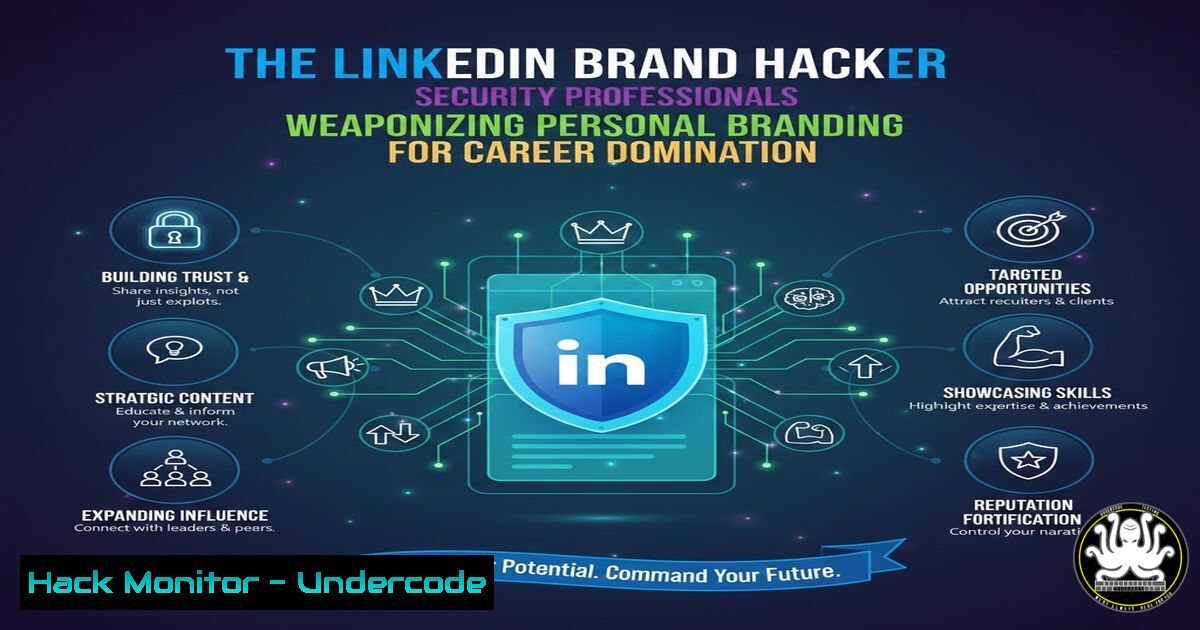
In the rapidly evolving cybersecurity landscape, technical skills alone are no longer sufficient for career advancement. Security professionals are now leveraging strategic personal branding on platforms like LinkedIn to establish authority, attract opportunities, and significantly accelerate their career trajectories. This paradigm shift represents a fundamental change in how cybersecurity expertise is demonstrated and validated in the digital age.
Learning Objectives:
- Master the framework for building a compelling cybersecurity professional brand
- Implement content strategies that demonstrate expertise rather than just claim it
- Leverage your brand to access high-value opportunities and career advancement
You Should Know:
1. The Foundation: Crafting Your Cybersecurity Brand Architecture
Building a powerful personal brand begins with strategic foundation work. Your LinkedIn profile serves as your professional command center—it’s the first place recruiters, potential employers, and collaborators will assess your credibility. Start by optimizing your profile with cybersecurity-specific keywords that align with your expertise and target roles. Your headline should clearly communicate your specialization whether it’s cloud security, threat intelligence, or vulnerability management.
Step-by-step guide:
- Audit your current LinkedIn profile for consistency and clarity
- Research industry-specific keywords using tools like LinkedIn Analytics
- Craft a compelling headline that includes your specialization + value proposition
- Optimize your “About” section with measurable achievements and technical competencies
- Showcase certifications (CISSP, CEH, OSCP) and technical skills in dedicated sections
- Gather recommendations from colleagues and managers that validate your expertise
2. Content Weaponization: Demonstrating Expertise Through Value-Driven Posts
The most effective cybersecurity brands don’t just claim expertise—they demonstrate it through consistent, valuable content. This establishes credibility and keeps you top-of-mind within your professional network. Focus on creating content that solves problems, explains complex concepts in accessible ways, and showcases your unique perspective on industry developments.
Step-by-step guide:
- Develop a content calendar focusing on cybersecurity trends and practical insights
- Create posts that breakdown recent vulnerabilities or security incidents
- Share tutorials on using common security tools (Wireshark, Nmap, Metasploit)
- Engage with other security professionals’ content to expand your reach
- Use multimedia formats including screenshots, diagrams, and short video explanations
- Include relevant hashtags like Cybersecurity, InfoSec, CloudSecurity
3. Technical Demonstration: Showcasing Hands-On Expertise
For cybersecurity professionals, theoretical knowledge must be complemented by practical demonstrations. Sharing technical tutorials and walkthroughs not only helps others but firmly establishes your hands-on capabilities. Consider creating content around common security tasks and tools that prospective employers value.
Step-by-step guide:
- Create tutorial content using security tools with practical examples:
Nmap scan for vulnerability assessment
nmap -sV -sC --script vuln target_ip

Wireshark filter for detecting potential malicious activity
ip.src == 192.168.1.100 && tcp.port == 443

Metasploit module for authorized penetration testing
use auxiliary/scanner/ssl/heartbleed
set RHOSTS target_ip
run
- Document your home lab configurations and experiments
- Share code snippets from security scripts or automation tools
- Explain mitigation techniques for common vulnerabilities
- Demonstrate cloud security configurations (AWS, Azure, GCP)
4. Network Exploitation: Strategic Relationship Building
In cybersecurity, your professional network serves as an early warning system, knowledge repository, and opportunity pipeline. Strategic networking goes beyond collecting connections—it involves building meaningful relationships with peers, mentors, and industry leaders who can provide insights and opportunities.
Step-by-step guide:
- Identify and connect with cybersecurity influencers and hiring managers
- Engage meaningfully with their content before requesting connections
- Join and participate in relevant cybersecurity groups and communities
- Attend virtual and in-person security conferences and events
- Initiate conversations around shared interests or technical topics
- Offer value to your connections through introductions or information sharing
- Opportunity Engineering: Converting Brand Equity into Career Advancement
A strong personal brand naturally attracts opportunities, but strategic professionals actively engineer these opportunities. This involves positioning yourself for specific roles, projects, or collaborations that align with your career objectives and leveraging your brand authority to access them.
Step-by-step guide:
- Showcase project work and contributions to open-source security tools
- Document your problem-solving approach for complex security challenges
- Share case studies (within disclosure boundaries) of security incidents
- Position yourself as a subject matter expert for speaking engagements
- Contribute to security publications or start your own technical blog
- Use your established credibility to negotiate better positions and compensation
6. Continuous Monitoring: Tracking Your Brand Performance
Just as security professionals monitor systems for threats and performance issues, you must regularly assess your brand’s effectiveness. This involves tracking key metrics, gathering feedback, and making data-driven adjustments to your strategy.
Step-by-step guide:
- Monitor LinkedIn analytics for engagement trends and audience growth
- Track profile view trends following content publication
- Measure connection requests from target companies or roles
- Solicit feedback on your content from trusted colleagues
- Adjust your strategy based on what generates the most engagement
- Conduct quarterly brand audits to ensure consistency and relevance
7. Defense in Depth: Protecting Your Professional Reputation
In cybersecurity, your personal brand is both an asset and a potential attack vector. Maintaining professionalism, ethical boundaries, and operational security is crucial to protecting the reputation you’ve built. This involves careful content curation and adherence to ethical standards.
Step-by-step guide:
- Establish clear boundaries regarding confidential information
- Develop a content approval process for sensitive topics
- Maintain professionalism in all interactions and discussions
- Regularly audit your online presence for potential security issues
- Implement privacy controls on personal social media accounts
- Create guidelines for responding to criticism or technical disagreements
What Undercode Say:
- Personal branding has become a non-negotiable competency for cybersecurity professionals seeking career advancement
- The most effective brands combine technical demonstration with strategic positioning and networking
- Consistent, value-driven content establishes authority more effectively than credentials alone
- Cybersecurity professionals who master personal branding command higher salaries and better positions
- The ROI on personal branding investment compounds over time through expanded opportunities
Analysis: The transformation of personal branding from optional to essential in cybersecurity reflects broader industry shifts. As remote work expands and the talent war intensifies, digital presence has become a primary vehicle for professional assessment. Security professionals who strategically build their brands achieve multiple advantages: they establish thought leadership, create opportunity pipelines, and develop professional networks that serve as both radar and early warning systems. The most successful practitioners treat personal branding with the same systematic approach they apply to security challenges—developing strategies, implementing controls, and continuously monitoring effectiveness. This professional meta-skill may ultimately determine career trajectories as much as technical capabilities.
Prediction:
The importance of personal branding in cybersecurity will continue to accelerate as remote work becomes permanent and digital credentials gain prominence. We’ll see emergence of specialized personal branding tools for security professionals, increased integration between technical portfolios and professional profiles, and potentially verified skill badges based on practical assessments. Cybersecurity professionals who neglect their digital presence will find themselves at a significant disadvantage regardless of their technical capabilities, while those who master strategic self-presentation will access exponentially growing opportunities in an increasingly competitive landscape.
🎯Let’s Practice For Free:
IT/Security Reporter URL:
Reported By: Anthony Natoli – Hackers Feeds
Extra Hub: Undercode MoN
Basic Verification: Pass ✅


