Listen to this Post
Introduction:
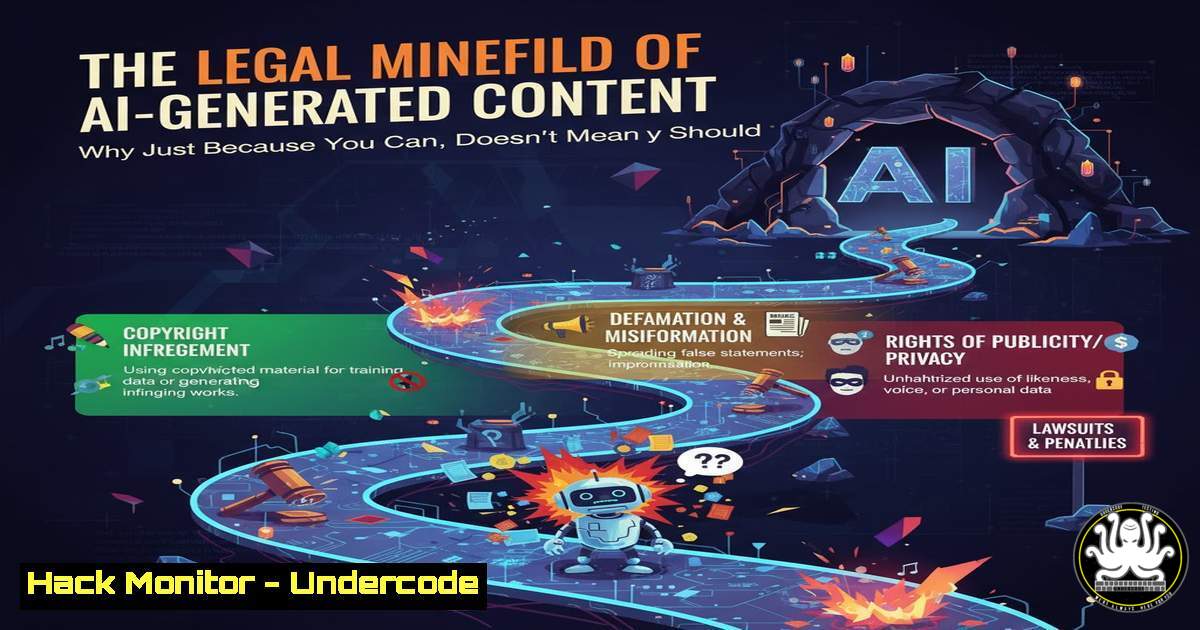
The explosive growth of generative AI has empowered businesses to create convincing marketing materials, including customer testimonials, at an unprecedented scale and speed. However, this technological capability is on a direct collision course with established consumer protection laws and fair market practices. Navigating this new terrain requires a clear understanding that existing legal frameworks, not just emerging AI-specific regulations, govern the use of such content.
Learning Objectives:
- Understand the specific legal violations inherent in using AI-generated fake testimonials.
- Learn how to implement technical and procedural safeguards to ensure marketing compliance.
- Develop a framework for auditing existing digital content for AI-generated material that may pose legal risks.
You Should Know:
- The Legal Basis: It’s More Than Just the AI Act
While the European AI Act is a landmark piece of legislation, it does not preempt long-standing consumer protection laws. Using AI to generate fake customer testimonials violates multiple legal pillars of fair trading. Primarily, it constitutes a deceptive commercial practice under EU Directive 2005/29/EC concerning unfair business-to-consumer practices. Such actions are illegal because they mislead the average consumer, influencing their economic decision-making by fabricating social proof. This can lead to severe penalties, including substantial fines, injunctions against your business, and mandatory corrective advertising. The legal liability falls on the company using the testimonial, not necessarily the AI tool provider, making due diligence a critical corporate responsibility.
- Technical Detection: How Regulators Might Uncover Your AI Content
Regulatory bodies and competitors are increasingly using the same AI technology to detect fraudulent content. Understanding their methods is the first step in risk mitigation.
Step‑by‑step guide explaining what this does and how to use it.
Step 1: Stylometric Analysis. Tools like Giant Language Model Test Room (GLTR) or more advanced AI detection APIs analyze text for statistical anomalies. Human writing has a certain entropy and predictability pattern, while AI-generated text often has a more uniform, “perfected” distribution.
Step 2: Metadata and Provenance Scrutiny. A genuine testimonial should be traceable to a real user account in your database. Regulators may request proof of the customer’s existence and their consent. An audit trail is crucial.
Step 3: Image and Video Forensics. For multi-media testimonials, tools can analyze digital fingerprints. AI-generated images often have inconsistencies in lighting, reflections, or biological impossibilities (e.g., irregular pupils, mismatched earrings). Commands for basic image analysis can be run with tools like `exiftool` to check for manipulation metadata: exiftool -a -u -g1 image_of_testimonial.jpg. A lack of standard EXIF data (like camera model or creation date) can be a red flag.
3. Proactive Compliance: Implementing a Content Verification Workflow
To prevent legal issues, integrate a compliance check into your content creation pipeline.
Step‑by‑step guide explaining what this does and how to use it.
Step 1: Source Attestation. Never publish a testimonial without a verifiable source. Implement a system where each testimonial is linked to a real, active customer account ID in your CRM. A simple database query can verify this link: `SELECT user_id, testimonial_text FROM testimonials JOIN users ON testimonials.user_id = users.id WHERE users.email_verified = TRUE;`
Step 2: AI Detection Scan. Before publication, run all AI-generated or AI-assisted content through a detection tool. This can be automated in your CMS. For example, a script could call an API like OpenAI’s own classifier (or a third-party service) and flag content for human review if the AI-likelihood score exceeds a certain threshold.
Step 3: Archival and Consent Management. Store the original, unedited submission from the customer and their recorded consent (e.g., a clickwrap agreement) in an immutable audit log. This is your primary legal defense.
4. System Hardening: Securing Your Marketing Infrastructure
Prevent unauthorized or non-compliant content from being published by hardening your digital assets.
Step‑by‑step guide explaining what this does and how to use it.
Step 1: Role-Based Access Control (RBAC). In your Content Management System (e.g., WordPress), ensure that only authorized compliance managers can publish testimonials. Use the principle of least privilege. For a WordPress site, this means creating a custom role with specific capabilities, not giving everyone administrator access.
Step 2: Version Control and Logging. Implement strict version control for all content. On a Linux-based web server, you can use Git to track changes to static pages containing testimonials. Commands like `git log –oneline –grep=”testimonial”` can help you track who changed what and when.
Step 3: API Security for AI Tools. If you use AI services via API, secure your API keys. Do not hardcode them in your applications. Use environment variables. For example, in a Node.js application, use `process.env.OPENAI_API_KEY` and set the variable in your production environment.
5. Incident Response Plan for a “Bad Buzz”
When a fake testimonial is exposed, having a plan is critical to mitigating reputational and legal damage.
Step‑by‑step guide explaining what this does and how to use it.
Step 1: Immediate Takedown. As soon as a complaint is verified, immediately remove the non-compliant content from all platforms (website, social media, ads). This can be scripted for speed, for instance, by deactivating a specific post ID in your database: `UPDATE wp_posts SET post_status = ‘draft’ WHERE ID = [bash];`
Step 2: Transparent Communication. Prepare a holding statement and a final response that acknowledges the error, explains the corrective action taken, and reaffirms your commitment to ethical practices. Do not attempt to lie or cover it up.
Step 3: Conduct a Post-Mortem. Analyze how the non-compliant content bypassed your safeguards. Update your verification workflow and technical controls to prevent a recurrence. Document everything for potential legal proceedings.
What Undercode Say:
- Technology Outpaces Regulation, But Not Precedent. The most significant risk isn’t a new AI law; it’s being prosecuted under old, powerful consumer protection statutes that were designed for exactly this kind of deception.
- Your Best Defense is a Verifiable Paper Trail. In the eyes of the law, the ability to prove a testimonial’s authenticity is as important as the testimonial itself. Technical audits and logs are your evidence.
The core analysis is that businesses are treating AI-generated content as a productivity tool without re-evaluating their compliance boundaries. The legal framework for “fair trading” is technology-agnostic; it cares about the impact on the consumer, not the tool used to create the deception. The rush to adopt AI is creating a ticking time bomb of liability, where a single investigation into a fake testimonial could trigger a full audit of a company’s marketing practices, uncovering a history of violations and leading to catastrophic fines and loss of consumer trust. The convergence of AI capability and legal enforcement is not a future problem—it is a present and active risk.
Prediction:
Within the next 18-24 months, we will see the first major, publicly-documented enforcement action by a national consumer protection agency (like the FTC in the US or DGCCRF in France) against a medium-to-large enterprise specifically for the use of AI-generated fake testimonials. This case will set a legal precedent, causing a domino effect of litigation and forcing a rapid maturation of compliance-focused AI tools. This will also accelerate the integration of cryptographic content provenance standards (like the C2PA’s “Content Credentials”) directly into major AI content generation platforms, making traceability a default feature rather than a post-hoc add-on.
🎯Let’s Practice For Free:
IT/Security Reporter URL:
Reported By: Alexianewyns Intelligenceartificielle – Hackers Feeds
Extra Hub: Undercode MoN
Basic Verification: Pass ✅


