Listen to this Post
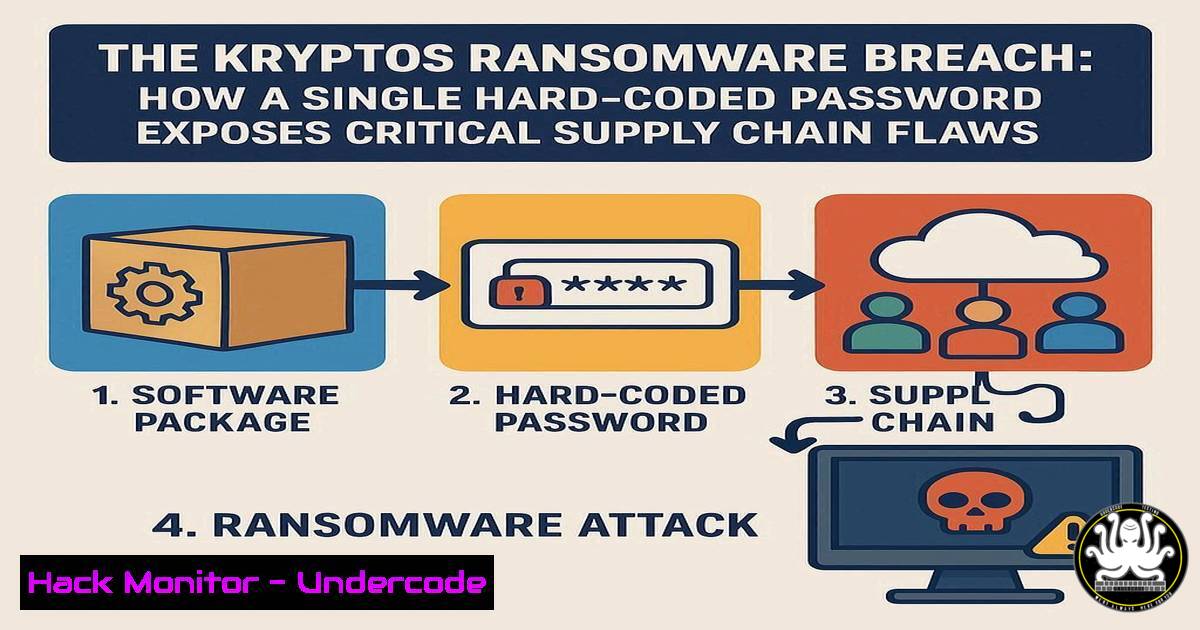
Introduction:
The recent discovery of a hard-coded password within the Kryptos ransomware gang’s own infrastructure has sent shockwaves through the cybersecurity community. This critical failure not only exposes the operators’ operational security (OpSec) lapses but also serves as a stark reminder of the pervasive risks associated with credential reuse and poor secrets management across the entire software and threat landscape.
Learning Objectives:
- Understand the critical risks of hard-coded secrets and credential reuse in both offensive and defensive security postures.
- Learn how to utilize OSINT and threat intelligence tools to trace credential exposure and assess organizational risk.
- Implement hardening techniques to detect and prevent secrets from being embedded in code and configuration files.
You Should Know:
1. OSINT Password Discovery with Sherlock
Verified Linux command list or code snippet:
 Install Sherlock
git clone https://github.com/sherlock-project/sherlock.git
cd sherlock
python3 -m pip install -r requirements.txt

Run Sherlock against a username found in a breach
python3 sherlock.py --verbose target_username
Step-by-step guide: This tool hunts for a specified username across hundreds of social media and web platforms. After a password is discovered in a breach (like the Kryptos password), security researchers use the associated username to see where else that identity exists. The `–verbose` flag provides detailed output on the search process, showing where the username was found. This is the first step in mapping an attacker’s or a target’s digital footprint.
2. Scanning for Hard-Coded Secrets with TruffleHog
Verified Linux command:
 Scan a git repository for secrets
docker run --rm -it -v "$PWD:/pwd" trufflesecurity/trufflehog:latest git https://github.com/your-organization/your-repo.git

Scan a local directory
docker run --rm -it -v "$PWD:/pwd" trufflesecurity/trufflehog:latest filesystem /pwd
Step-by-step guide: TruffleHog is an essential tool for detecting accidentally committed secrets like passwords, API keys, and tokens. It scans through git repositories and file systems, checking the entropy of strings to identify potential secrets. The command runs TruffleHog in a Docker container against a remote GitHub repo, dumping all found secrets to the console. Integrating this into your CI/CD pipeline can prevent secrets from being pushed to code repositories.
3. Password Hash Cracking with Hashcat
Verified Linux command:
 Identify the hash type
hashid -m 'hash_to_crack'

Crack an MD5 hash using the rockyou.txt wordlist
hashcat -m 0 -a 0 'hash_to_crack' /usr/share/wordlists/rockyou.txt

Crack a SHA1 hash using a rules-based attack
hashcat -m 100 -a 0 'sha1_hash' /usr/share/wordlists/rockyou.txt -r /usr/share/hashcat/rules/best64.rule
Step-by-step guide: When threat intelligence databases provide password hashes, tools like Hashcat are used to recover the plaintext. The `-m` flag specifies the hash type (0 for MD5, 100 for SHA1), and `-a` specifies the attack mode (0 for straight wordlist). Using powerful rule files like `best64.rule` modifies words in the list to match common password variations, dramatically increasing the success rate.
- Implementing Secrets Management with AWS CLI & SSM
Verified Linux/Cloud command:
 Store a secret in AWS Systems Manager Parameter Store
aws ssm put-parameter --name "/prod/database/password" --value "s3cr3tP@ss!" --type "SecureString" --overwrite

Retrieve the secret in an application
aws ssm get-parameter --name "/prod/database/password" --with-decryption --query "Parameter.Value" --output text
Step-by-step guide: Instead of hard-coding passwords, modern applications should retrieve them from a secure secrets management service at runtime. This AWS CLI example shows how to store a password as a `SecureString` in the Parameter Store, which is encrypted using a KMS key. The application then retrieves and decrypts the value only when needed, ensuring the secret never resides in plaintext within the codebase.
5. Detecting Credential Dumping with Windows Command Line
Verified Windows command:
 Query Windows Security Event Log for LSASS access (Event ID 4660)
Get-WinEvent -FilterHashtable @{LogName='Security'; ID=4660} | Where-Object {$_.Message -like "lsass.exe"} | Format-List

Use Sysmon to detect Mimikatz-style access (if Sysmon is installed)
Get-WinEvent -FilterHashtable @{LogName='Microsoft-Windows-Sysmon/Operational'; ID=10} | Where-Object {$_.Message -like "lsass.exe"} | Format-List
Step-by-step guide: Attackers often use tools like Mimikatz to dump credentials from the LSASS process. These PowerShell commands query the Windows Event Log for specific events that indicate access to LSASS. Event ID 4660 in the Security log and Event ID 10 in the Sysmon log can reveal attempts to read the memory of the LSASS process, a key indicator of credential dumping activity.
6. Hardening Linux Against Credential Theft
Verified Linux command:
 Configure auditd to monitor /etc/shadow for read access
sudo auditctl -w /etc/shadow -p war -k shadow_access

Search the audit log for shadow file access attempts
sudo ausearch -k shadow_access | aureport -f -i

Set permissions to prevent unauthorized access to /etc/passwd and /etc/shadow
sudo chmod 644 /etc/passwd
sudo chmod 000 /etc/shadow
Step-by-step guide: The `/etc/shadow` file contains the password hashes for all system accounts. These commands use the Linux audit subsystem (auditd) to watch (-w) the shadow file for any write, attribute change, or read access (-p war). Any attempt to read this file, such as by a credential-dumping tool, will generate a log entry. The `chmod` commands ensure strict permissions on these critical files.
7. API Security: Testing for Hard-Coded Keys
Verified Linux command with curl:
 Test for exposed API keys by making an authenticated request
curl -H "Authorization: Bearer YOUR_API_KEY" https://api.service.com/v1/users

Use Nikto to scan for common API key exposures
nikto -h https://yourapi.com -C all

Check code with Gitleaks for API key patterns
docker run --rm -v ${PWD}:/path zricethezav/gitleaks:latest detect --source="/path" --verbose
Step-by-step guide: Hard-coded API keys in mobile apps, JavaScript files, or client-side code are a massive security risk. These commands demonstrate how to test if an API key is valid and what access it grants. `Nikto` can scan web endpoints for common file exposures that may contain keys, while `Gitleaks` is a specialized secret scanner that uses advanced pattern matching to find API keys, tokens, and passwords in source code.
What Undercode Say:
- The principle of “Don’t Put Secrets in Code” is the most violated yet most critical rule in modern software development and infrastructure management.
- Offensive OpSec failures provide invaluable defensive intelligence; the same tools and techniques used by attackers can be turned against them when they make mistakes.
The Kryptos incident is not an anomaly but a symptom of a systemic problem. The fact that a sophisticated criminal group, whose entire business model relies on secrecy, fell victim to a basic security flaw underscores a universal truth: humans are the weakest link. This breach provides a rare, textbook case study for defenders. By analyzing the OpSec failures of adversaries, we can better understand their workflows, predict their movements, and harden our own environments against similar tactics. The password reuse discovered by the OSINT researcher demonstrates that the digital identities of threat actors are just as vulnerable to correlation and tracking as anyone else’s, creating new opportunities for attribution and disruption.
Prediction:
The Kryptos breach will catalyze a two-fold evolution in the cyber threat landscape. Defensively, organizations will accelerate the adoption of automated secrets detection and management platforms, making hard-coded credentials a rapidly shrinking attack vector. Offensively, ransomware groups will learn from this OpSec catastrophe, leading to the development and use of more sophisticated, ephemeral credential systems and a heightened focus on operational security, ultimately making them harder to track and attribute. This will force a new arms race in counter-intelligence tactics within cybersecurity.
🎯Let’s Practice For Free:
IT/Security Reporter URL:
Reported By: Mamun Infosec – Hackers Feeds
Extra Hub: Undercode MoN
Basic Verification: Pass ✅


