Listen to this Post
Introduction:
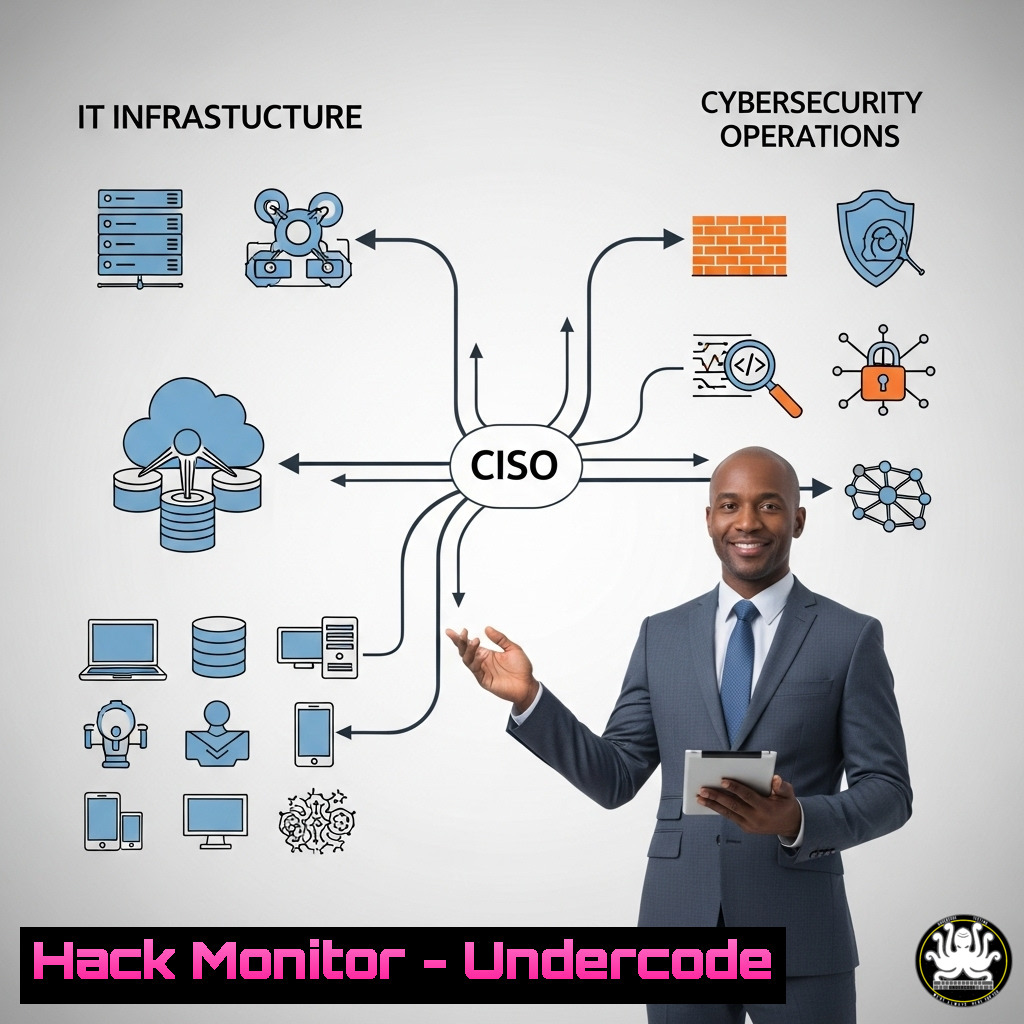
The traditional silos separating IT operations and cybersecurity are collapsing. A new paradigm is emerging where a single, unified leader oversees both infrastructure and security, forging a more resilient and efficient organization. This convergence is critical for defending against modern threats that exploit the gap between system administration and security policy.
Learning Objectives:
- Understand the strategic advantages of merging IT and Security leadership.
- Identify the key technical controls that bridge IT and Security operations.
- Implement practical commands and configurations to harden your environment.
You Should Know:
1. Unified Asset Discovery and Inventory
`nmap -sS -O -sV 192.168.1.0/24` (Linux)
`Get-NetComputer -DomainName mydomain.com | Export-Csv .\all_assets.csv` (Windows – PowerView)
A comprehensive, accurate asset inventory is the foundational layer for both IT management and security monitoring. The Nmap command performs a stealth SYN scan, attempts OS fingerprinting, and enumerates service versions across a subnet, providing a critical snapshot of the network. The PowerView command (part of the PowerSploit toolkit) queries Active Directory to pull a list of all joined computers, ensuring your IT inventory and security monitoring tools are aligned on what needs to be protected.
2. Centralized Logging and Analysis Configuration
`sudo apt install filebeat && sudo nano /etc/filebeat/filebeat.yml` (Linux)
`Add-WindowsFeature -Name AD-Certificate, ADCS-Web-Enrollment -IncludeManagementTools` (Windows)
Centralized logging is the nervous system of a converged team. Filebeat is a lightweight shipper that forwards log data from Linux systems to Elasticsearch, Logstash, or Splunk. After installation, you must configure the `/etc/filebeat/filebeat.yml` file to point to your central log server and define which logs to ship. On Windows, promoting a server to a Certificate Authority via the Active Directory Certificate Services role is crucial for implementing certificate-based authentication and encrypting log traffic in transit.
3. Enforcing Least Privilege Access
`sudo visudo` then add: `%dev_team ALL=(ALL) /usr/bin/systemctl restart nginx, /usr/bin/tail -f /var/log/nginx/access.log` (Linux)
`New-LocalGroup -Name “LogReaders” -Description “Members can read log files.”` followed by `icacls C:\Windows\System32\winevt\Logs\Security.evtx /grant “LogReaders:(RX)”` (Windows)
Least privilege is a core security principle that IT admins must implement. The Linux command uses `visudo` to safely edit sudoers file, granting a developer group only the ability to restart the Nginx service and read its logs—nothing more. On Windows, we create a new local group and use the `icacls` command to grant that group Read and Execute (RX) permissions only on the Security event log file, preventing broad administrative access.
4. Automated Vulnerability Patching Script
`!/bin/bash` sudo apt update && sudo apt list --upgradable | grep -i security | awk '{print $1}' | xargs sudo apt -y upgrade (Linux)
`Install-Module -Name PSWindowsUpdate -Force` then `Get-WindowsUpdate -Install -AcceptAll -AutoReboot` (Windows)
Patching is an IT task with the most significant security impact. This Bash script for Debian/Ubuntu systems updates the package list, filters for only packages with security updates, and upgrades them automatically. For Windows, the PSWindowsUpdate module supercharges the native update CLI. The command installs the module and then fetches and installs all available updates, accepting them and automatically rebooting if necessary.
5. Configuration Compliance Scanning
`sudo lynis audit system –quick` (Linux)
`Get-Service | Where-Object {$_.StartType -eq ‘Automatic’ -and $_.Status -ne ‘Running’} | Format-Table -AutoSize` (Windows)
Maintaining secure baselines across the IT estate is a joint responsibility. Lynis is a renowned hardening tool that performs a comprehensive system scan for misconfigurations, outdated software, and policy violations. The Windows PowerShell command quickly audits services that are set to start automatically but have failed to run, which could indicate a problem or a potential backdoor for persistence.
6. Network Segmentation Testing
`iptables -A INPUT -s 10.0.5.0/24 -p tcp –dport 22 -j ACCEPT` iptables -A INPUT -p tcp --dport 22 -j DROP (Linux)
`New-NetFirewallRule -DisplayName “Block-DB-From-Web” -Direction Inbound -LocalPort 1433 -Protocol TCP -Action Block -Profile Any` (Windows)
Micro-segmentation prevents lateral movement. These rules demonstrate host-based segmentation. The Linux iptables rules first allow SSH access only from the management subnet (10.0.5.0/24), then drop all other SSH connection attempts. The Windows command creates a firewall rule explicitly blocking inbound traffic to the default SQL Server port (1433), which should only be accessible by application servers, not entire subnets.
7. Proactive Threat Hunting Query
`cat /var/log/auth.log | grep “Failed password” | awk ‘{print $11}’ | sort | uniq -c | sort -nr` (Linux)
`Get-WinEvent -FilterHashtable @{LogName=’Security’; ID=4625} | Select-Object -ExpandProperty Message | ForEach-Object { if ($_ -match ‘Source Network Address:\s+([^\s]+)’) { $matches[bash] } } | Group-Object | Sort-Object -Property Count -Descending` (Windows)
A converged team enables proactive security. This Linux command parses authentication logs to count and list the source IPs of failed SSH login attempts, quickly identifying brute-force attacks. The complex Windows PowerShell command extracts all failed logon events (Event ID 4625), uses regex to parse out the source IP address from the message field, and then groups and sorts them by count, providing the same critical threat intelligence.
What Undercode Say:
- The convergence of IT and Security leadership is not a trend but an evolutionary response to the unsustainable cost and inefficiency of siloed operations.
- The technical barrier to convergence is not technology itself, but the cultural and process-oriented divide that has existed for decades. The commands provided are the technical bridge.
- The post highlights a critical inflection point in organizational design. The “shift” mentioned is driven by the realization that security cannot be bolted on; it must be built in. A leader like Reed Loden, overseeing both, can mandate that every IT project has security requirements from day zero and that every security control is evaluated for its operational impact. This eliminates the classic friction where IT prioritizes uptime and agility, and security prioritizes lockdown, often resulting in a dysfunctional stalemate. The technical controls we’ve outlined are the tangible execution of this philosophy—they are actions that serve both masters: operational efficiency and security hardening.
Prediction:
Within five years, the standalone CISO role in mid-market companies will largely disappear, absorbed into a broader Chief IT and Security Officer (CITSO) role. This will be driven by the proliferation of AI-driven security tools that integrate directly into IT management platforms, making deep, separate security expertise less necessary at the executive decision-making level and more embedded into the tools themselves. The hack we will see is not a technical one, but an organizational one: attackers will continue to exploit the communication and priority gaps in companies that failed to make this convergence happen, making them the prime targets for ransomware and business email compromise attacks.
🎯Let’s Practice For Free:
IT/Security Reporter URL:
Reported By: Maseissa Always – Hackers Feeds
Extra Hub: Undercode MoN
Basic Verification: Pass ✅


