Listen to this Post
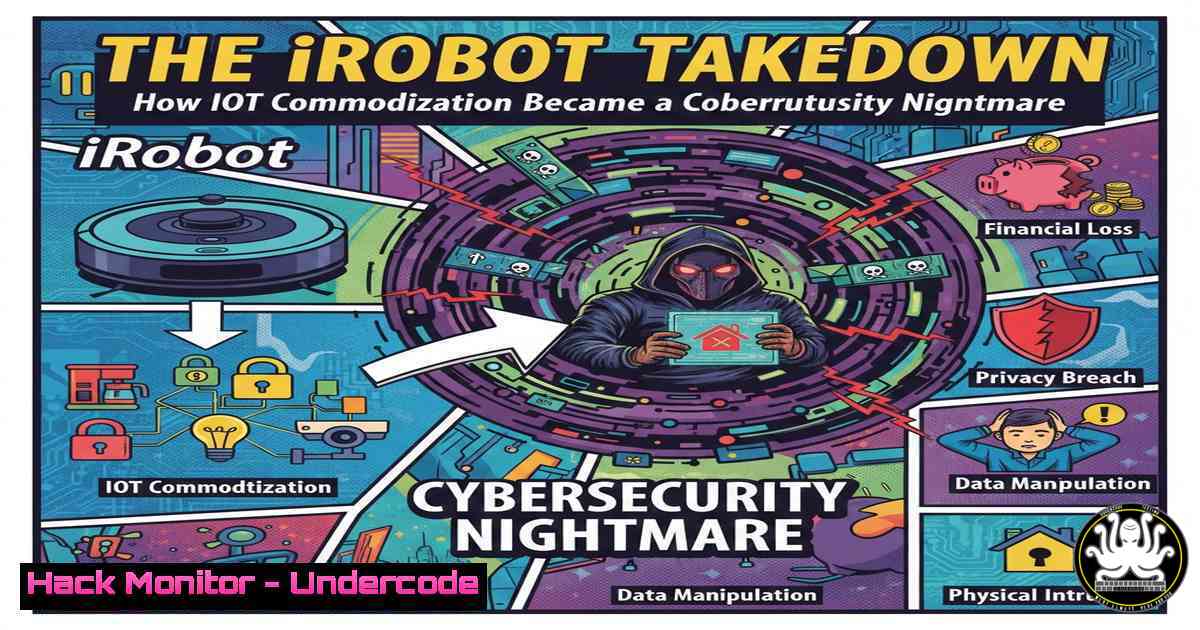
Introduction:
The collapse of iRobot, famed for its Roomba vacuum, is not merely a business story but a critical case study in the intersection of IoT commoditization and cybersecurity. As cheap, connected devices flood the market, the race to the bottom on price often comes at the expense of robust security architecture, transforming smart homes into vulnerable attack surfaces. This article dissects the technical fallout, exploring how commoditized devices become low-hanging fruit for attackers and what IT professionals must do to secure them.
Learning Objectives:
- Understand the specific security vulnerabilities inherent in commoditized IoT devices, including weak APIs, default credentials, and unpatched firmware.
- Learn practical steps to audit, harden, and segment IoT devices within both enterprise and home networks.
- Develop a proactive strategy for managing third-party IoT risk, including supply chain assessment and continuous vulnerability monitoring.
You Should Know:
1. The Anatomy of a Commoditized IoT Vulnerability
The drive to reduce costs in competitive markets like robot vacuums leads manufacturers to cut corners on security components. Common flaws include hardcoded credentials, insecure firmware update mechanisms (HTTP vs. HTTPS), and unprotected diagnostic ports. These devices, once connected to a network, serve as potential pivots points for attackers to move laterally.
Step‑by‑step guide explaining what this does and how to use it.
Step 1: Network Discovery with Nmap
First, identify all IoT devices on your network. A simple Nmap scan can reveal open ports and services.
`sudo nmap -sV -O 192.168.1.0/24`
This command performs a version (-sV) and OS detection (-O) scan on the entire subnet. Look for devices responding on ports like 23 (Telnet), 80/8080 (HTTP), or 9000 (often used for device management).
Step 2: Banner Grabbing & Service Interrogation
Once a device is found, probe its services for information leakage.
`nc -v 192.168.1.105 80`
Then, issue a basic HTTP request: GET / HTTP/1.0. The response headers often reveal the device model, firmware version, and sometimes even default credentials.
2. Exploiting Insecure APIs and Cloud Integrations
Most IoT devices rely on cloud APIs for mobile app functionality. These APIs are frequently riddled with weaknesses such as improper authentication, lack of rate limiting, and insecure direct object references (IDOR). A compromised API can lead to mass data exfiltration or device control.
Step‑by‑step guide explaining what this does and how to use it.
Step 1: Intercepting Mobile App Traffic
Use a tool like Burp Suite or MITMproxy to intercept traffic between the IoT device’s mobile app and the cloud. Configure your smartphone to use the proxy.
Step 2: Analyzing API Endpoints and Tokens
Capture the authentication flow. Look for API endpoints like /api/v1/device/control. Analyze the tokens (JWT, API keys) for poor signing or excessive lifespan. Test for IDOR by manipulating device ID parameters in requests:
`curl -H “Authorization: Bearer
Change `12345` to another number to see if you can control another user’s device.
3. Hardening Network Segmentation for IoT
The primary defense is isolating IoT devices onto a separate network segment, preventing lateral movement to critical assets like laptops and servers.
Step‑by‑step guide explaining what this does and how to use it.
Step 1: Configuring a Dedicated VLAN (Enterprise/Prosumer)
On a managed switch or router (e.g., pfSense, OpenWRT), create a new VLAN (e.g., VLAN 30) for IoT devices. Configure firewall rules to block ALL INITIATED traffic FROM the IoT VLAN TO your main LAN, while allowing replies to established connections. This allows your phone on the main LAN to control the device, but blocks a compromised Roomba from scanning your desktop.
Step 2: Implementing Client Isolation on Wi-Fi
On your wireless access point, enable “Client Isolation” or “AP Isolation” for the IoT SSID. This prevents devices on the same Wi-Fi network from communicating with each other, containing potential worm-like propagation.
4. Firmware Analysis and Patch Management
Commoditized devices often lack automated, secure update mechanisms. Proactively analyzing and updating firmware is crucial.
Step‑by‑step guide explaining what this does and how to use it.
Step 1: Extracting Firmware
Find the firmware file on the manufacturer’s website or via the device’s web interface. Use `binwalk` to extract filesystem contents.
`binwalk -Me firmware_v2.1.4.bin`
This command recursively extracts (`-M`) all identified files.
Step 2: Analyzing for Hardcoded Secrets
Search the extracted files for passwords, keys, and backdoors.
`grep -r “password\|admin\|root\|key\|token” ./firmware-root/`
Cross-reference found credentials against the device. Establish a manual patching calendar if automatic updates are unavailable.
- Leveraging AI for Anomaly Detection in IoT Traffic
Given the scale, AI-driven network detection is becoming essential to identify compromised devices based on behavioral anomalies.
Step‑by‑step guide explaining what this does and how to use it.
Step 1: Deploying a Network Traffic Analyzer
Use a tool like Zeek (formerly Bro) to generate rich network logs from a span port or network tap.
`zeek -i eth0 local “Site::local_nets += { 192.168.1.0/24 }”`
Step 2: Implementing Simple ML-Based Alerting
Use the Zeek logs with a SIEM or Elastic Stack. Create machine learning jobs to baseline normal IoT device behavior (e.g., periodic, low-volume traffic to a specific cloud IP). Alert on significant deviations, such as a vacuum cleaner making sustained HTTP connections to unfamiliar internal IPs, indicating potential lateral movement attempts.
What Undercode Say:
- Key Takeaway 1: The business failure of iRobot is a direct proxy for a pervasive security failure. Commoditization pressure creates a predictable pattern of vulnerabilities—weak authentication, insecure APIs, and abandoned firmware—that attackers are actively exploiting.
- Key Takeaway 2: Perimeter defense is obsolete in an IoT world. Proactive, zero-trust segmentation is non-negotiable. IT and security teams must treat every IoT device as untrusted and enforce policies that restrict communication to only explicitly authorized paths.
The analysis indicates that technical debt in consumer IoT is now translating into corporate risk. The “smart” in smart devices is often a marketing term, not a security guarantee. The reliance on third-party cloud services adds another opaque layer of risk, as a breach at the vendor level can compromise every deployed device simultaneously. Defending requires shifting from a posture of assumed safety to one of assumed compromise, focusing on containment and monitoring.
Prediction:
The trajectory points towards a rise in automated, swarm-based attacks targeting commodity IoT vulnerabilities at scale. Botnets like Mirai will evolve to incorporate AI for stealthier targeting and propagation. This will force regulatory intervention, potentially mandating basic security hygiene (unique passwords, secure updates, vulnerability disclosure policies) for all connected devices sold in major markets. Simultaneously, the cybersecurity skills gap will widen, creating a premium for professionals who can bridge embedded systems security, cloud API hardening, and AI-driven threat hunting. The market will bifurcate: a low-cost, high-risk segment and a premium, security-certified segment, with enterprise procurement increasingly demanding the latter.
▶️ Related Video (88% Match):
🎯Let’s Practice For Free:
IT/Security Reporter URL:
Reported By: Marknvena Opinion – Hackers Feeds
Extra Hub: Undercode MoN
Basic Verification: Pass ✅


