Listen to this Post
Introduction:
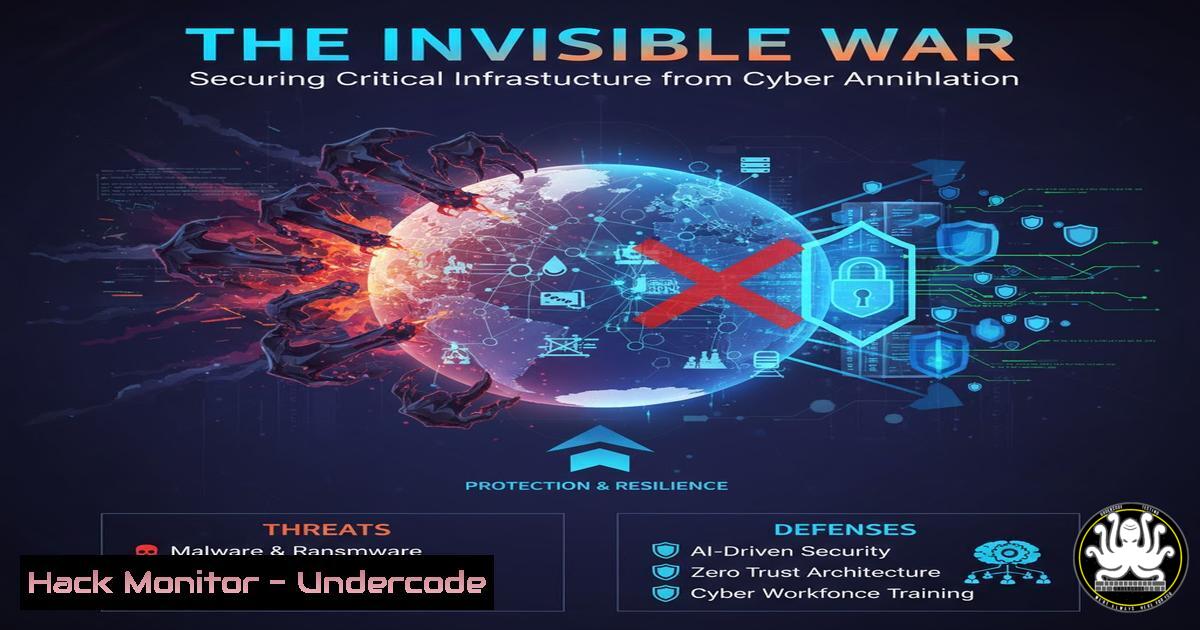
The very lifelines of modern society—our power grids, water systems, and oil refineries—are under constant digital siege. As revealed in Chip Harris’s “System Failure,” nation-states and criminal syndicates are actively targeting Operational Technology (OT), the computing systems that control physical industrial processes. This article provides a technical deep dive into the commands, tools, and methodologies used to both exploit and defend these critical environments.
Learning Objectives:
- Understand the key vulnerabilities and attack surfaces in Industrial Control Systems (ICS) and SCADA networks.
- Learn practical command-line techniques for network reconnaissance, vulnerability assessment, and hardening of critical systems.
- Develop a foundational knowledge of how cyber-physical attacks are executed and mitigated across both IT and OT domains.
You Should Know:
1. Network Reconnaissance in an OT Environment
Identifying assets in a sprawling industrial network is the first step for both attackers and defenders. Unlike standard IT networks, OT networks use specialized protocols.
`nmap -sU -p 161,44818,502 –script s7-info,modbus-discover 10.10.1.0/24`
What this does and how to use it: This Nmap command performs a UDP scan (-sU) on common OT protocol ports: SNMP (161), EtherNet/IP (44818), and Modbus (502). The NSE (Nmap Scripting Engine) scripts `s7-info` and `modbus-discover` will interrogate any discovered hosts to extract detailed information about Siemens S7 PLCs and Modbus slaves, such as system model, firmware, and connected modules.
1. Install Nmap and the necessary scripts (often included in distributions like Kali Linux).
2. Replace the IP range `10.10.1.0/24` with your target network.
3. Run the command from a system with network access to the OT segment.
4. Analyze the output to build a map of all programmable logic controllers (PLCs) and other devices, identifying make, model, and potential default configurations.
2. Interrogating a Modbus PLC for Device Information
The Modbus protocol, notoriously lacking authentication, can be easily queried to gather critical intelligence about a process.
`python3 -c “from pymodbus.client import ModbusTcpClient; client = ModbusTcpClient(‘10.10.1.50’); client.connect(); print(client.read_holding_registers(0, 10).registers); client.close()”`
What this does and how to use it: This Python script uses the `pymodbus` library to connect to a Modbus TCP server (a PLC) at IP 10.10.1.50. It reads 10 holding registers starting at address 0. These registers often contain device identification, setpoints, or real-time process values.
1. Install the `pymodbus` library using pip install pymodbus.
2. Replace the IP address `10.10.1.50` with the target PLC’s IP.
3. Run the script. The output will be a list of integer values from the PLC’s registers.
4. An attacker would map these register addresses to specific functions (e.g., pressure, temperature, valve position) to understand and manipulate the process.
3. Hardening a Windows ICS Server with PowerShell
Many Human-Machine Interface (HMI) and historian servers run on Windows. Hardening them is paramount.
`Get-Service | Where-Object {$_.Name -like “sql” -or $_.Name -like “vnc” -or $_.Name -like “teamviewer”} | Stop-Service -PassThru | Set-Service -StartupType Disabled`
What this does and how to use it: This PowerShell command finds and disables non-essential services that are common attack vectors. It searches for services with “sql”, “vnc”, or “teamviewer” in their name, stops them if running, and sets their startup type to “Disabled.”
1. Open PowerShell with Administrator privileges.
- Execute the command. Review the list of services that will be affected before proceeding.
- This reduces the server’s attack surface by removing remote database and unauthorized remote desktop access points that are not required for the core ICS function.
-
Detecting Network Anomalies with Zeek (Bro) on an OT DMZ
Zeek is a powerful network security monitoring tool that can decode industrial protocols and detect anomalous behavior.
`zeek -C -r capture.pcap industrial-protocols.scan`
What this does and how to use it: This command analyzes a packet capture file (capture.pcap) using Zeek, ignoring invalid checksums (-C). The `industrial-protocols.scan` script is a policy script that detects scanning activity within industrial protocols.
1. Capture network traffic from a critical OT network segment using a tool like tcpdump.
2. Run the Zeek command against the saved `.pcap` file.
3. Zeek will generate log files (e.g., notice.log) that will highlight any connection attempts that resemble reconnaissance scans against OT devices, a primary indicator of compromise.
- Exploiting and Mitigating a Siemens S7 PLC Stop Command
A common attack on PLCs is the “Stop” command, which halts the physical process entirely.
`python3 s7_plc_stop.py -i 192.168.1.10 -r rack -s slot`
What this does and how to use it (Exploitation): A proof-of-concept script (e.g., using the `python-snap7` library) can send a crafted “Stop” CPU command to a Siemens S7-300/400 PLC, causing it to halt. This is a denial-of-service attack against a physical process.
1. An attacker would identify a vulnerable S7 PLC (see Reconnaissance section).
2. Using knowledge of the S7 protocol, they would craft and send a packet that issues a “Stop” command.
3. The PLC stops, halting production, shutting down a pipeline, or causing a manufacturing line to freeze.
`acl_control_plc = { permit : true | false }`
What this does and how to use it (Mitigation): Modern PLCs and OT firewalls offer Access Control Lists (ACLs). This configuration snippet (conceptual) would be applied on the PLC or a front-facing firewall to only permit programming and control commands from a specific, authorized engineering workstation IP address, blocking unauthorized “Stop” commands from the rest of the network.
6. Assessing Cloud-Based SCADA Data Historian Security
Modern ICS often use cloud platforms like AWS to store historical process data. Misconfigurations are a major risk.
`aws s3 ls s3://scada-data-bucket –recursive –region us-east-1`
What this does and how to use it: This AWS CLI command lists all the files in an S3 bucket named “scada-data-bucket.” If the bucket policy is misconfigured, this command could be run by an unauthenticated user, exposing sensitive process data.
1. Install and configure the AWS CLI.
- Run the command against a target bucket name (often discovered through subdomain enumeration).
- If successful, it reveals the entire structure and files within the bucket, which could include historical sensor data, alarm logs, and production recipes. Defenders should use this command to verify that their buckets are not publicly accessible.
7. Building a Honeypot to Detect OT Intrusion
Deploying a low-interaction honeypot that emulates OT services can act as an early-warning system.
`sudo docker run -p 5020:5020 -p 44818:44818/udp s7sniff/honeypot:latest`
What this does and how to use it: This command uses Docker to run a honeypot image that simulates a Siemens S7 PLC (TCP/102) and an Allen-Bradley EtherNet/IP device (UDP/44818). Any connection to these ports is logged as malicious reconnaissance.
1. Ensure Docker is installed on a decoy server placed within the OT DMZ.
2. Run the command to start the honeypot container.
3. Monitor the container logs for any connection attempts. Any traffic to this system is, by definition, unauthorized and indicates an active attacker on the network.
What Undercode Say:
- The barrier between IT and OT networks is the single most critical defense layer. Its compromise leads directly to physical consequences.
- Legacy systems, chosen for their 20-year lifespans and reliability, are fundamentally incompatible with modern cybersecurity principles, creating an inherent and massive attack surface.
The analysis from “System Failure” and the technical commands above paint a stark picture. The core issue is not a lack of security tools, but a fundamental architectural problem. We have connected air-gapped, safety-designed OT environments to IT networks and the internet for efficiency, without adequately addressing the threat model. The commands for interrogating Modbus and S7 devices are simple precisely because these protocols were never built with malice in mind. The urgency for robust network segmentation, protocol-aware deep packet inspection firewalls, and comprehensive asset visibility has never been greater. Defending critical infrastructure requires a specialized blend of IT cybersecurity skills and OT engineering knowledge.
Prediction:
The continued convergence of IT and OT, driven by Industry 4.0 and IoT, will exponentially increase the attack surface of critical infrastructure. We will see a shift from disruptive attacks to sophisticated, multi-stage campaigns designed for physical sabotage and long-term persistence. Attackers will move beyond simple PLC stops to manipulate sensor readings and control logic, causing catastrophic equipment failure while hiding their actions from operators. The future battlefield is digital, but the explosions will be very, very real.
🎯Let’s Practice For Free:
IT/Security Reporter URL:
Reported By: Luther Chip – Hackers Feeds
Extra Hub: Undercode MoN
Basic Verification: Pass ✅


