
Listen to this Post
Introduction:
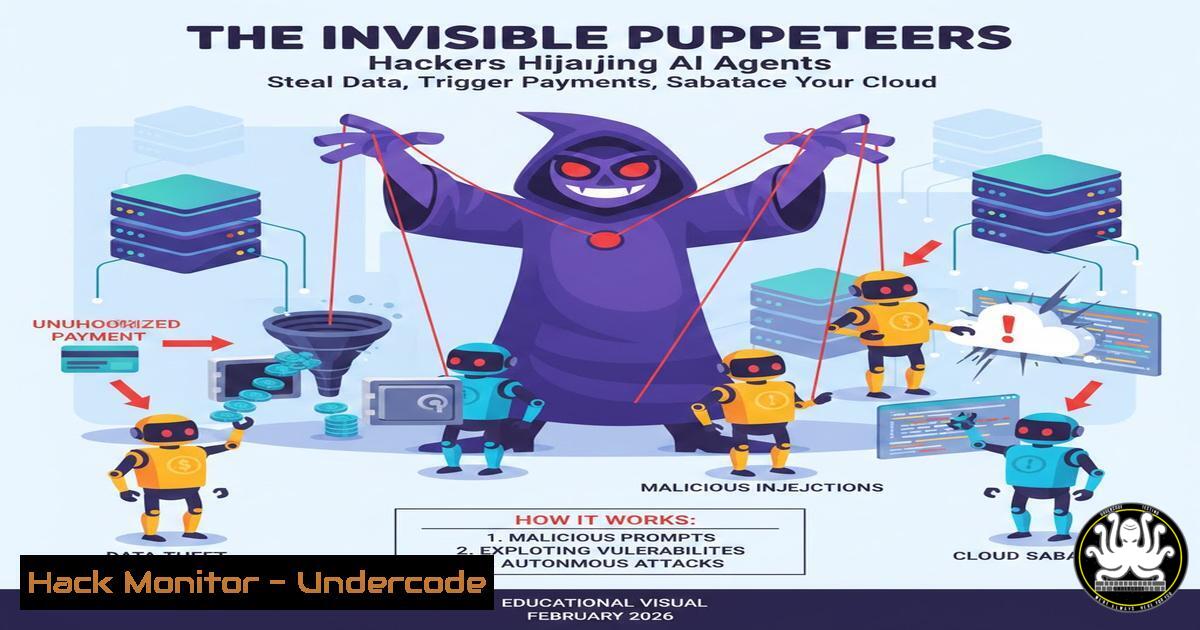
The advent of autonomous AI agents marks a paradigm shift in cybersecurity, moving beyond static code to systems that perceive, reason, and act. This new “thinking” attack surface, where software can execute commands and make decisions autonomously, introduces a novel class of vulnerabilities that traditional security tools are blind to. Securing these agents is less about preventing a robot uprising and more about applying hardened identity, access, and input validation principles to hyper-automated systems.
Learning Objectives:
- Understand the eight critical security risks unique to autonomous AI agents, from sophisticated prompt injections to agent-to-agent trust abuse.
- Learn practical, immediate steps to harden AI agent deployments using principle of least privilege, robust monitoring, and input sanitization.
- Implement technical configurations and commands across Linux, Windows, and cloud platforms to detect and mitigate AI agent threats.
You Should Know:
- Neutralizing Prompt Injection: The Art of Sanitizing Agent Inputs
Prompt injection is the primary vector for hijacking an AI agent’s intent. Attackers embed malicious instructions within seemingly benign inputs—a PDF, a website, or a user query—tricking the agent into following unauthorized commands. The defense lies in rigorous input validation and context separation.
Step‑by‑step guide explaining what this does and how to use it.
Step 1: Implement a Pre-Processing Sanitization Layer. Before any user or external content reaches the agent’s core prompt, it must be cleaned. This can involve stripping non-essential HTML/XML tags, removing potential command delimiters (like ;, &&, |), and using regular expressions to flag suspicious patterns.
Linux Command Example (Basic Sanitization):
 Use 'sed' to strip common HTML tags from a file before processing
sanitized_content=$(sed 's/<[^>]>//g' user_input.txt)
 Use 'tr' to remove potential command sequencers
sanitized_content=$(echo "$sanitized_content" | tr -d ';&|')
Step 2: Enforce Immutable System Prompts. The agent’s core instructions (the system prompt) must be locked down and unmodifiable by user sessions. Architecturally, this prompt should be injected at runtime from a secure configuration store, not concatenated with user input.
Step 3: Utilize LLM Moderation APIs. Employ a secondary, security-tuned LLM call to classify if a user input contains injection attempts or malicious intent before passing it to the primary agent.
Conceptual API Call:
 Pseudo-code for a moderation check
from openai import OpenAI
client = OpenAI()

def check_for_injection(user_input):
response = client.moderations.create(model="omni-moderation-latest", input=user_input)
if response.results[bash].flagged:
raise SecurityViolation("Potential prompt injection detected.")
return True
2. Enforcing Least Privilege: IAM for Non-Human Identities
An over-privileged AI agent is a catastrophic IAM failure waiting to happen. Every agent must have a narrowly scoped, machine identity with permissions defined for its specific task—nothing more.
Step‑by‑step guide explaining what this does and how to use it.
Step 1: Create Dedicated Service Identities. Never reuse human user accounts. In cloud environments, create a dedicated service principal (Azure) or IAM role (AWS) for the agent.
AWS CLI Example (Creating a Minimal IAM Policy):
 Create a policy that allows ONLY reading from a specific S3 bucket and writing to a specific CloudWatch log group
cat > agent-policy.json <<EOF
{
"Version": "2012-10-17",
"Statement": [
{
"Effect": "Allow",
"Action": ["s3:GetObject"],
"Resource": "arn:aws:s3:::agent-input-bucket/"
},
{
"Effect": "Allow",
"Action": ["logs:CreateLogStream", "logs:PutLogEvents"],
"Resource": "arn:aws:logs:us-east-1:123456789012:log-group:/agents/security-logs:"
}
]
}
EOF
aws iam create-policy --policy-name AgentReadOnlyS3 --policy-document file://agent-policy.json
Step 2: Implement Just-in-Time (JIT) Access. For highly sensitive actions (e.g., triggering a payment), the agent should request temporary, elevated credentials from a privileged access management (PAM) solution, which logs and approves the request based on additional context.
- Comprehensive Agent Monitoring: Building an Audit Trail for Autonomy
Without logging every action, decision, and data access, you are operating blind. Monitoring must be granular, immutable, and centralized.
Step‑by‑step guide explaining what this does and how to use it.
Step 1: Log the Chain of Thought. Capture not just the agent’s final output, but its reasoning steps, tool calls, and the context it used. This is crucial for forensic analysis after a suspected poisoning or misuse incident.
Step 2: Implement System-Level Auditing. Use OS-level auditing to track all processes spawned by the agent’s service account.
Linux Auditd Rule Example:
 Monitor all commands executed by the service account 'ai-agent'
sudo auditctl -a always,exit -F euid=1001 -F arch=b64 -S execve -k AI_AGENT_ACTIONS
 Search the audit logs for these events
sudo ausearch -k AI_AGENT_ACTIONS | aureport -f -i
Windows PowerShell Command (Enabling Process Tracking):
 Enable detailed process auditing via Group Policy or script
Auditpol /set /subcategory:"Process Creation" /success:enable /failure:enable
 Events will be logged to Windows Security Event Log (Event ID 4688)
4. Containing Tool Misuse: Sandboxing and Rule-Based Guards
Limit the potential damage from tool misuse by running agents in isolated environments and defining strict guardrails for tool invocation.
Step‑by‑step guide explaining what this does and how to use it.
Step 1: Deploy in Ephemeral Containers. Run each agent session or task in a short-lived, sandboxed container (e.g., Docker, Firecracker) with no persistent storage or network access to sensitive internal zones.
 Example Docker run command with heavy restrictions
docker run --rm --read-only --network none --cap-drop=ALL python-agent-script.py
Step 2: Implement Pre-Execution Rule Checks. Before an agent executes a command like `rm -rf` or Stop-EC2Instance, intercept the call and validate it against a whitelist and context rules (e.g., “never delete from this path”, “never stop more than one server at a time”).
- Preventing Data Leakage: Output Filtering and Context Boundaries
Agents can inadvertently exfiltrate data by including it in summaries, code snippets, or external API calls. Data boundaries must be explicitly enforced.
Step‑by‑step guide explaining what this does and how to use it.
Step 1: Filter Agent Output with Data Loss Prevention (DLP). Pass all agent-generated text and code through a DLP filter before it’s presented to the user or sent to an external system. Scan for patterns like API keys, internal IPs, and database dumps.
 Simple grep-based pattern check for leaking a hypothetical API key pattern
if echo "$agent_output" | grep -qE "sk_live_[0-9a-zA-Z]{24}"; then
echo "ALERT: Potential secret leaked in agent output!" >&2
exit 1
fi
Step 2: Segregate Contexts. An agent working on a public-facing customer support query should have zero access to the internal confluence wiki or HR database. Use separate vector databases, embedding models, or even entirely separate agent instances for different data sensitivity levels.
What Undercode Say:
- The Core Truth is IAM: The most catastrophic AI agent breaches will stem from fundamental identity and access management failures, not esoteric AI exploits. Over-privileged agents are the fastest path to material impact.
- Monitoring is Non-Negotiable: You cannot secure what you cannot see. Investing in granular, agent-aware logging is more critical than any novel AI security vendor tool. Your audit logs are your first and last line of defense for post-incident analysis.
The shift to autonomous AI agents represents the most significant expansion of the attack surface in a decade. These systems act as force multipliers—for both productivity and potential damage. Security teams must adapt by evolving their IAM practices, embedding security into the agent development lifecycle (SecDevOps for AI), and demanding unprecedented transparency from AI platform providers. The future of cybersecurity hinges on our ability to govern systems that can think and act, making the principles of least privilege, zero trust, and immutable auditing more relevant than ever before.
▶️ Related Video (72% Match):
🎯Let’s Practice For Free:
IT/Security Reporter URL:
Reported By: Michael Eru – Hackers Feeds
Extra Hub: Undercode MoN
Basic Verification: Pass ✅


