Listen to this Post
Introduction:
Single Sign-On (SSO) has evolved from a convenience feature to a critical enterprise security control, centralizing authentication and reducing the sprawling attack surface created by numerous passwords. At its core, SSO is a session and user authentication service that permits a user to use one set of login credentials to access multiple applications, governed by a trusted Identity Provider (IdP). This article deconstructs the seamless magic of SSO, explores its underlying protocols, and provides actionable guidance for secure implementation and hardening.
Learning Objectives:
- Understand the fundamental flow and security architecture of a modern SSO system.
- Differentiate between key federation protocols: SAML, OAuth 2.0, and OpenID Connect (OIDC).
- Implement basic SSO configurations and apply critical security hardening measures.
You Should Know:
- The SSO Authentication Flow: More Than Just a Token
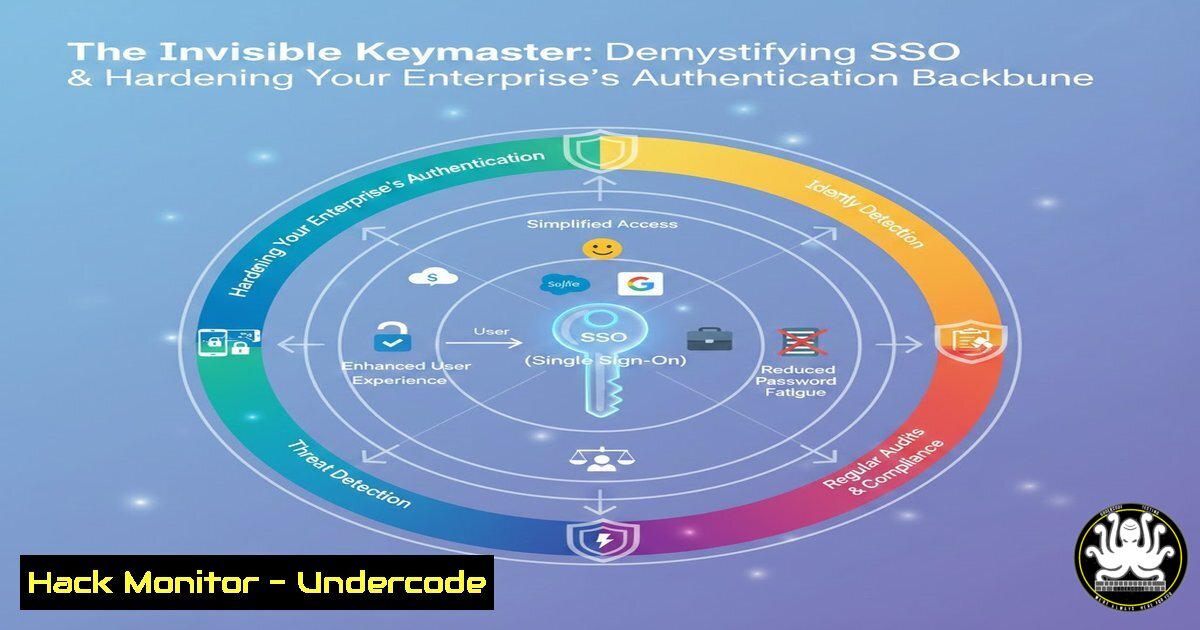
The graphical flow described in the post outlines the user experience. Technically, the process is a carefully choreographed security handshake. When a user attempts to access a Service Provider (SP) like Salesforce, they are redirected to the Identity Provider (IdP) like Okta or Azure AD. The IdP authenticates the user (via password, MFA, etc.) and then generates a cryptographically signed assertion (SAML) or a set of tokens (OIDC). This package, not just a simple “session token,” contains verified identity claims (username, groups, email) and is passed back to the SP. The SP validates the signature using pre-configured certificates from the IdP, establishes a local session, and grants access.
Step-by-step guide (High-Level):
1. User clicks login on `application.company.com`.
- Application generates a SAML AuthnRequest and redirects the user’s browser to the IdP (
sso.company.com). - IdP presents a login page, user authenticates (potentially with MFA).
- IdP builds a SAML Response containing assertions, digitally signs it with its private key, and sends it back to the user’s browser.
- Browser posts the SAML Response to the application’s ACS (Assertion Consumer Service) URL.
- Application verifies the SAML Response’s signature using the IdP’s public certificate, extracts user attributes, and creates a local application session.
2. Protocols Powering the Magic: SAML vs. OAuth/OIDC
Not all SSO is created equal. The choice of protocol is fundamental.
– SAML (Security Assertion Markup Language): XML-based, mature, and common in enterprise-to-enterprise scenarios. It’s primarily for authentication and authorization. The key components are the IdP, SP, and the SAML assertion.
– OAuth 2.0: An authorization framework, not strictly an authentication protocol. It allows an application to obtain limited access (scopes) to a resource on behalf of the user. Think “This app wants to read your Google Calendar.”
– OpenID Connect (OIDC): An authentication layer built on top of OAuth 2.0. It adds an ID Token (a JWT that verifiably asserts the user’s identity) and the UserInfo endpoint. This is the modern standard for consumer and modern SaaS application SSO.
Step-by-step guide to decoding a JWT ID Token (OIDC):
An ID Token is a JSON Web Token (JWT). You can inspect its contents.
 Example using a online tool conceptually. In practice, handle tokens with extreme care.
 A JWT has three parts: Header.Payload.Signature
echo "eyJhbGciOiJSUzI1NiIsInR5cCI6IkpXVCJ9.eyJzdWIiOiIxMjM0NTY3ODkwIiwibmFtZSI6IkpvZSBEb2UiLCJlbWFpbCI6ImpvZUBleGFtcGxlLmNvbSIsImlhdCI6MTUxNjIzOTAyMn0..." | cut -d '.' -f 2 | base64 -d 2>/dev/null | jq .
This might reveal the payload:
{
"sub": "1234567890",
"name": "Joe Doe",
"email": "[email protected]",
"iat": 1516239022
}
- Implementing a Basic SSO Test Lab with Keycloak
Keycloak is a powerful open-source IdP perfect for testing.
Step-by-step guide:
- Deploy Keycloak: `docker run -p 8080:8080 -e KEYCLOAK_ADMIN=admin -e KEYCLOAK_ADMIN_PASSWORD=admin quay.io/keycloak/keycloak:latest start-dev`
2. Access Admin Console: Navigate to `http://localhost:8080` and log in. - Create a Realm & Client: Realms are security domains. Create a realm, then a client under it. Set “Client protocol” to `openid-connect` and a valid redirect URI (e.g., `http://localhost:3000/`).
- Create a User: In the “Users” menu, create a user and set a password under the “Credentials” tab.
- Integrate a Sample App: Use a Quickstart (e.g., a Node.js app). Configure the app with the Client ID and Secret from Keycloak, and set the authentication URL to `http://localhost:8080/realms/{realm-name}/protocol/openid-connect/auth`.
4. Critical SSO Security Hardening Measures
The centralization SSO provides also creates a single point of failure. Harden it aggressively.
– Enforce Phishing-Resistant MFA: Use FIDO2/WebAuthn security keys or certificate-based authentication. Avoid SMS and voice codes.
– Mandate HTTPS Everywhere: All traffic between SP, IdP, and user must be TLS 1.2+ encrypted. Use HSTS headers.
– Rotate Signing Certificates: Regularly rotate the IdP’s SAML signing and OIDC JWT signing certificates. Have a defined process for distributing new public keys to SPs.
– Validate Assertions Strictly: SPs must validate the audience (aud claim), issuer (iss claim), and expiration (exp claim) of every token/assertion.
– Implement Short Session Timeouts & Step-Up Authentication: Force re-authentication for highly privileged actions.
5. The Adversary’s View: Common SSO Exploitation Paths
Understanding attack vectors is crucial for defense.
- Token Theft & Replay: Stealing a SAML assertion or OIDC tokens via browser exploits (XSS) or man-in-the-middle attacks. Mitigation: Keep session lifetimes short, use `Strict` SameSite cookies, and implement PKCE for OAuth public clients.
- Misconfiguration: Incorrect SP configuration accepting unsigned or improperly signed assertions. Regularly audit configurations.
- IdP Compromise: The worst-case scenario. Protect IdP admin accounts with the highest level of MFA and JIT (Just-In-Time) access. Monitor for unusual admin activity.
- Protocol-Specific Flaws: Such as SAML Signature Wrapping or OAuth authorization code injection. Mitigation: Keep IdP/SP software patched and use standard libraries that handle these checks.
What Undercode Say:
- SSO is a Security Amplifier, Not a Silver Bullet. It magnificently reduces password fatigue and related risks (phishing, credential stuffing) but centralizes risk. The compromise of an SSO account is a compromise of everything tied to it, making privileged identity protection and MFA non-negotiable.
- The Devil is in the Configuration. Most major SSO breaches stem from implementation errors—misconfigured trust relationships, weak token signatures, or lax audience validation—not from flaws in the core protocols. Security teams must own the SSO configuration audit cycle.
Prediction:
SSO will increasingly converge with Zero Trust principles, evolving beyond a simple “on/off” gate. We will see the rise of continuous authentication and context-aware sessions, where the SSO system dynamically evaluates risk signals (device posture, location, behavior) throughout the session, not just at login. This may lead to shorter, more granular tokens and more frequent, transparent re-authentication challenges. Furthermore, decentralized identity models built on blockchain-like verifiable credentials may begin to challenge the traditional centralized IdP model, shifting the locus of control back to the user while maintaining the seamless experience SSO provides.
▶️ Related Video (86% Match):
🎯Let’s Practice For Free:
IT/Security Reporter URL:
Reported By: Cybernara Sso – Hackers Feeds
Extra Hub: Undercode MoN
Basic Verification: Pass ✅


