Listen to this Post
Introduction:
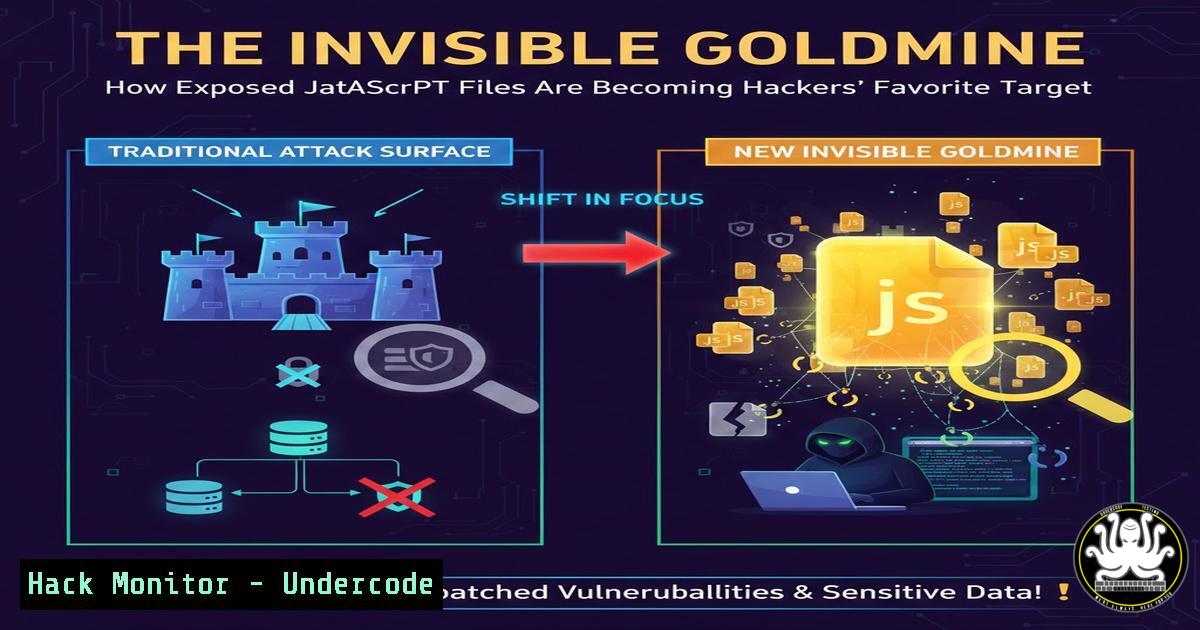
In the modern web application landscape, client-side code has transformed from a static presentation layer into a dynamic, data-rich environment. Security researcher Kassem’s recent discovery of sensitive data exposed within a public JavaScript file underscores a critical, often overlooked attack surface. His custom tool, Secret Hunter, automates the reconnaissance of these digital frontiers, revealing how automation is essential for identifying secrets, misconfigurations, and other vulnerabilities that traditional scanners miss.
Learning Objectives:
- Understand the risks and methodologies behind client-side reconnaissance and exposed data vulnerabilities.
- Learn to set up and utilize the Secret Hunter tool for automated discovery of secrets and insights in web assets.
- Integrate findings from automated tools into a comprehensive security assessment and bug bounty workflow.
You Should Know:
- The Hidden Dangers Lurking in Your JavaScript Files
Modern web applications rely heavily on JavaScript for dynamic content, often embedding API keys, internal endpoints, authentication tokens, or even hard-coded credentials within client-side scripts. Unlike server-side code, these files are publicly accessible to anyone who views the page source, making them a prime target for attackers during the reconnaissance phase. Tools like Secret Hunter systematize the discovery of these “low-hanging fruits” by parsing and analyzing the code served directly to the browser.
Step‑by‑step guide explaining what this does and how to use it.
Concept: Client-Side Reconnaissance. This involves enumerating all JavaScript, CSS, and other static files loaded by a web application and meticulously examining them for sensitive data.
Manual Method: Using Browser Developer Tools.
Open your browser’s Developer Tools (`F12`).
Navigate to the Sources or Network tab.
Reload the page and filter for `.js` files.
Manually inspect each file for patterns like api_key, secret, token, password, endpoint, internal, or comments containing developer notes.
Automation with Secret Hunter: The tool automates this process.
 Clone the repository (example command - actual tool location may vary)
 git clone <secret_hunter_repo_url>

Install required dependencies (typically Python-based)
 pip install -r requirements.txt

Run the tool against a target URL
 python secret_hunter.py -u https://target.com -o results.txt
Analysis: The tool fetches the target page, enumerates all linked scripts, downloads them, and applies a set of regular expressions and rules to flag potentially sensitive strings. It outputs a report detailing the file and the line where a potential secret was found.
2. Building Your Automated Reconnaissance Pipeline
A single tool is just one part of an effective security posture. Professional bug bounty hunters and penetration testers chain multiple specialized tools together to create a comprehensive reconnaissance pipeline. This pipeline automates the discovery of subdomains, endpoints, and technologies before diving deep into file analysis.
Step‑by‑step guide explaining what this does and how to use it.
Concept: Reconnaissance Pipeline. A sequenced workflow where the output of one tool feeds into the next, creating an automated asset discovery and initial vulnerability screening process.
Sample Pipeline using Linux/Bash:
 1. Subdomain Enumeration
subfinder -d target.com -o subdomains.txt
assetfinder -subs-only target.com >> subdomains.txt
sort -u subdomains.txt -o final_subdomains.txt

<ol>
<li>Probe for live hosts and HTTP servers
cat final_subdomains.txt | httprobe -c 50 > live_hosts.txt</p></li>
<li><p>Spider each live host for paths and files (using a tool like gospider)
cat live_hosts.txt | while read host; do
gospider -s "$host" -d 2 -t 50 --js --sitemap -o ./gospider_output/
done</p></li>
<li><p>Extract all JavaScript file paths and feed them to Secret Hunter
grep -r ".js" ./gospider_output/ | cut -d " " -f 3 | sort -u > js_files.txt
cat js_files.txt | while read jsurl; do
python secret_hunter.py -u "$jsurl" --mode single
done
Analysis: This pipeline automates the first few hours of manual work. It finds all associated subdomains, determines which are live web servers, spiders them to discover content, and then focuses your secret-hunting tool on the most valuable targets: the JavaScript files.
3. From Finding to Exploitation: Validating Your Discoveries
Finding a potential secret is only the first step. The critical phase is validation—determining if the exposed data is live, valid, and what level of access it grants. An invalidated API key is just a note; a validated one can lead to data breach.
Step‑by‑step guide explaining what this does and how to use it.
Concept: Proof-of-Concept (PoC) Validation. Actively testing a discovered credential or endpoint to confirm its impact.
Process for a Discovered API Key:
- Identify the Service: Use the context from the JS file or the key’s format (e.g., `AKIA…` for AWS, `sk_live_…` for Stripe) to identify the service.
- Test for Read Permissions: Use the service’s CLI or a simple `cURL` command to test access.
Example: Testing a hypothetical cloud storage API key
curl -H "Authorization: Bearer YOUR_DISCOVERED_TOKEN" \
https://api.cloudprovider.com/v1/buckets
- Assess Scope: Does the key allow listing resources, reading data, or writing/deleting? Start with the least invasive checks.
- Document Precisely: For bug bounty reports, document the exact JS file location, the line number, the test command you ran, and the response that proves access.
Analysis: Responsible validation is key. Use isolated test commands that do not damage the target’s data. The goal is to confirm the vulnerability’s existence, not to exfiltrate or manipulate data beyond what is necessary for the PoC.
4. Beyond Secrets: Leveraging Reconnaissance for Broader Attacks
Kassem notes that Secret Hunter now finds “recon insights and weak points.” Exposed JavaScript files can reveal more than just keys: internal API endpoints, version numbers, third-party dependencies with known vulnerabilities, and debug functions left active in production.
Step‑by‑step guide explaining what this does and how to use it.
Concept: Attack Surface Expansion. Using reconnaissance data to discover new, less obvious attack vectors.
Actions:
Internal Endpoint Mapping: Discovered API paths like `https://internal-api.target.com/v1/users` can be tested for authorization flaws (e.g., IDOR, Broken Object Level Authorization).
Dependency Analysis: Use a tool like `retire.js` or `npm-audit` (if `package.json` is exposed) to check linked libraries for known CVEs.
 Example: Using retire.js to scan a downloaded JS file for vulnerable libs
retire --jspath /path/to/downloaded/javascript/files/
Source Map Extraction: If a `.js.map` file is exposed, it can be used to de-obfuscate minified production code, potentially revealing even more sensitive logic and strings.
Analysis: A holistic view of the reconnaissance data allows you to pivot. A secret might lead to a compromised cloud bucket, while an exposed internal endpoint might lead to a full application takeover. Connect the dots.
5. Hardening the Client-Side: Essential Defensive Measures
For developers and security teams, the offensive findings directly inform defensive strategies. Eliminating these exposure points is crucial for application hardening.
Step‑by‑step guide explaining what this does and how to use it.
Concept: Client-Side Security Hardening. Proactive steps to remove sensitive data from client-side code and monitor for leaks.
Defensive Actions:
- Implement Server-Side Logic: Never hardcode API keys, secrets, or business logic in client-side code. Move all sensitive operations to backend APIs.
- Use Environment Variables Securely: Front-end build processes (like Webpack) can embed environment variables, but they become part of the final bundle. Understand that they are not secret from end-users.
- Automate Scanning in CI/CD: Integrate secret detection tools like TruffleHog, Gitleaks, or Secret Hunter into your deployment pipeline to scan code before it reaches production.
Example: Running a secret scan in a Git pre-commit hook
In .git/hooks/pre-commit
trufflehog git file://. --since-commit HEAD --only-verified
- Employ Content Security Policy (CSP): A strong CSP header can mitigate the impact of XSS but also control which scripts are allowed to load, indirectly helping to control asset exposure.
Analysis: Defense is about shifting left. By integrating security checks into the development lifecycle, you can prevent secrets from being committed and subsequently exposed in your publicly served files.
What Undercode Say:
The Reconnaissance Phase is King: The majority of successful breaches and bug bounty awards stem from meticulous, often automated, reconnaissance. Overlooking client-side assets is a cardinal sin in both attack and defense.
Automation is the Force Multiplier: Manual review is unsustainable at scale. Tools like Secret Hunter and the associated pipeline are not just conveniences; they are necessities for maintaining visibility over ever-expanding attack surfaces.
The post by Kassem is not a brag but a case study in modern security methodology. It highlights the evolution from manual, targeted hunting to scalable, automated discovery. The real story isn’t just the exposed data found in a JS file; it’s the systematic process that led to its discovery. This approach reflects the broader trend in cybersecurity: leveraging code to find flaws in code, turning the complexity of modern development into a map for auditors. The most significant vulnerabilities are often not deep in the backend but sitting in plain sight, delivered directly to the user’s browser, waiting for the right tool to look.
Prediction:
The sophistication and automation of client-side reconnaissance will accelerate. We will see the integration of AI/ML models into tools like Secret Hunter to better understand code context, reducing false positives and identifying more complex, obfuscated secrets. Furthermore, as more business logic pushes to the client (e.g., with Jamstack architectures), the attack surface will grow, making pre-production and runtime client-side security scanning a standard part of the security stack. Bug bounty platforms will likely begin offering integrated, sanctioned reconnaissance automation for hunters, formalizing this critical phase of testing.
🎯Let’s Practice For Free:
IT/Security Reporter URL:
Reported By: All Inbox – Hackers Feeds
Extra Hub: Undercode MoN
Basic Verification: Pass ✅


