Listen to this Post
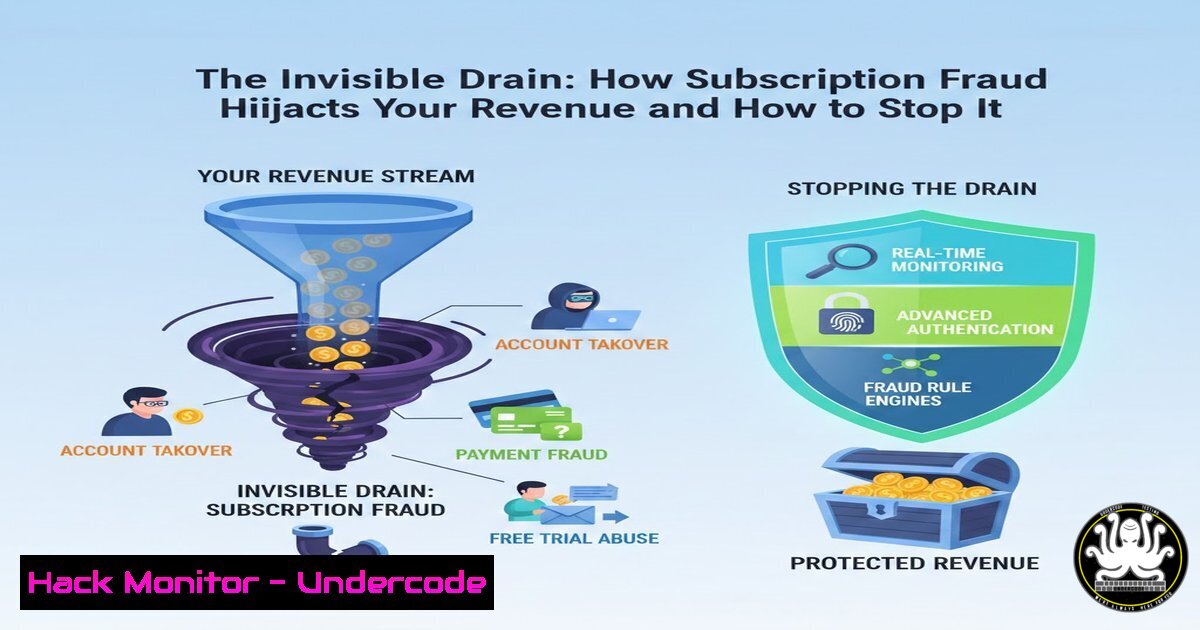
Introduction:
Subscription fraud exploits the very mechanics of digital business models—free trials, recurring payments, and automated onboarding—to drain revenue and distort critical metrics. By mimicking legitimate user behavior, these attacks bypass traditional security measures, making advanced detection and prevention strategies essential for protecting sustainable growth in fintech, SaaS, and e-commerce.
Learning Objectives:
- Understand the common technical and behavioral patterns of subscription fraud.
- Implement practical, code-level monitoring and detection mechanisms.
- Deploy AI-driven and rule-based prevention strategies to harden your payment and onboarding systems.
You Should Know:
1. Technical Pattern Recognition: Identifying Fake Accounts
Subscription fraud often begins with the automated creation of fake accounts. Attackers use scripts to bypass CAPTCHAs, generate temporary emails, and spoof device fingerprints.
Step‑by‑step guide explaining what this does and how to use it.
Step 1: Analyze Web Server Logs for Bot Sign-ups. A sudden spike in account creation from similar IP ranges is a key indicator. Use command-line tools to filter and analyze logs.
Linux Command Example:
 Count unique IPs creating accounts in the last hour, looking for outliers
grep "POST /signup" /var/log/nginx/access.log | grep `date -d '1 hour ago' '+%H'` | awk '{print $1}' | sort | uniq -c | sort -nr | head -20
Step 2: Detect Temporary Email Domains. Integrate an API or maintain a local blocklist of domains from disposable email services.
Python Code Snippet for Validation:
import dns.resolver
disposable_domains = {"tempmail.com", "10minutemail.net", "guerrillamail.com"}

def is_disposable_email(email):
domain = email.split('@')[-1]
 Check against known disposable domains
if domain in disposable_domains:
return True
 Optional: Check for MX record (basic email validity)
try:
dns.resolver.resolve(domain, 'MX')
return False
except dns.resolver.NoAnswer:
return True  No mail server, likely disposable
Step 3: Implement Device Fingerprinting. Use libraries like `FingerprintJS` to generate a unique hash from browser/device attributes (canvas, fonts, WebGL). Flag accounts created from the same fingerprint with different emails.
2. Behavioral Signal Analysis: Monitoring Trial Period Anomalies
Fraudsters aggressively use services during trials to maximize value before a chargeback. Monitoring usage patterns is crucial.
Step‑by‑step guide explaining what this does and how to use it.
Step 1: Define Baseline “Normal” User Behavior. For your service, this might be API calls per hour, pages viewed, or data downloaded. Calculate averages for the first 24-72 hours of a genuine user.
Step 2: Instrument Your Application to Log Usage. Ensure user IDs are attached to all critical event logs.
Step 3: Set Up Real-Time Alerts. Use a stream processing framework or cloud service to flag abnormal activity.
Example SQL Query (for a dashboard like Metabase/Redshift):
-- Find trial users consuming resources at 10x the average rate
SELECT user_id, COUNT() as api_calls_last_hour
FROM api_logs
WHERE event_time > NOW() - INTERVAL '1 HOUR'
AND user_id IN (SELECT id FROM users WHERE account_status = 'trial')
GROUP BY user_id
HAVING COUNT() > (
SELECT AVG(api_calls)  10
FROM (
SELECT user_id, COUNT() as api_calls
FROM api_logs WHERE event_time > NOW() - INTERVAL '24 HOURS'
GROUP BY user_id
) normal_users
);
- Payment Intelligence: Tracking Card Reuse and Failure Patterns
Stolen or shared payment cards exhibit distinct patterns. Integrating with a payment gateway that offers risk scores is key, but you can add your own logic.
Step‑by‑step guide explaining what this does and how to use it.
Step 1: Hash Payment Method Identifiers. For PCI compliance, never store raw card numbers. Store a hash of the fingerprint (e.g., last-4 digits + BIN + hashed value).
Step 2: Query for Reuse. Check if a hashed payment method is linked to an unusual number of accounts or recent chargebacks.
Step 3: Analyze Failure Sequences. A pattern of failed payment attempts with slight variations (expiry dates, CVV) is a strong fraud signal. Log these attempts in a secure database for pattern analysis.
- Infrastructure Hardening: Blocking Bots and High-Risk IP Ranges
Layer network-level defenses to reduce the attack surface.
Step‑by‑step guide explaining what this does and how to use it.
Step 1: Integrate a Managed Service. Use cloudflare, AWS WAF, or similar to challenge requests with high bot scores.
Step 2: Maintain Dynamic IP Blocklists. Use tools like `fail2ban` to automatically block IPs exhibiting malicious patterns.
Linux/fail2ban Configuration Example:
 /etc/fail2ban/jail.local
[subscription-fraud]
enabled = true
port = http,https
filter = signup-filter
logpath = /var/log/nginx/signup_attempts.log
maxretry = 3  Block after 3 failed signup patterns
bantime = 86400  Ban for 1 day
Create a custom filter (/etc/fail2ban/filter.d/signup-filter.conf) to parse your application logs for rapid, failed sign-ups.
5. AI-Powered Defense: Deploying Models for Evolving Patterns
Rule-based systems fail against adaptive fraud. Machine learning models can identify subtle, evolving correlations.
Step‑by‑step guide explaining what this does and how to use it.
Step 1: Feature Engineering. Create a dataset with features like: signup_time, ip_risk_score, email_domain_age, device_fp_hash_count, trial_usage_vs_average, card_failure_count.
Step 2: Train a Model. Start with a binary classifier (Random Forest, XGBoost) on historical data labeled as “fraud” or “legitimate.”
Step 3: Operationalize with an API. Serve the model using a lightweight framework like Flask or FastAPI.
FastAPI Inference Endpoint Example:
from fastapi import FastAPI
import joblib
import pandas as pd

app = FastAPI()
model = joblib.load("fraud_model.pkl")

@app.post("/predict_fraud")
async def predict(user_features: dict):
df = pd.DataFrame([bash])
prediction = model.predict(df)
probability = model.predict_proba(df)[bash][bash]
return {"is_fraud": bool(prediction[bash]), "risk_score": probability}
Step 4: Integrate the Prediction. Call this API during user sign-up and trial renewal. Trigger step-up verification (e.g., SMS OTP) for high-risk scores.
6. Step-Up Verification: Balancing Security and Friction
For high-risk signals, introduce additional authentication before granting value.
Step‑by‑step guide explaining what this does and how to use it.
Step 1: Define Risk Thresholds. For example, trigger if: (AI_risk_score > 0.8) OR (card_seen_on_3+_accounts) OR (trial_usage > 15x_average).
Step 2: Implement a Modular Verification Service. This service should offer multiple methods: SMS OTP, email link, document check, or a micro-deposit for bank accounts.
Step 3: Architect for Decoupling. Use a message queue (e.g., RabbitMQ, AWS SQS) to handle verification requests asynchronously, preventing bottlenecks in the user onboarding flow.
What Undercode Say:
- Fraud Prevention is a Core Feature, Not an Afterthought: In modern SaaS and fintech, the security of your revenue loop is as critical as the application’s primary functionality. It must be designed into the product architecture from day one.
- Data Sovereignty is Your Strategic Asset: The quality and granularity of your first-party data—behavioral logs, device fingerprints, and transaction sequences—determine the effectiveness of both rule-based and AI-driven defenses. Aggressively instrument your application to collect this data ethically.
The analysis of subscription fraud trends indicates a shift from blunt, mass-scale attacks to sophisticated, low-and-slow campaigns that resemble legitimate user journeys. This evolution makes traditional, threshold-based rules obsolete. The future of defense lies in continuous authentication and behavior-based profiling, where a user’s identity is constantly re-verified by their actions rather than a one-time login. Companies that fail to adopt these layered, intelligent systems will not only leak revenue but will also face escalating penalties from payment processors and suffer irreparable damage to their unit economics and investor trust. The integration of AI into this domain is no longer a competitive advantage but a baseline requirement for operational integrity.
Prediction:
Within the next 18-24 months, we will see the rise of “Fraud-as-a-Service” (FaaS) platforms that offer AI-powered bots specifically designed to bypass behavioral analytics and ML models, creating an arms race. This will force a industry-wide move towards collaborative defense networks—secure, anonymized consortiums where companies share fraud intelligence in real-time, significantly raising the cost and complexity for attackers. Simultaneously, regulatory pressure around payment transparency and consumer data protection (like PSD3 in Europe) will mandate more robust fraud detection, turning today’s best practices into tomorrow’s compliance requirements.
▶️ Related Video (80% Match):
🎯Let’s Practice For Free:
IT/Security Reporter URL:
Reported By: Nikhil Kassetty – Hackers Feeds
Extra Hub: Undercode MoN
Basic Verification: Pass ✅


