Listen to this Post
Introduction:
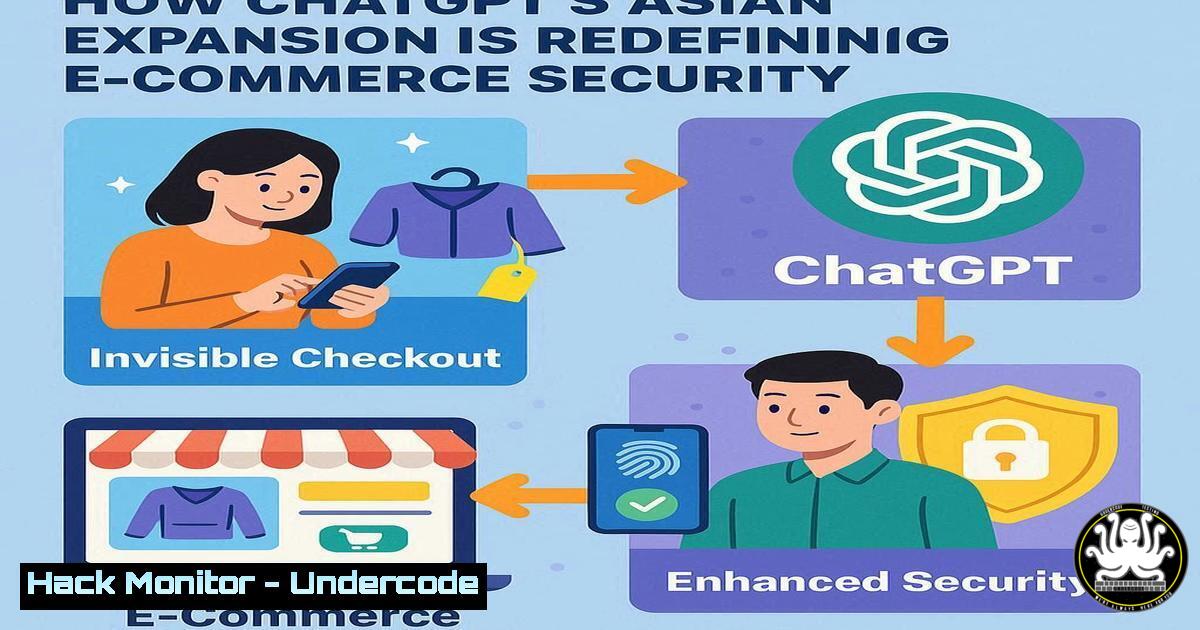
OpenAI’s strategic rollout of the low-cost ChatGPT Go plan across 16 Asian markets is not merely a user growth play; it is the foundational step towards embedding commerce directly into conversational AI. This shift from chat to checkout creates a new, complex threat landscape where API security, data integrity, and prompt injection become critical frontline defenses for businesses. The race to integrate with these AI storefronts demands a parallel race to secure them.
Learning Objectives:
- Understand the new attack vectors introduced by AI-powered commerce, including prompt injection and data poisoning.
- Learn to secure APIs and data feeds that will power AI-driven product recommendations and transactions.
- Develop mitigation strategies for the unique vulnerabilities at the intersection of large language models and payment systems.
You Should Know:
1. Securing the AI-Commerce API Gateway
APIs are the critical bridge between a company’s product data and the AI’s conversational interface. A vulnerable API can lead to data exfiltration, inventory manipulation, or fraudulent transactions.
Verified Command/Code Snippet:
 Using OWASP Amass for API endpoint discovery and reconnaissance
amass enum -active -d apidomain.com -brute -w /usr/share/wordlists/amass/subdomains.txt -o amass_output.txt

Scanning for common API vulnerabilities with Nuclei
nuclei -u https://api.target-ecommerce.com -t /nuclei-tokens/ -t /nuclei-tokens/api/ -severity medium,high,critical -o nuclei_api_scan.txt
Step-by-step guide:
First, use Amass to perform active reconnaissance and discover all associated subdomains and API endpoints of your target domain. This helps identify shadow IT or undocumented endpoints. The `-active` flag enables DNS resolution and attempts to grab TLS certificates. The output is saved for analysis. Next, feed the discovered endpoints into Nuclei, a powerful vulnerability scanner. The command targets the API URL with templates specific to API security (/nuclei-tokens/api/) and filters for medium-to-critical severity findings. Regularly running this pipeline helps ensure no vulnerable endpoints are exposed to AI platforms scraping your data.
2. Detecting and Preventing Prompt Injection Attacks
Prompt injection is a primary method for manipulating an AI’s behavior, potentially tricking a commerce-enabled ChatGPT into offering unauthorized discounts or revealing sensitive data.
Verified Command/Code Snippet:
 A basic Python filter for common prompt injection attempts
def detect_prompt_injection(user_input):
red_flags = [
"ignore previous", "system prompt", "", "disregard", "from now on",
"your new purpose", "you are now", "as a language model"
]
user_input_lower = user_input.lower()
if any(flag in user_input_lower for flag in red_flags):
 Log the attempt and return a safe, non-committal response
logging.warning(f"Potential prompt injection detected: {user_input}")
return "I'm sorry, I can't process that request. How else can I help you with your purchase today?"
return None  Proceed with normal processing
Step-by-step guide:
This Python function acts as a first-line defense. It checks the user’s input against a list of known phrases often used in prompt injection attacks. When a match is found, it logs a security warning for further analysis and returns a neutral, non-escalating message that does not acknowledge the attempted manipulation. This function should be integrated into the pre-processing stage of any user input before it is sent to the LLM for a commerce-related task.
3. Hardening Product Data Feeds Against Poisoning
AI recommendations are only as good as the data they’re trained on. An attacker who poisons your product data feed can manipulate the AI’s suggestions, damaging brand reputation or directing sales to malicious listings.
Verified Command/Code Snippet:
 Using `jq` to audit and validate a product feed JSON for anomalies
cat product_feed.json | jq '.products[] | select(.price < 1)' | jq -r '.id' > suspicious_low_price_ids.txt

Using a custom script to checksum the feed and detect unauthorized changes
sha256sum product_feed.json > current_checksum.txt
diff current_checksum.txt known_good_checksum.txt
Step-by-step guide:
The first command uses jq, a powerful JSON processor, to parse the product feed and extract the IDs of any items with a price of less than 1 unit. Such anomalies could indicate a data poisoning attempt or a sku used for testing that was never removed. The second step involves generating a SHA-256 checksum of the entire feed file. By comparing this against a previously stored “known good” checksum, you can instantly detect if the file has been tampered with, a crucial step before the feed is consumed by an AI system.
4. Implementing Zero-Trust for AI-Calling Microservices
The backend services that handle inventory, pricing, and checkout must assume that the AI caller, like ChatGPT, is an untrusted network.
Verified Command/Code Snippet:
 Example Kubernetes NetworkPolicy to restrict microservice traffic (Zero-Trust)
apiVersion: networking.k8s.io/v1
kind: NetworkPolicy
metadata:
name: allow-only-from-ai-gateway
spec:
podSelector:
matchLabels:
app: pricing-service
policyTypes:
- Ingress
ingress:
- from:
- podSelector:
matchLabels:
app: ai-gateway-proxy
ports:
- protocol: TCP
port: 8080
Step-by-step guide:
This Kubernetes NetworkPolicy enforces a zero-trust model. It defines that the `pricing-service` microservice can only receive incoming traffic (Ingress) from pods labeled `app: ai-gateway-proxy` and only on port 8080. Even if another pod within the same cluster is compromised, it cannot directly access the pricing service. This limits the blast radius and ensures that all AI-originated traffic must pass through a dedicated, secured gateway where additional validation, rate limiting, and authentication can occur.
5. Monitoring for Model Theft and Data Leakage
The product data and business logic used to train specialized commerce models are valuable assets. Monitoring for abnormal data access patterns is key.
Verified Command/Code Snippet:
-- SQL query to flag anomalous data access from an AI integration
SELECT user_id, api_endpoint, COUNT() as request_count, AVG(response_size) as avg_response_size
FROM api_logs
WHERE timestamp >= NOW() - INTERVAL '1 HOUR'
AND user_agent LIKE '%ChatGPT-Integration%'
GROUP BY user_id, api_endpoint
HAVING COUNT() > 1000 OR AVG(response_size) > 1048576; -- More than 1000 requests or avg > 1MB per call
Step-by-step guide:
This analytical query is designed to run against your API access logs. It groups requests in the last hour that originate from your ChatGPT integration (identified by the User-Agent). It then flags any user or endpoint combination that exhibits anomalous behavior, such as an excessively high number of requests (>1000) or an unusually large average response size (>1MB), which could indicate an attempt to scrape your entire product catalog or extract an entire dataset through the AI interface.
6. Leveraging CSP to Thwart Client-Side Skimming
As AI chat interfaces evolve into full-blown web applications, they become targets for Magecart-style attacks that steal payment details.
Verified Command/Code Snippet:
 Content Security Policy (CSP) header for an AI-commerce chat widget
Content-Security-Policy: default-src 'self'; script-src 'self' https://trusted-cdn.openai.com; connect-src 'self' https://api.youraccount.com; frame-ancestors 'none'; form-action 'self' https://payment-processor.com;
Step-by-step guide:
This CSP header is a powerful defense for web-based chat interfaces. It instructs the browser to only execute scripts from your own domain ('self') and the specific, trusted OpenAI CDN. It restricts connections (XHR, fetch) to your own API and a specific payment processor. `frame-ancestors ‘none’` prevents clickjacking, and `form-action` restricts where forms can be submitted, blocking attempts to send payment data to a malicious server. This significantly reduces the attack surface for client-side attacks.
7. Auditing AI Permissions with IAM Policies
The cloud identity used by your AI integration should have permissions scoped with the principle of least privilege.
Verified Command/Code Snippet:
 AWS CLI command to simulate IAM policy actions for a security audit
aws iam simulate-custom-policy \
--policy-input-list file://ai-integration-policy.json \
--action-names "dynamodb:GetItem" "dynamodb:Scan" "dynamodb:PutItem" "s3:GetObject" "s3:PutObject"
Step-by-step guide:
This AWS CLI command uses the IAM policy simulator. You provide it with the JSON of the IAM policy attached to your AI integration’s role (ai-integration-policy.json) and a list of API actions you want to test. The simulator returns whether each action is allowed or denied. This is a critical step for verifying that your AI cannot perform unauthorized actions, such as writing to a database (PutItem) if it only needs read-only access (GetItem).
What Undercode Say:
- The attack surface is no longer just your website; it’s the entire data pipeline that feeds the AI, from APIs to product feeds. Securing this pipeline is now a non-negotiable cost of doing business in an AI-driven market.
- The human element remains the weakest link. Social engineering attacks will evolve to manipulate both customers and the AI models themselves, requiring a new layer of user education and behavioral monitoring.
The quiet expansion of ChatGPT Go is a strategic infrastructure deployment, not a product launch. OpenAI is building the rails for a new economy, and with it, a new class of vulnerabilities. The most significant immediate threat is not a direct assault on OpenAI’s infrastructure, but the exploitation of the thousands of unprepared businesses that will rush to integrate with it. Companies that treat their AI-facing APIs and data feeds with the same seriousness as their public-facing web servers will gain a significant early advantage. The next wave of e-commerce breaches will stem from poisoned data, manipulated prompts, and insecure integrations, making AI security the most critical investment for online retailers in the next 18 months.
Prediction:
Within two years, we will witness the first major “AI-sourced” data breach, where a compromised product data feed or a successful prompt injection attack against a commerce-integrated LLM will lead to mass fraud, manipulating AI assistants to recommend malicious or non-existent products to millions of users. This will trigger the creation of a new regulatory sub-field focused on AI-in-commerce liability and force the adoption of standardized security frameworks for AI-to-business data exchanges, mirroring the evolution of PCI DSS for payment security.
🎯Let’s Practice For Free:
IT/Security Reporter URL:
Reported By: Michael Westerweel – Hackers Feeds
Extra Hub: Undercode MoN
Basic Verification: Pass ✅


