
Listen to this Post
Introduction
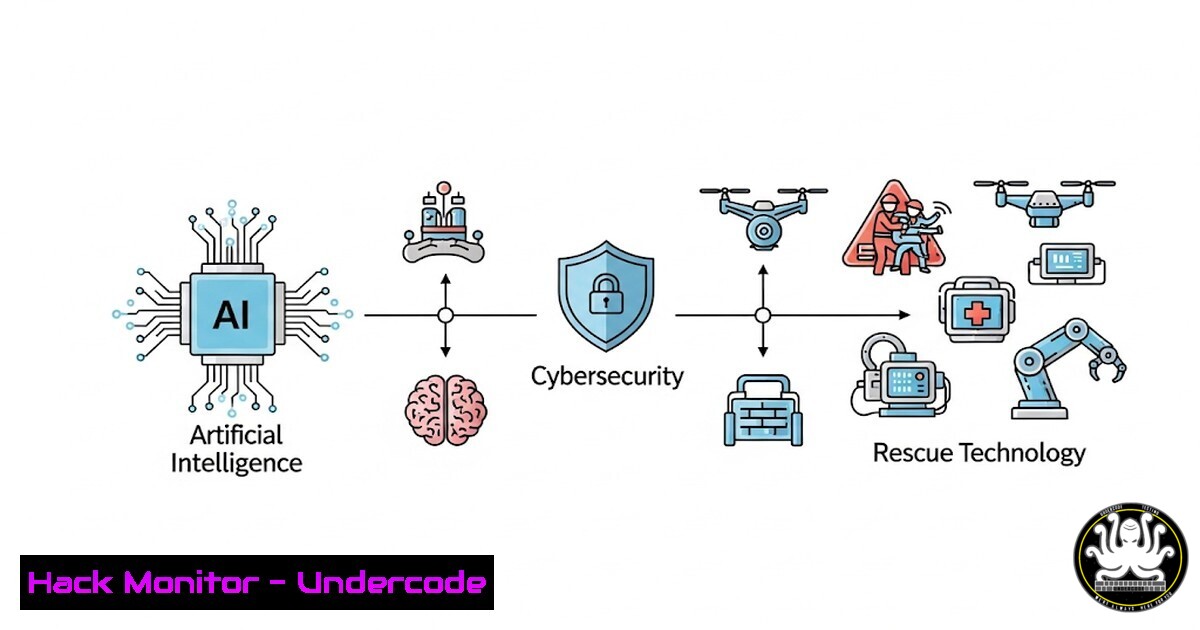
The rapid convergence of artificial intelligence (AI), cybersecurity, and emergency response technologies is revolutionizing life-saving operations. From AI-powered rescue drones to blockchain-secured emergency communications, cutting-edge tech is enhancing disaster response while introducing new cybersecurity challenges.
Learning Objectives
- Understand AI-driven rescue technologies and their cybersecurity risks.
- Learn key Linux/Windows commands for securing emergency response systems.
- Explore cloud-hardening techniques for critical infrastructure.
You Should Know
1. Securing AI-Powered Rescue Drones
AI-driven drones are increasingly used in firefighting and search-and-rescue missions. However, they are vulnerable to hijacking and data interception.
Linux Command:
sudo iptables -A INPUT -p tcp --dport 5683 -j DROP
What it does: Blocks unauthorized MQTT (Message Queuing Telemetry Transport) traffic, a common protocol used in drone communications.
Steps:
1. Open a terminal.
- Run the command to block port
5683, often exploited in drone hijacking.
3. Verify with:
sudo iptables -L
2. Hardening Emergency Response Cloud Systems
Many rescue operations rely on cloud platforms for real-time coordination. Misconfigurations can lead to data leaks.
AWS CLI Command:
aws s3api put-bucket-policy --bucket rescue-data-bucket --policy file://policy.json
What it does: Applies a strict access policy to an S3 bucket storing emergency response data.
Steps:
- Create a `policy.json` file with least-privilege access rules.
2. Execute the command to enforce the policy.
3. Verify with:
aws s3api get-bucket-policy --bucket rescue-data-bucket
- Detecting Rogue IoT Devices in Rescue Networks
Hackers can infiltrate rescue networks via vulnerable IoT sensors.
Windows PowerShell Command:
Get-NetTCPConnection | Where-Object {$_.State -eq "Established"} | Select-Object LocalAddress, RemoteAddress
What it does: Lists all active network connections to detect unauthorized devices.
Steps:
1. Open PowerShell as Administrator.
2. Run the command to monitor connected devices.
3. Investigate unknown IPs with:
Test-NetConnection -ComputerName [bash]
4. Encrypting Emergency Communications with Blockchain
Blockchain ensures tamper-proof logs for rescue coordination.
Linux Command (GPG Encryption):
gpg --encrypt --recipient [email protected] emergency_plan.txt
What it does: Encrypts critical documents before blockchain upload.
Steps:
1. Install GPG:
sudo apt-get install gnupg
2. Generate a key pair:
gpg --gen-key
3. Encrypt files before transmission.
- Mitigating AI Model Poisoning in Rescue Systems
Attackers can corrupt AI models used in disaster prediction.
Python Code Snippet (Model Validation):
from sklearn.ensemble import IsolationForest
clf = IsolationForest(contamination=0.01)
clf.fit(training_data)
anomalies = clf.predict(new_data)
What it does: Detects anomalies in AI training data to prevent poisoning.
Steps:
1. Load your dataset.
2. Train an Isolation Forest model.
3. Flag suspicious data points.
What Undercode Say
- Key Takeaway 1: AI and IoT are transforming rescue ops but require robust cybersecurity measures.
- Key Takeaway 2: Attack surfaces are expanding—zero-trust policies and encryption are non-negotiable.
Analysis:
As AI-driven rescue tech proliferates, hackers will increasingly target weak points—unsecured drone feeds, cloud leaks, and manipulated AI models. Governments and NGOs must adopt military-grade encryption, real-time intrusion detection, and blockchain audits to safeguard life-saving systems.
Prediction
By 2030, cyber-physical attacks on emergency systems will surge, prompting global regulations for AI-powered rescue tech. Proactive hardening today will prevent catastrophic breaches tomorrow.
🎯Let’s Practice For Free:
IT/Security Reporter URL:
Reported By: Christine Raibaldi – Hackers Feeds
Extra Hub: Undercode MoN
Basic Verification: Pass ✅


