Listen to this Post
Introduction:
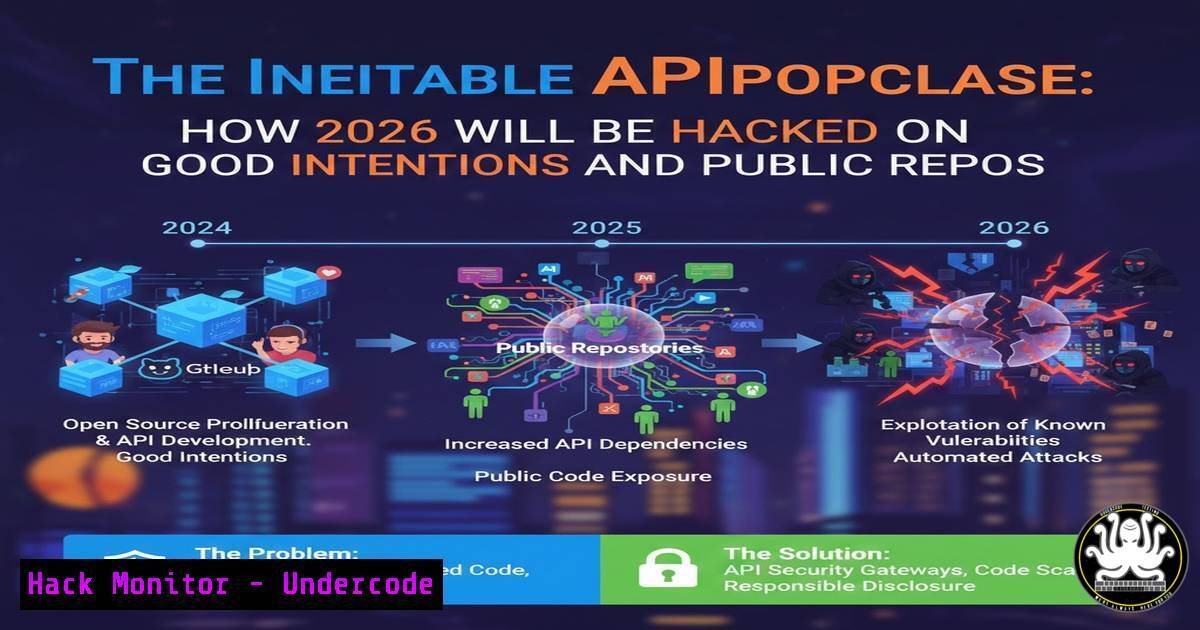
The casual push of an API key to a public repository, despite multiple warnings, is not just a developer slip-up; it is a systemic failure in modern DevSecOps practices that directly fuels the burgeoning underground economy of credential theft. As “vibe coding” culture—prioritizing rapid development and aesthetics over stringent security protocols—clashes with increasingly automated offensive security tools, 2026 is poised to witness an unprecedented wave of breaches originating from preventable human error amplified by sophisticated scraping bots.
Learning Objectives:
- Understand the technical mechanisms bots use to scour GitHub, GitLab, and public paste sites for exposed credentials.
- Learn to implement pre-commit and pre-push hooks, alongside robust secret scanning, to prevent accidental exposure.
- Master the procedures for immediate key revocation, incident response, and post-mortem analysis following an exposure.
You Should Know:
1. The Anatomy of a GitHub Scraping Bot
The moment a secret is committed and pushed, even to a private repository later made public, it enters the domain of automated hunters. These bots, often running on cheap cloud infrastructure, continuously crawl version control platforms using their public APIs and webhooks, parsing commits for patterns matching API keys, database connection strings, and passwords. They use regex patterns tailored for services like AWS (AKIA[0-9A-Z]{16}), Stripe (sk_(live|test)_[a-zA-Z0-9]{24}), and Slack (xoxb-[0-9]{12}-[0-9]{12}-[a-zA-Z0-9]{24}).
Step‑by‑step guide explaining what this does and how to use it.
Step 1: Simulate a Scraper (For Educational Purposes): Use gitleaks, an open-source SAST tool, to understand what attackers see. First, install it.
Linux/macOS: `brew install gitleaks`
Or via Docker: `docker run -v $(pwd):/path zricethezav/gitleaks:latest detect –source=”/path” -v`
Step 2: Run a Detect Scan: In a test directory or a cloned repo, run gitleaks detect --source ./ -v. This will output any secrets found, demonstrating the ease of detection.
Step 3: Automate Defense: Integrate `gitleaks` as a pre-commit hook. Create a `.pre-commit-config.yaml` file:
repos:
- repo: https://github.com/gitleaks/gitleaks
rev: v8.18.0
hooks:
- id: gitleaks
Run pre-commit install. Now, any commit triggering a leak will be blocked.
2. Implementing Impermeable Git Hooks
Pre-commit hooks are scripts that run before a commit is finalized. A robust hook should scan the staging area for secrets, check for high-entropy strings, and validate against a deny list of patterns.
Step‑by‑step guide explaining what this does and how to use it.
Step 1: Navigate to your repo’s hooks directory: `cd /path/to/your/repo/.git/hooks`
Step 2: Create the pre-commit hook: `nano pre-commit` (or use your preferred editor).
Step 3: Insert a basic but effective shell script:
!/bin/bash
 Simple pre-commit hook to search for high-risk patterns
PATTERNS="AKIA[0-9A-Z]{16}|sk_live_[0-9a-zA-Z]{24}|xoxb-[0-9]{12}-[0-9]{12}-[a-zA-Z0-9]{24}"
if git diff --cached --name-only | xargs grep -E "$PATTERNS" 2>/dev/null; then
echo "COMMIT REJECTED: Potential API key or secret detected."
echo "Remove the secret from the files or use environment variables."
exit 1
fi
exit 0
Step 4: Make it executable: chmod +x pre-commit. Now, any commit containing these patterns will be automatically rejected.
3. The Immediate Triage: Revocation & Incident Response
Exposure is not just about deletion; the secret is compromised the second it’s pushed. Immediate revocation is critical.
Step‑by‑step guide explaining what this does and how to use it.
Step 1: Locate the Exposed Key: Identify the exact key and its associated service (e.g., AWS IAM, GitHub Personal Access Token, Stripe).
Step 2: Revoke, Do Not Just Delete:
AWS: Navigate to IAM > Users > Security credentials. Deactivate the old access key and create a new one.
GitHub: Go to Settings > Developer settings > Personal access tokens. Delete the compromised token.
Generic: Use the provider’s console or API. For programmatic revocation, e.g., with the GitHub API: `curl -X DELETE -H “Authorization: token YOUR_GH_TOKEN” https://api.github.com/repos/OWNER/REPO/actions/secrets/SECRET_NAME`.
Step 3: Audit Logs: Immediately check the service’s access logs for the period between exposure and revocation for any unauthorized use.
4. Hardening with Environment Variables and Secret Managers
Hardcoded secrets are the root cause. Moving them to environment variables is step one; using a dedicated secrets manager is the enterprise-grade solution.
Step‑by‑step guide explaining what this does and how to use it.
Step 1: Use Environment Variables Locally: Create a `.env` file (ADD TO .gitignore). Load it in your app.
Python (python-dotenv): `from dotenv import load_dotenv; load_dotenv()`
Node.js: `require(‘dotenv’).config()`
Step 2: Integrate a Cloud Secret Manager (AWS Secrets Manager Example):
import boto3
import json
from botocore.exceptions import ClientError

def get_secret():
secret_name = "MyAPIKey"
region_name = "us-east-1"
session = boto3.session.Session()
client = session.client(service_name='secretsmanager', region_name=region_name)
try:
get_secret_value_response = client.get_secret_value(SecretId=secret_name)
except ClientError as e:
raise e
secret = get_secret_value_response['SecretString']
return json.loads(secret)['api_key']
Step 3: Set IAM Permissions: Ensure your application’s execution role has the minimal `secretsmanager:GetSecretValue` permission only for the required secret.
5. Post-Exposure Forensics and Attribution
After containment, you must determine if the key was used, what was accessed, and by whom. This involves log aggregation, analysis, and potentially threat intelligence.
Step‑by‑step guide explaining what this does and how to use it.
Step 1: Aggregate Logs: Use tools like AWS CloudTrail (for AWS), provider-specific audit logs, or SIEM solutions. For a compromised GitHub token, review the account’s security log.
Step 2: Search for Anomalies: Look for access from unfamiliar IP ranges, ASNs, or geolocations, unusual timestamps, or spikes in request rates. A simple CloudTrail lookup via AWS CLI:
aws cloudtrail lookup-events --lookup-attributes AttributeKey=AccessKeyId,AttributeValue=AKIAEXAMPLEKEY1234 --start-time 2024-01-01T00:00:00Z --end-time 2024-01-02T00:00:00Z
Step 3: Enrich IP Data: Use tools like `whois` or threat intelligence feeds (e.g., AbuseIPDB) to check if the calling IP is associated with known malicious activity.
What Undercode Say:
- Automation Cuts Both Ways: The same automation that enables CI/CD pipelines is weaponized by attackers to find and exploit secrets at a scale and speed impossible for humans. Your defense must be equally automated and integrated into the developer workflow, not a separate audit step.
- The “Four Warnings” Are a Process Failure: If a developer receives four warnings and ignores them, the system designed to prevent the error has failed. Effective DevSecOps embeds security that is difficult to bypass—failing the build/pipeline, not just showing a polite warning.
The “vibe coder” versus hacker narrative underscores a fundamental cultural divide. The pressure for velocity and the abstraction of infrastructure create an environment where security is a perceived drag. However, 2026’s attacks will not discriminate based on intent; they will exploit the gap between development ease and security rigor. The solution is not to slow down innovation but to bake immutable, automated guardrails into the very fabric of the development lifecycle, making the secure path the only easy path.
Prediction:
The convergence of AI-powered code generation (e.g., Copilot, CodeWhisperer) and AI-powered offensive security tools will create a perfect storm in 2026 and beyond. Attackers will use AI to write more sophisticated, context-aware scrapers that can deduce the purpose of a repo and tailor their secret-hunting patterns, while also generating plausible payloads to use with any stolen keys in real-time. Simultaneously, “vibe coders” relying on AI assistants may inadvertently generate code with embedded placeholder secrets or overly permissive configurations, vastly expanding the attack surface. The industry will respond with AI-driven secret scanning and automated remediation bots, leading to an AI-versus-AI arms race in the software supply chain.
▶️ Related Video (80% Match):
🎯Let’s Practice For Free:
IT/Security Reporter URL:
Reported By: Pallis Dude – Hackers Feeds
Extra Hub: Undercode MoN
Basic Verification: Pass ✅


