Listen to this Post
Introduction:
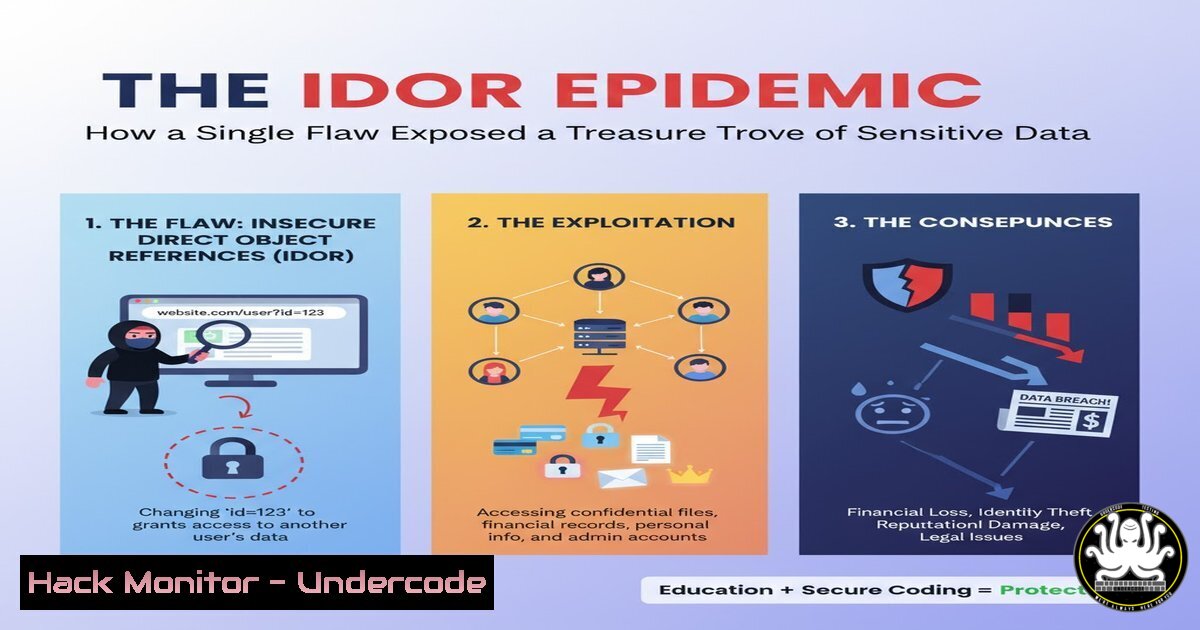
Insecure Direct Object Reference (IDOR) vulnerabilities continue to be a pervasive and critical threat to web application security. A recent discovery, where an IDOR flaw exposed student records and Aadhaar-linked files, underscores the severe consequences of improper authorization checks. This incident, coupled with recognition in a major vendor’s patch cycle, highlights the urgent need for robust access control mechanisms.
Learning Objectives:
- Understand the core mechanics of IDOR vulnerabilities and how to identify them in various endpoints.
- Learn practical command-line and tool-assisted techniques for detecting and exploiting IDOR flaws.
- Master secure coding practices and server-side controls to mitigate IDOR risks effectively.
You Should Know:
1. Manual IDOR Testing with cURL
`curl -H “Authorization: Bearer
`curl -H “Authorization: Bearer
Step-by-step guide:
cURL is an essential tool for manually testing API endpoints for IDOR vulnerabilities. The first command attempts to access user 12345’s data with a valid authentication token. The second command tests for horizontal privilege escalation by attempting to access user 67890’s data with the same token. If both requests return successful responses with sensitive data, an IDOR vulnerability exists. Always test with incremental IDs, UUIDs, and hashed identifiers across all user-accessible endpoints.
2. Automated IDOR Scanning with ffuf
`ffuf -w wordlist.txt -u https://api.example.com/v1/users/FUZZ -H “Authorization: Bearer
`ffuf -w id_list.txt -u https://api.example.com/v1/orders/FUZZ/details -H “Cookie: session=
Step-by-step guide:
Ffuf is a fast web fuzzer ideal for automating IDOR detection. The first command fuzzes the user ID parameter with values from a wordlist, filtering for HTTP 200 responses. The second command targets order endpoints using session cookies and filters by response size. Create comprehensive wordlists containing sequential numbers, common IDs, and identifiers discovered during reconnaissance. Always test during off-hours and ensure you have proper authorization.
3. Burp Suite Intruder for Authorization Bypass
Target: https://api.secureapp.com/profiles/%USERID%`Payloads: Numeric sequences 1-10000, UUID lists, encoded values
<h2 style="color: yellow;"></h2>Grep Match: “ssn”, “aadhaar”, “password”, “email”`
<h2 style="color: yellow;">
Step-by-step guide:
Configure Burp Suite Intruder to systematically test for IDOR vulnerabilities. Set the target URL with the object reference parameter marked as the payload position. Use payloads that include sequential numbers, common UUIDs, and base64-encoded identifiers. Configure grep match rules to flag responses containing sensitive keywords. Analyze response lengths and status codes—variations often indicate successful unauthorized access.
4. Browser Developer Console for Client-Side Testing
`fetch(‘/api/user/5678’, {credentials: ‘include’}).then(r => r.json()).then(console.log)`
`document.cookie=”session=eyJhbGciOiJIUzI1NiIsInR5cCI6IkpXVCJ9…”;`
`window.localStorage.setItem(‘token’, ‘malicious_token_value’);`
Step-by-step guide:
Modern browsers’ developer consoles enable quick IDOR testing by manipulating client-side requests. The first command uses fetch API to attempt accessing another user’s data while including current credentials. The second demonstrates cookie manipulation for session-based applications. The third shows token replacement in local storage. These techniques help identify when authorization is solely enforced client-side—a critical security failure.
5. Database Query Analysis for Backend Protection
`SELECT FROM user_data WHERE user_id = ? AND organization_id = ?`
`– NEVER: SELECT FROM user_data WHERE user_id = $input`
`UPDATE accounts SET balance = ? WHERE account_id = ? AND owner_id = ?`
Step-by-step guide:
Implement proper server-side authorization by ensuring all database queries include the authenticated user’s context. The first secure query retrieves data only for the specific user within their organization. The vulnerable example shows direct object reference without authorization checks. Always use parameterized queries to prevent SQL injection and include session-based identifiers in WHERE clauses to enforce access control.
6. API Gateway Security Configuration
`aws apigateway put-method –rest-api-id abc123 –resource-id xyz789 –http-method GET –authorization-type CUSTOM –authorizer-id auth123`
`nginx.conf: location /api/users/ { auth_request /auth-verify; }`
`location = /auth-verify { internal; proxy_pass http://auth-service:8080/validate; }`
Step-by-step guide:
Configure API gateways to enforce authorization before requests reach application logic. The AWS CLI command sets up a custom authorizer for API Gateway. The Nginx configuration demonstrates using the auth_request module to validate every API call through an authentication service. This ensures consistent authorization enforcement across all endpoints, preventing IDOR through centralized security controls.
7. Log Analysis for IDOR Detection
`grep -E ” 200 ” access.log | grep -E “(user|profile|account)/[0-9]+” | awk ‘{print $7}’ | sort | uniq -c | sort -nr`
`cat application.log | jq ‘. | select(.status == 200 and .userAgent != “SecurityScanner”) | .endpoint’ | grep -E “users/\d+”`
Step-by-step guide:
Proactively detect potential IDOR attacks through log analysis. The first command parses web server logs to find successful accesses to object endpoints, counting requests per resource. The second uses jq to parse JSON application logs, filtering successful accesses to user endpoints while excluding known security scanners. Monitor for patterns where single users access numerous sequential object IDs—a strong indicator of IDOR exploitation.
What Undercode Say:
- IDOR vulnerabilities represent a fundamental failure in authorization architecture, not merely a coding error.
- The exposure of Aadhaar-linked files demonstrates how IDOR can violate privacy regulations and lead to severe compliance penalties.
- Oracle’s inclusion of similar vulnerabilities in their Critical Patch Update confirms IDOR as an enterprise-scale threat affecting major platforms.
The recent case of student record exposure through IDOR reveals systemic issues in how organizations implement access control. While authentication verifies identity, authorization determines access rights—and this crucial distinction is often overlooked during development. The fact that such vulnerabilities continue to appear in critical systems, including those handling government-issued identifiers like Aadhaar, indicates insufficient security testing methodologies. Organizations must shift from perimeter-based security models to implementing defense in depth with mandatory server-side authorization checks for every object access request.
Prediction:
The sophistication and impact of IDOR attacks will escalate dramatically as more sensitive data migrates to digital platforms. Within two years, we predict major regulatory actions targeting organizations that fail to implement proper access controls, with fines potentially reaching GDPR-scale percentages of global revenue. The integration of AI-assisted penetration testing tools will make IDOR detection more accessible to attackers, while simultaneously enabling defenders to identify vulnerabilities pre-production. Organizations that prioritize authorization architecture and implement zero-trust principles for object access will significantly reduce their attack surface against this persistent threat.
🎯Let’s Practice For Free:
IT/Security Reporter URL:
Reported By: Itcsafsar Tip – Hackers Feeds
Extra Hub: Undercode MoN
Basic Verification: Pass ✅


