Listen to this Post
Introduction:
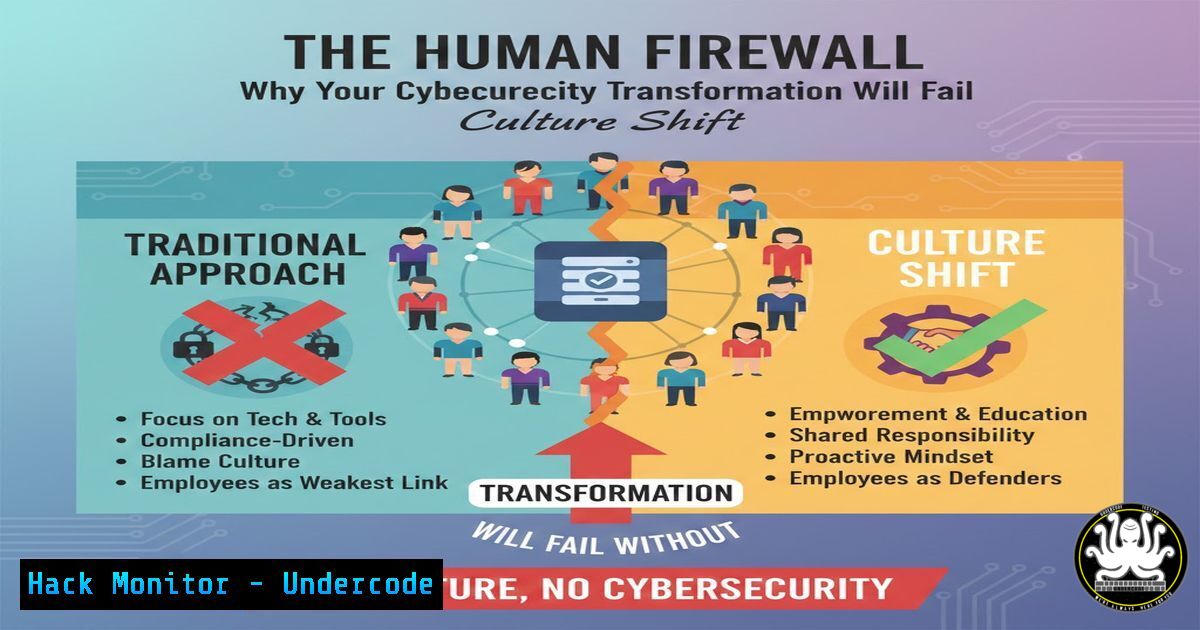
The most sophisticated SIEM, the most robust zero-trust architecture, and the latest AI-driven threat intelligence platform are rendered useless by a single employee clicking a malicious link. In cybersecurity, digital transformation isn’t just about deploying new tools; it’s about orchestrating a fundamental cultural shift where every employee becomes a proactive defender. This article dissects the critical intersection of organizational culture and cybersecurity efficacy, providing a technical blueprint for building a resilient human-centric security posture.
Learning Objectives:
- Understand why psychological safety and cross-departmental collaboration are non-negotiable for effective threat detection and response.
- Learn to implement technical controls and processes that enforce and encourage a security-first mindset.
- Develop strategies to move from a punitive, compliance-driven security culture to a data-informed, agile security operation.
You Should Know:
- Building Psychological Safety: From Blame to Just Culture
A culture of blame ensures that security incidents are hidden, not reported. A “Just Culture” distinguishes between human error, at-risk behavior, and reckless actions, focusing on systemic fixes rather than individual punishment. This is the bedrock of rapid incident response.
Step‑by‑step guide:
- Implement Anonymous Reporting Channels: Deploy a system like a secured web form or dedicated email (e.g.,
[email protected]) protected with strong access logs. On Linux, you can set up a simple monitored alias:Edit /etc/aliases security-incident: root,[email protected] Run newaliases
- Conduct Blameless Post-Mortems: After any security event, gather IT, SecOps, and the involved users. Use the Five Whys technique. Frame questions around process: “Why was the phishing email convincing?” not “Why did you click it?”
- Reward Reporting: Publicly acknowledge (anonymously if preferred) employees who report suspicious activity or potential vulnerabilities. Integrate this into your SIEM/SOAR to tag and track internally reported events.
-
Breaking Silos: Integrating IT, SecOps, and Business Units
When IT provisions access, SecOps monitors for threats, and business units demand speed, vulnerabilities emerge in the gaps. DevSecOps and cross-functional workflows are the antidote.
Step‑by‑step guide:
- Automate Security into DevOps Pipelines: Integrate SAST/DAST tools directly into your CI/CD pipeline (e.g., Jenkins, GitLab CI). A simple GitLab CI job might look like:
security_scan:
stage: test
image: docker:latest
script:</li>
</ol>

<p>- docker run --rm -v "$(pwd):/src" owasp/zap2docker-stable zap-baseline.py -t https://your-test-app.com -r report.html
artifacts:
paths:
- report.html
2. Establish a Unified Ticketing & ChatOps System: Use a platform like Jira Service Management integrated with Slack/Microsoft Teams. Create automated alerts that post security incidents to a dedicated incident-response channel, tagging both infrastructure and application owners.
3. Conduct Tabletop Exercises with Mixed Teams: Run simulated breach scenarios (e.g., ransomware, data exfiltration) involving members from Help Desk, Legal, PR, and engineering to practice coordinated response.- Moving from Gut Feeling to Data-Informed Security Decisions
Culture must prioritize data over hierarchy. This means democratizing access to security metrics and baselining “normal” behavior to spot anomalies.
Step‑by‑step guide:
- Deploy a Centralized Logging Infrastructure: Aggregate logs from endpoints, network devices, and cloud services using the ELK Stack (Elasticsearch, Logstash, Kibana) or a SIEM. A basic Logstash config to parse Windows Event Logs (Security) might start as:
input { beats { port => 5044 } } filter { if [bash] == "windows-security" { grok { match => { "message" => "%{TIMESTAMP_ISO8601:timestamp} %{WORD:event_id} ..." } } } } output { elasticsearch { hosts => ["localhost:9200"] } } - Create Executive & Team Dashboards: Build Kibana or Grafana dashboards that display key metrics: mean time to detect (MTTD), mean time to respond (MTTR), phishing test failure rates, and patch compliance percentages. Share these broadly.
- Implement User and Entity Behavior Analytics (UEBA): Use tools to baseline normal login times, data access patterns, and network traffic. Alert on deviations, such as a user account accessing servers at 3 AM from a foreign country.
-
Fixing Processes Before Buying Tools: The Minimum Viable Security Product
Resist buying a new “silver bullet” appliance. Often, maximizing existing tooling and processes yields greater ROI and less friction.
Step‑by‑step guide:
- Conduct a Capability Gap Analysis: For each major tool (Firewall, EDR, IAM), document its fully licensed features vs. features in use. Example: Are you using only signature-based AV when your EDR has script control and ransomware rollback?
- Harden Existing Configurations: Apply Center for Internet Security (CIS) Benchmarks. On a Windows Server, use the `Microsoft Security Compliance Toolkit` to apply CIS-recommended Group Policy Objects (GPOs). On Linux (Ubuntu), use tools like
lynis:sudo lynis audit system
- Automate Basic Hygiene: Use scripting to enforce policies. A PowerShell script to verify local admin accounts weekly:
Get local administrators
$computer = $env:COMPUTERNAME
$admins = Get-LocalGroupMember -Group "Administrators" | Select-Object Name
$admins | Export-Csv -Path "C:\Audits\$computer-Admins-$(Get-Date -Format 'yyyyMMdd').csv" -NoTypeInformation
5. Continuous Security Training: Beyond Annual Compliance Videos
Transform training from a checkbox to an engaging, continuous process that uses real-world simulations and just-in-time learning.
Step‑by‑step guide:
- Deploy a Phishing Simulation Platform: Use open-source tools like `Gophish` or commercial platforms to run regular, targeted campaigns. Segment users by department and tailor lures (e.g., fake GitHub alerts for developers).
- Integrate “Just-in-Time” Training: Use a web proxy or email gateway to inject brief training modules when a user encounters a simulated threat or visits a high-risk category. For example, a pop-up explaining QR code risks when scanning a test code.
- Create Internal “Capture The Flag” (CTF) Events: Set up a vulnerable lab environment (using DVWA or a custom Azure/AWS sandbox) and encourage teams to compete in finding and responsibly reporting vulnerabilities. This builds positive engagement.
What Undercode Say:
- Culture Eats Configuration for Breakfast: The most perfectly configured firewall rule set is worthless if an admin bypasses it for “convenience.” Sustainable security requires aligning human incentives with technical controls.
- Data is the Universal Translator: When a security mandate is backed by data—”80% of our incidents stem from unpatched Java,”—it transcends departmental politics and drives unified action based on objective risk.
The central failure of most cybersecurity transformations is treating them as an IT project rather than a human evolution project. Tools are force multipliers, but they amplify underlying cultural currents. A culture of fear and silos will only use new tools to create more sophisticated blame reports. A culture of collaboration, psychological safety, and data-driven inquiry will leverage even basic tools to achieve formidable defense-in-depth. The command line and the boardroom must speak the same language: the language of shared risk and collective resilience.
Prediction:
The next major evolution in cybersecurity will not be a new technology but the formalization of “Cultural Security” as a critical control framework. We will see the rise of Chief Culture Officers working in tandem with CISOs, and security audits will increasingly measure cultural metrics—psychological safety scores, cross-departmental drill participation rates, and mean time to employee-reported incident. Organizations that master this human-technology symbiosis will see their threat detection and response times improve exponentially, turning their workforce from the greatest vulnerability into their most unbreachable human firewall.
▶️ Related Video (82% Match):
🎯Let’s Practice For Free:
IT/Security Reporter URL:
Reported By: Digital Transformation – Hackers Feeds
Extra Hub: Undercode MoN
Basic Verification: Pass ✅🔐JOIN OUR CYBER WORLD [ CVE News • HackMonitor • UndercodeNews ]
📢 Follow UndercodeTesting & Stay Tuned:
- Moving from Gut Feeling to Data-Informed Security Decisions


