Listen to this Post
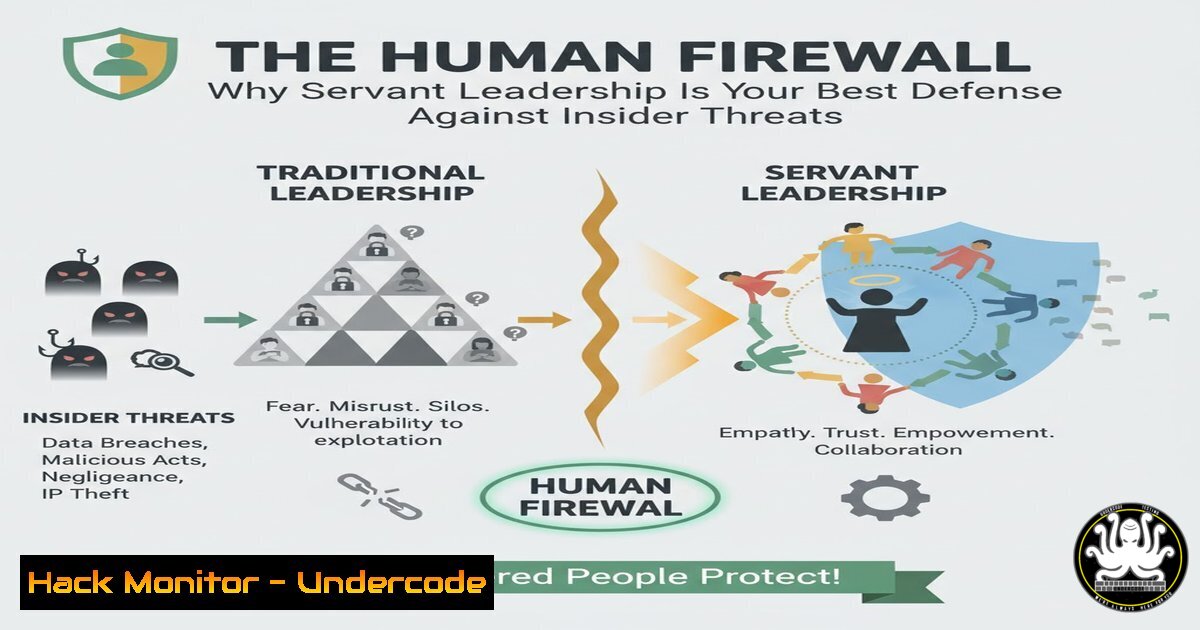
Introduction:
In the cybersecurity domain, we often focus on technological defenses, from next-generation firewalls to AI-powered threat detection. However, the most critical vulnerability and potent asset in any organization remains its human element. The principles of leadership directly influence security culture, employee vigilance, and resilience against social engineering and insider threats, making leadership style a foundational component of any security program.
Learning Objectives:
- Understand the correlation between toxic leadership styles and increased cybersecurity risk.
- Learn how servant leadership principles foster a robust “Human Firewall” and a proactive security culture.
- Implement practical strategies to build psychological safety and decentralized decision-making for faster incident response.
You Should Know:
1. Toxic Leadership Creates Security Blind Spots
A command-and-control leadership model, where blame flows downward and information is hoarded, creates an environment of fear. In such climates, employees are less likely to report security mistakes, such as accidentally clicking a phishing link, for fear of reprisal. This creates critical blind spots for the Security Operations Center (SOC), allowing threats to dwell in the system undetected.
Step-by-step guide:
Problem: An employee receives a phishing email, hovers over the link, and even enters credentials before realizing the mistake. Fearful of a punitive response from a toxic manager, they clear their browser history and say nothing.
Solution: Cultivate a “Just Culture.” This involves:
- Leadership Communication: Executives and managers must explicitly state that reporting security mistakes is encouraged and will not be punished. Frame it as a learning opportunity.
- Simplify Reporting: Implement an easy, anonymous (if possible) reporting mechanism, like a dedicated “Report a Phish” button in the email client or a specific Slack channel.
- Public Positive Reinforcement: When an employee reports a potential threat, acknowledge it publicly (without shaming the individual if it was a mistake). For example: “Thanks to
 for quickly flagging a suspicious email, our team was able to block the malicious domain within minutes."</li>
</ol>

<h2 style="color: yellow;">2. Servant Leadership Empowers the Human Firewall</h2>

Servant leaders decentralize power and invest in their team's growth. In a security context, this means moving beyond the security team being the sole "gatekeeper" and empowering every employee with the knowledge, tools, and authority to act as a first line of defense.

<h2 style="color: yellow;">Step-by-step guide:</h2>

Problem: A developer is pressured by a toxic leader to meet an aggressive deadline and bypasses security code review checks, deploying vulnerable code.
 Solution: Embed security into the development lifecycle (DevSecOps) and empower teams.
1. Implement and Enforce Git Hooks: Use pre-commit and pre-push hooks to run automated security scans.

<h2 style="color: yellow;"> Example Command (using `gitleaks`):</h2>

[bash]
 Install gitleaks
 Create a pre-commit hook .git/hooks/pre-commit
!/bin/bash
gitleaks detect --no-banner --source . --verbose
if [ $? -eq 1 ]; then
echo "❌ Gitleaks found secrets. Commit blocked."
exit 1
fi
2. Grant Selective Permissions: Instead of locking down everything, use the principle of least privilege to give teams the access they need to be proactive. For example, allow developers to view security scan results for their own projects directly.
3. Building Psychological Safety for Proactive Threat Hunting
Psychological safety—the belief that one won’t be punished for speaking up with ideas, questions, or concerns—is a hallmark of servant-led teams. This is the bedrock of a proactive security posture where employees feel comfortable challenging processes and reporting anomalies without fear.
Step-by-step guide:
Problem: A junior system administrator notices unusual network traffic from a senior executive’s account but assumes it’s authorized and says nothing.
Solution: Run tabletop exercises that reward questioning authority.
1. Scenario: During a tabletop exercise, present a scenario where the CEO’s account is behaving suspiciously.
2. Role-Play: Have team members practice the chain of communication. The goal is not just technical response, but practicing how to respectfully escalate a concern about a high-level individual.
3. Debrief: Focus the discussion on the communication process. Ask: “Was it easy to voice your concern? What would make it easier?”4. From Ego to DevOps: Fostering Cross-Team Collaboration
Toxic, ego-driven leadership creates silos where the security team is seen as the “Department of No.” Servant leadership breaks down these walls, fostering collaboration between security, development, and operations (DevOps) to achieve shared business objectives securely.
Step-by-step guide:
Problem: Security mandates are ignored by development teams because they are delivered as inflexible edicts, creating friction and delay.
Solution: Implement shared ownership models.
- Create a “Security Champions” Program: Identify developers in each team who receive extra security training and act as a liaison between the security team and their peers.
- Use Collaborative Tools: Implement a platform like Jira Service Management for security requests. This creates transparency and a formalized, collaborative workflow instead of ad-hoc, confrontational emails.
- Joint Metrics: Measure success with shared KPIs. Instead of just “number of vulnerabilities found,” track “mean time to remediate,” a metric that requires both security (to find) and development (to fix) to succeed.
5. Command & Control vs. Agile Incident Response
A rigid, top-down leadership structure is too slow for modern cyber incidents. Servant leaders empower frontline teams to make critical decisions during a crisis, adhering to pre-established runbooks, without waiting for approval from a chain of command.
Step-by-step guide:
Problem: A ransomware attack is detected. The SOC analyst must wait for a manager, who must wait for a director, to get approval to isolate a critical server, allowing the ransomware to spread.
Solution: Develop and practice pre-authorized response playbooks.
- Create Playbooks: Document step-by-step procedures for common incidents (e.g., phishing, ransomware, data exfiltration).
- Pre-Authorize Actions: Within these playbooks, specify which actions are pre-authorized. For example: “Upon confirmation of a ransomware signature, the on-call analyst is authorized to immediately run the following command to isolate the affected host.”
Example Command (Windows):
 Isolate a compromised machine by disabling its network adapter
Disable-NetAdapter -Name "Ethernet0" -Confirm:$false
Example Command (Linux):
 Block all incoming/outgoing traffic for a suspect machine
iptables -A INPUT -s <compromised_ip> -j DROP
iptables -A OUTPUT -d <compromised_ip> -j DROP
3. Drill Regularly: Conduct regular fire drills to ensure team members are confident in executing these playbooks without direct oversight.
What Undercode Say:
- Leadership is a configuration setting for your organization’s security posture. A toxic culture introduces exploitable vulnerabilities, while a servant-led culture patches them.
- The most sophisticated SIEM and EDR tools are rendered ineffective in an environment where employees are afraid to report the alerts they trigger.
The analysis is clear: technical controls are necessary but insufficient. A leader who hoards power and rules by fear actively undermines security investments by creating a culture of silence and risk aversion. Conversely, a leader who shares power, delegates authority, and fosters psychological safety builds a resilient organization where the human element becomes a multiplicative force for defense. The choice of leadership style is, therefore, a direct determinant of cyber risk.
Prediction:
The future of cybersecurity will increasingly focus on behavioral analytics and cultural metrics. Just as we now scan for technical vulnerabilities, we will see the rise of organizational risk assessments that measure team psychological safety, communication flow, and leadership effectiveness. AI will be used not just to detect technical anomalies, but to model and predict team behaviors that indicate high risk for insider threat or poor incident response, forcing a long-overdue conversation about the direct link between leadership and security resilience.
🎯Let’s Practice For Free:
IT/Security Reporter URL:
Reported By: Billgtingle Leaders – Hackers Feeds
Extra Hub: Undercode MoN
Basic Verification: Pass ✅🔐JOIN OUR CYBER WORLD [ CVE News • HackMonitor • UndercodeNews ]
📢 Follow UndercodeTesting & Stay Tuned:


