Listen to this Post
Introduction:
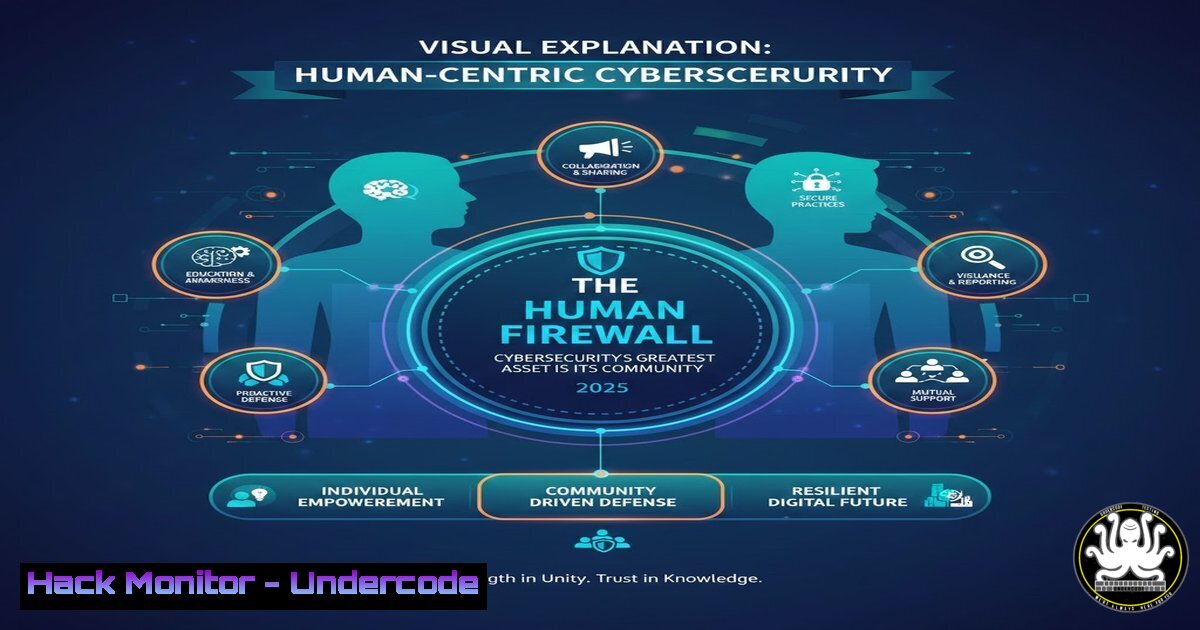
The cybersecurity landscape in 2025 is defined by advanced AI-powered threats, sophisticated cloud attacks, and an ever-expanding digital attack surface. Yet, as highlighted by a recent industry reflection from Security Engineer Laurent M., the core defense mechanism remains fundamentally human. This article explores the critical synergy between technical hardening and the collaborative, knowledge-sharing community that forms the ultimate “Human Firewall.”
Learning Objectives:
- Understand the role of professional networks in accelerating threat intelligence sharing and mitigation.
- Learn key technical commands and practices for secure collaboration and system hardening.
- Recognize how community-driven defense complements and enhances automated security tools.
You Should Know:
1. Building Your Threat Intelligence Network
The post underscores a network of professionals from various specializations—cloud security, AI, forensics, offensive security. This mirrors a practical Threat Intelligence Platform (TIP). Sharing Indicators of Compromise (IoCs) within trusted circles can drastically reduce mean time to respond (MTTR).
Step‑by‑step guide:
Join and Contribute: Engage on platforms like LinkedIn, professional Slack/Discord channels (e.g., OWASP, SANS ISC), and attend local meetups or BSides conferences.
Leverage Open Source Intelligence (OSINT): Use tools to gather and share tactical intelligence.
`Linux:` Use `whois
Automate Feeds: Contribute to and pull from community blocklists. A simple cron job to update a host-based blocklist: 0 curl -s https://community-blocklist.example.com/ips.txt >> /etc/hosts.deny.
Share Securely: Always share hashes, IPs, and malware samples within trusted groups using encrypted channels (e.g., Signal, PGP-encrypted email). Never share sensitive data in public forums.
2. Cross-Platform Hardening for Collaborative Environments
Securing the diverse endpoints (Windows, Linux, cloud workloads) used by a distributed community is paramount. Adopting a unified hardening baseline is key.
Step‑by‑step guide:
Linux Server Hardening:
Audit SSH configuration: `sudo grep -i PermitRootLogin /etc/ssh/sshd_config` (Should be no).
Enforce strong password policies: `sudo nano /etc/security/pwquality.conf` and set minlen = 12, minclass = 3.
Check for unnecessary services: sudo systemctl list-units --type=service --state=running.
Windows Workstation Hardening (PowerShell Admin):
Enable Windows Defender Application Control (WDAC): powershell Set-MpPreference -EnableControlledFolderAccess Enabled.
Disable SMBv1: `Disable-WindowsOptionalFeature -Online -FeatureName SMB1Protocol`.
Enforce PowerShell logging: Set-ItemProperty -Path "HKLM:\SOFTWARE\Policies\Microsoft\Windows\PowerShell\ScriptBlockLogging" -Name "EnableScriptBlockLogging" -Value 1.
Cloud (Azure/AWS) Baseline:
Azure CLI: Enable MFA for all users: az role assignment create --assignee <user> --role "Security Reader".
AWS CLI: Enforce S3 bucket encryption: aws s3api put-bucket-encryption --bucket my-bucket --server-side-encryption-configuration '{"Rules": [{"ApplyServerSideEncryptionByDefault": {"SSEAlgorithm": "AES256"}}]}'.
3. API Security in a Connected Ecosystem
The community’s tools and services interact via APIs, making them a prime target. Securing these interfaces is non-negotiable.
Step‑by‑step guide:
Implement Authentication & Rate Limiting: Use API keys, OAuth 2.0, or JWT tokens. For a simple Node.js/Express API, use the `express-rate-limit` middleware.
const rateLimit = require('express-rate-limit');
const limiter = rateLimit({ windowMs: 15  60  1000, max: 100 });
app.use('/api/', limiter);
Validate and Sanitize Input: Never trust API payloads. Use strict schema validation (e.g., with `joi` or `yup` libraries).
Scan Your APIs: Use tools like `OWASP ZAP` to perform automated security tests: `zap-cli quick-scan –self-contained –start-options ‘-config api.disablekey=true’ -s all http://localhost:3000/api/`.
4. Mitigating AI-Powered Social Engineering
AI is used to craft hyper-personalized phishing lures. Defense requires both technical controls and community awareness.
Step‑by‑step guide:
Deploy Advanced Email Security: Configure DMARC, DKIM, and SPF records for your domain. A sample DMARC DNS record: v=DMARC1; p=quarantine; pct=100; rua=mailto:[email protected].
Conduct Realistic Phishing Simulations: Use platforms like GoPhish to run internal campaigns. Train staff to report phishing via a dedicated button in Outlook/Gmail.
Verify Unusual Requests: Establish a verbal or out-of-band (OOB) verification protocol (e.g., a quick Signal call) for any unusual financial or data transfer request, even if it appears to come from a known contact.
5. Incident Response: Mobilizing Your Community
When a breach occurs, a pre-established community response can be the difference between containment and catastrophe.
Step‑by‑step guide:
Have a Communication Plan: Use encrypted channels (e.g., Keybase, Signal groups) for your core IR team.
Isolate the System:
Linux: `sudo iptables -A INPUT -s
Windows: `PS> Stop-Computer -Force` (hard shutdown if necessary).
Preserve Evidence: Create a forensic disk image using `dd` on Linux: sudo dd if=/dev/sda of=/mnt/secure/evidence.img bs=4M status=progress.
Share Tactics, Techniques, and Procedures (TTPs): Anonymize and share the attacker’s methods with your trusted network to help others defend.
What Undercode Say:
- The Collective Immune System: The cybersecurity community functions as a distributed immune system. An attack on one node leads to the rapid production and dissemination of “antibodies” (patches, IoCs, mitigation strategies) across the entire network, raising collective resilience.
- Soft Skills are Core Skills: Technical prowess alone is insufficient. The post highlights “franc-parler” (candor) and “valeurs humaines” (human values)—trust, transparency, and mentorship—as the glue that enables effective technical collaboration and rapid, honest post-mortems.
Analysis: Laurent M.’s post is not merely a thank-you note; it’s a blueprint for modern cyber defense. In an era where AI can generate malware and automate attacks at scale, the human capacity for trust, nuanced judgment, and altruistic knowledge-sharing becomes the ultimate asymmetric advantage. The listed individuals represent nodes in a robust, resilient graph. Their shared expertise in cloud (Azure MVP), AI security, forensics, and offensive operations creates a defense-in-depth that no single enterprise can replicate internally. This community model directly counters the isolating effects of sophisticated attacks, ensuring that when a novel threat emerges, someone, somewhere in the network, likely has a nascent solution. The future of security is not just in smarter SIEMs, but in stronger, more connected communities.
Prediction:
The “community-as-a-security-layer” model will formalize into commercial and open-source “Security Collaboration Platforms” by 2027. These platforms will go beyond threat intelligence feeds, integrating secure communication, cross-company incident response war rooms, and verified reputation scores for contributors. We will see the rise of the “Collective Security Responsibility” paradigm, where industries collaboratively pre-harden against shared threat actors, making the cost of attack prohibitively high. The most secure organizations in 2030 will not be those with the biggest budget, but those with the most connected and respected experts in their professional graph.
▶️ Related Video (84% Match):
🎯Let’s Practice For Free:
IT/Security Reporter URL:
Reported By: Laurent Minne – Hackers Feeds
Extra Hub: Undercode MoN
Basic Verification: Pass ✅


