
Listen to this Post
Introduction:
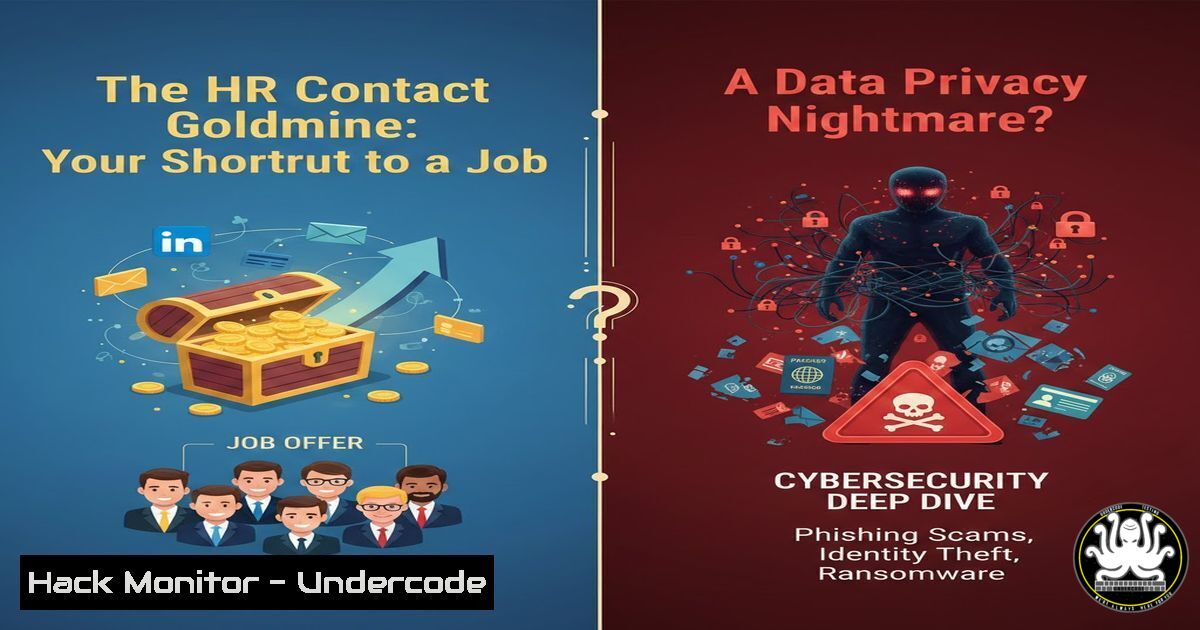
A viral LinkedIn post offering a “Database of 2000+ HR Contacts” promises a competitive edge for job seekers. However, from a cybersecurity and IT governance perspective, this database represents a significant risk vector, potentially violating data protection laws, enabling targeted phishing campaigns, and compromising corporate security. This article dissects the technical and ethical implications of using such unverified contact lists.
Learning Objectives:
- Understand the data privacy regulations (GDPR, CCPA) violated by unsolicited contact databases.
- Learn how to perform safe, ethical Open-Source Intelligence (OSINT) for job hunting.
- Implement technical safeguards to protect personal and corporate data during a job search.
- Recognize the hallmarks of phishing and social engineering attacks that stem from data leaks.
- Configure secure communication channels for professional outreach.
You Should Know:
- The Legal Quagmire: GDPR, CCPA, and Non-Compliant Data Scraping
The compilation of 2000+ personal email addresses and names likely breaches data protection laws. GDPR ( 6) and CCPA require lawful basis for processing personal data, such as explicit consent. This database almost certainly lacks it.
Step-by-Step Guide to Verify Data Handling Compliance:
- Identify the Data Source: If you receive such a list, ask the provider for their data provenance and consent records. Legitimate sources can provide this.
- Check for Opt-Out Mechanisms: Compliance requires easy opt-out. Look for unsubscribe links or privacy notices from the original data collector—this list has none.
- Technical Command – Check Domain Registration (Linux): Investigate where such lists are often hosted.
whois suspiciousdomain.com
Look for recently created domains, privacy-protected registrant info, or links to known spam operations.
-
Ethical OSINT: The Secure Way to Build Professional Contact Lists
Instead of using dubious lists, use ethical OSINT techniques to find hiring managers.Step-by-Step Guide to Ethical LinkedIn & GitHub Recon:
- Leverage Advanced Search Operators: On LinkedIn, use operators like `”hiring manager” AND “Python” AND “Berlin”` in the search bar.
- Use Official API (With Limits): If technically inclined, use LinkedIn’s official API for limited, compliant data gathering. Never use unauthorized scraping tools.
- Technical Command – GitHub Recon (Linux/Mac): For tech roles, find hiring managers via their technical contributions.
Use GitHub's official CLI or API. Example using `curl` for API (with token):
curl -H "Authorization: token YOUR_GITHUB_TOKEN" \
https://api.github.com/users/username/events
- Cross-Reference on Company Websites: Always verify the person’s role and email format on the official company `about/team` page.
3. Inbox Zero-Day: How Attackers Weaponize Contact Lists
This database is a prime source for spear-phishing. Attackers can use the HR contact names and email formats to craft believable attacks against other employees.
Step-by-Step Guide to Simulate & Mitigate a Spear-Phishing Attack:
1. Attack Simulation – Crafting a Credential Phish: An attacker uses the list to guess email formats ([email protected]).
2. They send a fake “Benefits Portal Update” email from a spoofed domain like hr-company-update.com.
3. Technical Command – Analyze Email Headers (Manual Investigation): If you receive a suspicious email, examine its headers.
 For a saved .eml file on Linux:
grep -E "(Received:|From:|Return-Path:|Message-ID:)" suspicious_email.eml
4. Mitigation – Use DMARC, DKIM, and SPF: As an IT admin, ensure your domain has these records set in DNS to prevent spoofing.
 Example DNS check for SPF record:
dig +short TXT example.com | grep spf
- Securing Your Outreach: PGP, Secure Forms, and Alternative Contact Methods
Cold emailing from a purchased list is spam. Secure, permission-based outreach is key.Step-by-Step Guide to Implementing PGP for Secure Communication:
- Generate a PGP Key Pair (Windows via Gpg4win/Kleopatra): Create your public/private key to encrypt emails.
- Upload Public Key to Keyservers or Your Website: Allow contacts to encrypt messages to you.
3. Encrypt an Outbound Message:
 Linux: Using GnuPG to encrypt a file for a recipient
echo "Your confidential message" | gpg --encrypt --armor --recipient [email protected] > message.asc
4. Alternative: Use Secure Contact Forms. Encourage contacts to use the encrypted form on your personal website, which you control.
- Corporate Defense: Hardening HR Systems Against Data Extraction
Companies must protect their employee directories from being scraped to create such lists.
Step-by-Step Guide for Basic Anti-Scraping Measures:
- Implement Rate Limiting on Web Endpoints: Use web server rules to block excessive requests.
Example Nginx rate limiting rule in a server block limit_req_zone $binary_remote_addr zone=one:10m rate=1r/s; location /company-directory { limit_req zone=one burst=5; } - Use CAPTCHAs on Contact Pages: Implement hCaptcha or reCAPTCHA v3 on pages listing team members.
- Monitor for Data Dumps: Set up Google Alerts or use monitoring tools like `HaveIBeenPwned` for domains to catch if your company’s contact list appears online.
- Employee Training: Conduct regular phishing simulations using platforms like GoPhish to train staff, especially HR, to recognize sophisticated, targeted scams.
What Undercode Say:
- Key Takeaway 1: The commodification of personal contact data, even with good intent, creates systemic risk. It bypasses legal frameworks designed for consent and transparency, eroding digital trust and providing attackers with high-quality fuel for social engineering.
- Key Takeaway 2: The technical skills gap is evident. The professionals commenting “LIST” are often in IT/Development fields but may not have applied cybersecurity principles to their job-search tactics. This highlights the critical need for security awareness to extend beyond corporate IT into personal and professional development activities.
Analysis:
The post reveals a dangerous normalization of data scraping and privacy infringement in the pursuit of career advancement. The individuals most eager to obtain this list—aspiring developers, data scientists, and sysadmins—are future stewards of digital systems. Their willingness to engage with potentially non-compliant data sets underscores a broader educational gap. Cybersecurity is not just about defending systems; it’s about cultivating an ethical mindset toward data itself. The tools and techniques for ethical OSINT exist but are overshadowed by the lure of a “free,” prepackaged solution. This incident is a microcosm of a larger issue: the tension between convenience and security, where convenience repeatedly wins until a major breach occurs. Responsible professionals must champion ethical data practices from the very beginning of their careers.
Prediction:
In the next 1-2 years, we will see a rise in targeted “job offer” and “interview” phishing campaigns with remarkably high credibility, directly sourced from leaked and traded professional contact databases. This will force platforms like LinkedIn to deploy more aggressive anti-scraping AI and promote their secure, official outreach channels (e.g., InMail). Furthermore, regulatory bodies may begin levying fines not only against the compilers of such lists but also against repeat individual users for willful non-compliance, making digital literacy in data privacy a non-negotiable career skill. AI will play a dual role: both in generating more convincing phishing lures from this data and in developing better detection algorithms to identify and flag data dumps circulating on social media and dark web forums.
▶️ Related Video (72% Match):
🎯Let’s Practice For Free:
IT/Security Reporter URL:
Reported By: Harsadash Hr – Hackers Feeds
Extra Hub: Undercode MoN
Basic Verification: Pass ✅


