Listen to this Post
Introduction:
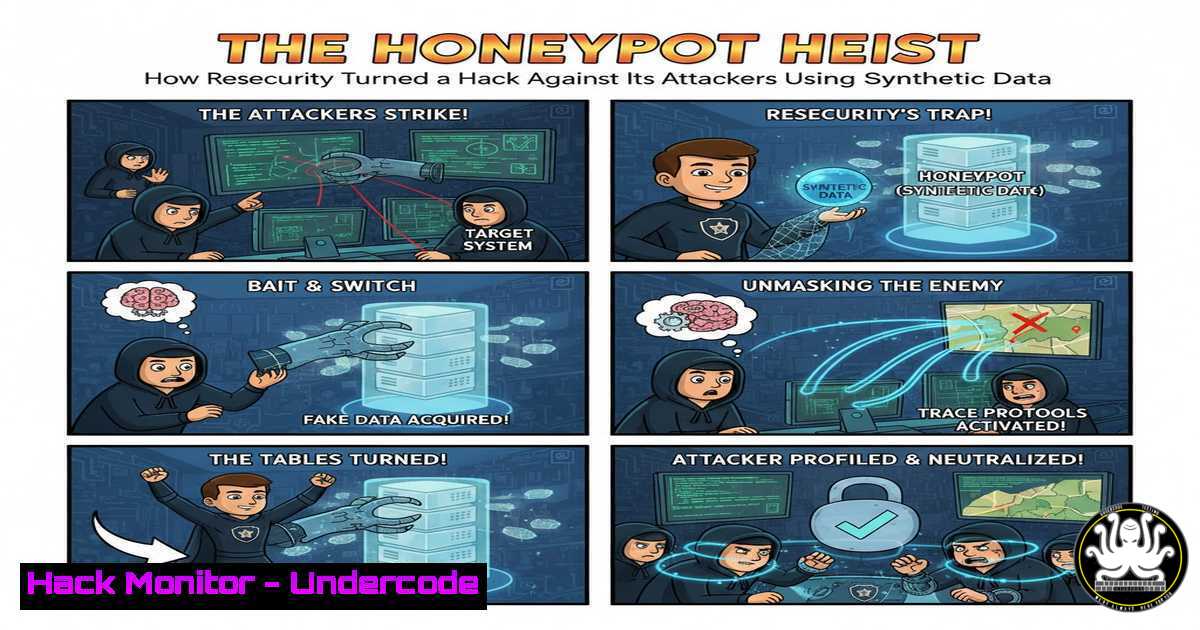
In a bold counterintelligence operation, cybersecurity firm Resecurity reportedly deceived the Scattered Lapsus$ Hunters (SLH) group by luring them into an elaborate honeypot filled with entirely synthetic data. While the attackers claimed a significant breach, Resecurity’s revelation reframes the incident as a masterclass in active cyber defense, leveraging fake customer profiles and financial transactions to gather critical threat intelligence.
Learning Objectives:
- Understand the architecture and strategic value of high-interaction honeypots using synthetic data.
- Learn how to generate and deploy realistic synthetic data sets for deception technologies.
- Analyze the tactics, techniques, and procedures (TTPs) collected from attacker engagement with a deception environment.
You Should Know:
1. Architecting a High-Interaction Honeypot with Synthetic Data
A honeypot is a decoy system designed to attract attackers. A high-interaction honeypot mimics a real production environment, allowing security teams to study attacker behavior in detail. The key to its success, as demonstrated by Resecurity, is populating it with convincing, non-sensitive synthetic data.
Step‑by‑step guide explaining what this does and how to use it.
First, isolate the honeypot network segment to prevent lateral movement into real systems. Use tools like `iptables` on Linux to create strict firewall rules.
 Create a new chain for the honeypot
sudo iptables -N HONEYPOT
 Redirect traffic destined for decoy IPs to this chain
sudo iptables -t nat -A PREROUTING -d 10.0.99.0/24 -j HONEYPOT
 Log all access attempts for analysis
sudo iptables -A HONEYPOT -j LOG --log-prefix "[HONEYPOT-Access]: "
 Finally, accept the traffic to allow interaction
sudo iptables -A HONEYPOT -j ACCEPT
Next, deploy a vulnerable-looking service (like an old version of WordPress or a custom web portal) on a server within this network. The goal is to create a believable entry point.
2. Generating Realistic Synthetic Data Sets
Synthetic data is artificially generated information that mimics the structure and format of real data. For a honeypot, it must be credible enough to keep attackers engaged. Resecurity generated over 28,000 fake consumer profiles and 190,000 fake Stripe-style transactions.
Step‑by‑step guide explaining what this does and how to use it.
Use Python libraries like `Faker` and `Pandas` to create bulk synthetic data. The script below generates a CSV of fake user profiles and payment logs.
import pandas as pd
from faker import Faker
import random
import datetime

fake = Faker()
profiles = []
transactions = []

Generate 1000 fake user profiles
for _ in range(1000):
profile = {
'employee_id': fake.uuid4(),
'username': fake.user_name(),
'email': fake.company_email(),
'name': fake.name(),
'department': fake.job(),
'fake_api_key_stripe': f'sk_live_{fake.lexify(text="????????????????????")}'
}
profiles.append(profile)
 Generate fake transactions for each user
for _ in range(random.randint(10, 30)):
transaction = {
'transaction_id': fake.uuid4(),
'user_email': profile['email'],
'amount': round(random.uniform(5.0, 5000.0), 2),
'currency': random.choice(['USD', 'EUR', 'GBP']),
'status': random.choice(['succeeded', 'failed']),
'created': fake.date_time_between(start_date='-1y', end_date='now').isoformat()
}
transactions.append(transaction)

Create DataFrames and save to CSV
df_profiles = pd.DataFrame(profiles)
df_transactions = pd.DataFrame(transactions)
df_profiles.to_csv('/honeypot/data/fake_employees.csv', index=False)
df_transactions.to_csv('/honeypot/data/fake_transactions.csv', index=False)
print("Synthetic data generated and saved.")
Place these CSV files in the honeypot’s web-accessible directory or within a fake admin panel to bait data exfiltration.
3. Configuring Telemetry and Attacker Monitoring
Once attackers interact with the honeypot, comprehensive logging is essential. This includes web server logs, command history, and network traffic captures.
Step‑by‑step guide explaining what this does and how to use it.
On a Linux-based honeypot server, configure detailed auditing using `auditd` to monitor file access and command execution.
 Install auditd
sudo apt-get install auditd -y
 Add a rule to log all commands executed by any user
sudo auditctl -a always,exit -F arch=b64 -S execve
 Watch the specific directory containing your synthetic data
sudo auditctl -w /honeypot/data/ -p rwxa -k honeypot_data_access
View the logs with sudo ausearch -k honeypot_data_access. Additionally, use `tcpdump` to capture all network traffic for later analysis of exfiltration attempts:
sudo tcpdump -i eth0 -w /honeypot/captures/network.pcap host <attacker_ip>
4. Analyzing Attacker TTPs from Captured Data
The value of the honeypot is realized in the analysis phase. Resecurity identified reconnaissance patterns, tools, and even operational mistakes like real IP leaks from proxy services.
Step‑by‑step guide explaining what this does and how to use it.
Analyze the PCAP files from `tcpdump` using Wireshark or the command line. Look for patterns.
 Use tshark (Wireshark's CLI tool) to extract HTTP request URLs from the capture
tshark -r /honeypot/captures/network.pcap -Y "http.request" -T fields -e http.host -e http.request.uri > http_requests.txt
 Count unique IPs to identify proxy rotation
tshark -r /honeypot/captures/network.pcap -T fields -e ip.src | sort | uniq -c | sort -nr
Correlate this with the `auditd` logs to build a timeline: which files were accessed first, what commands were run after initial access, and what data was targeted.
5. Legal and Collaborative Response Preparation
Resecurity stated that collected telemetry was shared with law enforcement, leading to a subpoena. Proper chain-of-custody for logs is critical for legal proceedings.
Step‑by‑step guide explaining what this does and how to use it.
From the moment of detection, preserve evidence. Use cryptographic hashing to prove log integrity.
 Generate SHA-256 hashes of all critical log files immediately after stopping captures
sha256sum /var/log/audit/audit.log /honeypot/captures/network.pcap > /secure_evidence/log_hashes.txt
 Store these hashes separately (e.g., on an air-gapped system or with a trusted time-stamping service)
Document every step taken from detection to analysis. This documentation, along with the preserved, hashed evidence, forms the basis for a legal report.
What Undercode Say:
- The Deception is in the Details: The efficacy of a honeypot hinges on the quality of its deception. Resecurity’s use of format-accurate synthetic data (e.g., Stripe API-like keys) was the hook that transformed a simple trap into a powerful intelligence-gathering operation.
- Active Defense is a Force Multiplier: This incident showcases a shift from passive monitoring to active cyber defense. By proactively engaging and misleading adversaries, organizations can waste attacker resources, gather invaluable TTPs, and even enable legal retaliation.
Analysis: This event blurs the line between victim and hunter. While the PR battle of “who hacked whom” plays out, the technical takeaways are clear. Modern threat intelligence must incorporate active deception strategies. The use of synthetic data solves a major ethical and legal hurdle in honeypot deployment—no real user data is risked. Furthermore, the automation of attacker tools (like the 188,000 automated exfiltration requests) works against them, generating more telemetry. This case will likely accelerate the adoption of deception technology platforms that automate the creation of such realistic, interactive environments across enterprise networks.
Prediction:
The Resecurity honeypot incident will catalyze a broader adoption of AI-driven deception technologies. In the next 2-3 years, we will see a rise in “adaptive honeypots” that use machine learning to dynamically adjust their responses and data lures based on attacker behavior in real-time. Simultaneously, threat actors like SLH will invest more in detecting deception environments, leading to an evolving arms race of AI vs. AI in the deception space. This will also push regulatory bodies to develop clearer frameworks for active defense measures, distinguishing lawful counterintelligence from prohibited hacking back.
▶️ Related Video (80% Match):
🎯Let’s Practice For Free:
IT/Security Reporter URL:
Reported By: Cyber It – Hackers Feeds
Extra Hub: Undercode MoN
Basic Verification: Pass ✅


