Listen to this Post
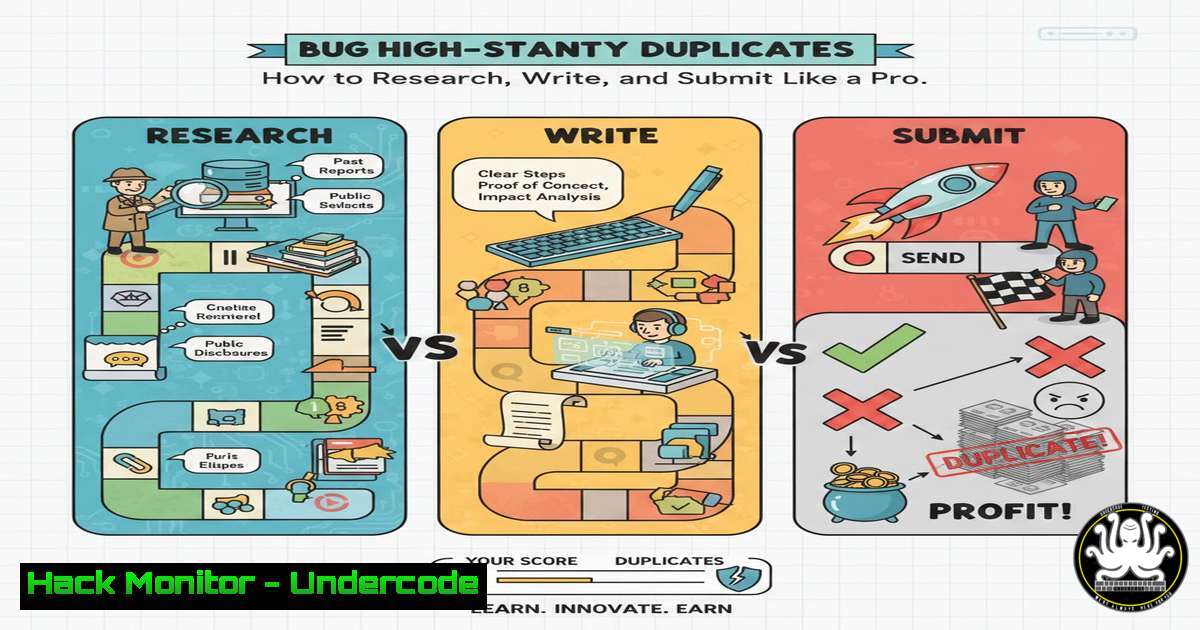
Introduction:
The recent disclosure by a security researcher of a duplicate finding on the OnlyFans bug bounty program highlights a critical, yet often unspoken, reality in ethical hacking. Business logic flaws represent some of the most impactful vulnerabilities, but navigating public bounty programs requires strategy beyond technical skill to avoid the frustration of non-payment due to prior reporting. This article deconstructs the process of effective vulnerability research and submission in competitive environments.
Learning Objectives:
- Understand the methodology for identifying unique business logic errors in modern web applications.
- Learn how to rigorously triage and validate findings before submission to avoid duplicates.
- Master the art of crafting a compelling proof-of-concept (PoC) and report that stands out to triage teams.
You Should Know:
1. Pre-Submission Recon: Mapping the Attack Surface Uniquely
The key to a unique find is exploring less-traveled paths. Automated scanners used by hundreds of other hunters will hit the same common endpoints. Your goal is to manually map user flows, especially those involving financial transactions, subscription models, gated content, and role-based actions—core to platforms like OnlyFans.
Step‑by‑step guide explaining what this does and how to use it.
Step 1: Define All User Roles. Enumerate every possible user type (e.g., free viewer, paying subscriber, content creator, moderator, admin).
Step 2: Diagram State Changes. For each role, document every possible action and how it changes application state (e.g., “subscriber purchases pay-per-view message,” “creator issues a refund,” “user upgrades tier”).
Step 3: Intercept Every Request. Use a proxy tool like Burp Suite or OWASP ZAP to capture all API calls and parameters during these flows. Save unique requests for testing.
 Example using Burp Suite CLI (headless) for automated logging if testing at scale:
 java -jar burpsuite_pro.jar --project-file=project.burp --config-file=scan.json --unpause-spider-and-scanner
Step 4: Identify Logic Boundaries. Ask: “What should never happen?” (e.g., a user cancelling a subscription but retaining access, applying multiple discount codes, gifting a subscription to themselves).
- The Art of Business Logic Testing: Bypassing Checks
Business logic errors often reside in the validation steps performed by the application. Your task is to challenge every assumption on the client and server side.
Step‑by‑step guide explaining what this does and how to use it.
Step 1: Parameter Tampering. This is fundamental. Alter parameters in intercepted requests (user IDs, price values, item quantities, status flags).
Locate a critical request: `POST /api/purchase` with body `{“item_id”: “premium_vid_123”, “price”: 10.00, “user_tier”: “standard”}`
Tamper: Change `”price”: 10.00` to `”price”: 0.01` or `”user_tier”: “standard”` to "user_tier": "admin".
Step 2: Sequence Breaking. Perform actions out of intended order. Example: Add item to cart -> Apply coupon -> Intercept final payment request -> Re-add a higher-priced item without resending the coupon application step. Does the discount still apply incorrectly?
Step 3: Race Conditions. Exploit tiny time windows where state is inconsistent. Use tools to send concurrent requests.
 A simple bash loop to send 10 concurrent refund requests (example)
for i in {1..10}; do
curl -X POST "https://target.com/api/refund" -H "Authorization: Bearer $TOKEN" -d "transaction_id=xyz" &
done
Mitigation Insight: Servers should use database locks or idempotency tokens to prevent this.
3. Pre-Submission Duplicate Checks: Going Beyond Program Scopes
Before writing your report, invest significant effort in checking if your bug is truly novel.
Step‑by‑step guide explaining what this does and how to use it.
Step 1: Internal Knowledge Search. Thoroughly search the bug bounty platform’s disclosed reports (if public), the program’s policy page for “Out of Scope” examples that might hint at known issues, and any related blog posts from the company’s security team.
Step 2: External Intelligence. Use Google Dorks, GitHub, and Twitter/X searches.
 Example Google Dorks for prior research
site:github.com "onlyfans" "bug bounty" "business logic"
site:twitter.com "OnlyFans" "bug" "duplicate"
intitle:"OnlyFans" "security" "vulnerability"
Step 3: Tool-Assisted Discovery. Use a tool like `waybackurls` or `gau` to gather historical endpoints and parameters, then filter for unique action-based paths (/upgrade, /apply_coupon, /transfer). Look for parameters others may have missed.
4. Crafting the Killer Proof-of-Concept (PoC)
A video is worth a thousand words. A working, concise PoC is what gets your report prioritized.
Step‑by‑step guide explaining what this does and how to use it.
Step 1: Document the Happy Path. Record a short screen capture (using OBS or Loom) of the normal, expected user flow.
Step 2: Document the Exploit. Record the step-by-step exploitation, clearly showing the tampered request in your proxy and the unexpected, successful outcome in the application UI (e.g., “Content Unlocked” without payment).
Step 3: Annotate and Explain. Overlay text or audio narration pointing to the exact request/response pair where the logic fails. Highlight the malicious parameter. Conclude by demonstrating the real-world impact (e.g., “This allows any user to purchase any item for $0.01”).
5. Writing the Report: From Finding to Fix
The report bridges your discovery to the developer’s patch. Clarity and actionability are key.
Step‑by‑step guide explaining what this does and how to use it.
Step 1: Executive Summary. One sentence: “A business logic vulnerability in the tiered subscription upgrade mechanism allows users to permanently upgrade their account without completing the payment process.”
Step 2: Technical Details.
Vulnerable Endpoint: `POST /api/v1/account/upgrade_plan`
Vulnerable Parameter: `”skip_payment_validation”: false`
Step-by-Step Reproduction: Numbered list, matching your PoC video.
Request/Response Logs: Provide the raw, tampered request and the successful response.
Step 3: Impact Assessment. Quantify: “This could lead to direct revenue loss by allowing widespread free premium access, undermining the core subscription model.”
Step 4: Remediation. Provide a concrete fix: “Server-side validation must be enforced. The payment gateway’s successful transaction ID must be verified and stored before the user’s account tier is modified. Implement a idempotency key for the upgrade transaction.”
What Undercode Say:
- The Hunt is a Marathon, Not a Sprint. Success in crowded bug bounty programs comes from persistent, manual exploration of complex features where automated tools fail. The goal is to think like both a developer and a malicious actor.
- Duplicate Findings are Inevitable Data Points. A duplicate is not a failure; it validates your methodology. It confirms you are looking in the right places. The learning from the process sharpens your skills for the next, unique find.
- The post underscores a maturity milestone in a researcher’s journey. Moving from running common scripts to meticulously deconstructing application logic is what separates casual testers from professional security engineers. The frustration of a duplicate is tempered by the knowledge that the researcher’s approach was correct—they found a critical flaw, proving their capability. The strategic response is to refine pre-submission research, document findings even more compellingly, and immediately apply the learned techniques to a new target or feature set. The race is not against other hunters, but against the evolving complexity of the application itself.
Prediction:
The increasing sophistication of bug bounty hunters and the proliferation of crowdsourced security will force a evolution in program management. We will see wider adoption of private, invite-only program phases for new features, giving top researchers first look to reduce public duplicates. Platform-native tools for automated duplicate detection during report drafting, using NLP to match against past submissions, will become standard. Furthermore, the focus will shift even more heavily towards complex business logic and AI-powered feature abuse, as traditional OWASP Top 10 vulnerabilities become harder to find in major platforms. Researchers who master the art of systemic logic testing and clear communication of risk will become the most valued assets in the ecosystem.
▶️ Related Video (76% Match):
🎯Let’s Practice For Free:
IT/Security Reporter URL:
Reported By: Vbvishalbarot Vulnerability – Hackers Feeds
Extra Hub: Undercode MoN
Basic Verification: Pass ✅


