Listen to this Post
Introduction:
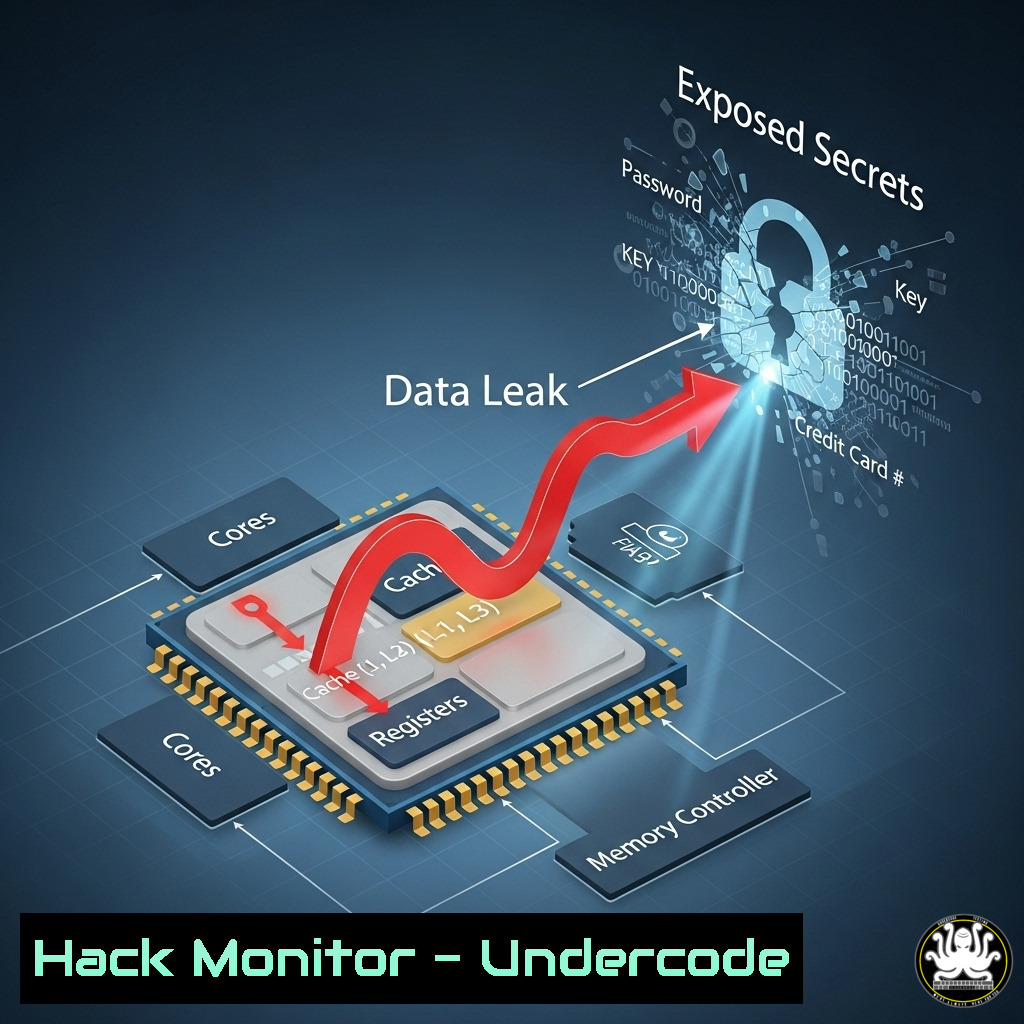
A novel side-channel attack vector is exploiting fundamental CPU architecture to bypass modern security protections. Intel’s Transactional Synchronization Extensions (TSX), designed to enhance parallel processing performance, has been weaponized to create precise timing attacks that can extract sensitive data from secured environments.
Learning Objectives:
- Understand the mechanics of Intel TSX-based side-channel attacks
- Identify vulnerable systems and implement detection mechanisms
- Apply mitigation strategies to protect critical infrastructure
You Should Know:
1. Detecting TSX Support on Linux Systems
grep -q "rtm" /proc/cpuinfo && echo "TSX supported - VULNERABLE" || echo "TSX not supported"
cat /sys/devices/system/cpu/vulnerabilities/tsx_async_abort
This command checks your CPU’s support for Restricted Transactional Memory (RTM), which indicates TSX capability. Systems showing “TSX supported” may be vulnerable to transactional memory attacks. The second command checks for specific TAA (TSX Asynchronous Abort) vulnerabilities documented in the kernel’s vulnerability database.
2. Monitoring TSX Transaction Aborts with perf
perf stat -e tx_mem.abort_conflict,tx_mem.abort_capacity /bin/true
The perf tool can monitor hardware events related to TSX transactions. This command tracks abort events due to cache conflicts and capacity issues, which attackers exploit to measure timing differences and infer memory contents.
3. Windows TSX Feature Detection via PowerShell
Get-WmiObject -Class Win32_Processor | Select-Object -Property Name, Description |
Where-Object { $_.Description -match "RTM" }
This PowerShell command queries the processor capabilities and checks for RTM (Restricted Transactional Memory) support, indicating TSX availability on Windows systems. Vulnerable systems should have mitigation strategies implemented.
4. Kernel Parameter Mitigation for TSX Attacks
echo 'options tsx=off' | sudo tee /etc/modprobe.d/tsx_off.conf
update-initramfs -u -k all
This disables TSX functionality at the kernel level by blacklisting the feature. After adding this configuration, update your initramfs and reboot. Note: This may impact performance on systems that legitimately use TSX for parallel processing.
5. Microcode Update Verification for TSX Vulnerabilities
dmesg | grep -i microcode
cat /proc/cpuinfo | grep -i 'microcode'
Checking microcode updates is critical as many TSX vulnerabilities are patched via CPU microcode updates. These commands verify whether your system has loaded the latest microcode that may include mitigations for TSX-based attacks.
6. Building TSX Attack Detection with eBPF
include <linux/bpf.h>
include <bpf/bpf_helpers.h>

SEC("tracepoint/syscalls/sys_enter_execve")
int bpf_prog(void ctx) {
char msg[] = "TSX transaction detected";
bpf_trace_printk(msg, sizeof(msg));
return 0;
}
This eBPF program monitors for execution patterns that might indicate TSX attack attempts. It attaches to the execve tracepoint and logs potential malicious activity. Compile with clang and load with bpftool.
7. CPU Isolation for Critical Workloads
systemctl set-property --runtime -- user.slice AllowedCPUs=0-3
systemctl set-property --runtime -- system.slice AllowedCPUs=4-7
taskset -c 0-3 critical_application
Isolating sensitive processes to specific CPU cores can contain potential TSX attacks. These commands configure systemd to restrict general processes to certain cores while dedicating others to critical applications, limiting cross-process information leakage.
What Undercode Say:
- Hardware-level vulnerabilities require hardware-level solutions
- Performance optimization features often create security trade-offs
- Defense-in-depth must extend to CPU architecture awareness
The TSX attack methodology represents a paradigm shift in side-channel exploitation. Unlike software-based vulnerabilities, these hardware-level attacks bypass traditional security boundaries and require fundamental changes in how we secure computing environments. The very features designed to enhance performance are being weaponized against security protections, suggesting that future security architectures must incorporate hardware vulnerability mitigation as a core design principle.
Prediction:
Within 24 months, TSX-like hardware exploitation techniques will evolve into standardized attack toolkits capable of breaching secure enclaves and trusted execution environments. Cloud providers will face increasing pressure to guarantee hardware-level security isolation, potentially leading to specialized security-focused processors that eliminate speculative execution features entirely. The security industry will shift toward hardware-software co-design approaches, fundamentally changing how critical systems are architected against microarchitectural attack vectors.
🎯Let’s Practice For Free:
IT/Security Reporter URL:
Reported By: Sam Bent – Hackers Feeds
Extra Hub: Undercode MoN
Basic Verification: Pass ✅


