
Listen to this Post
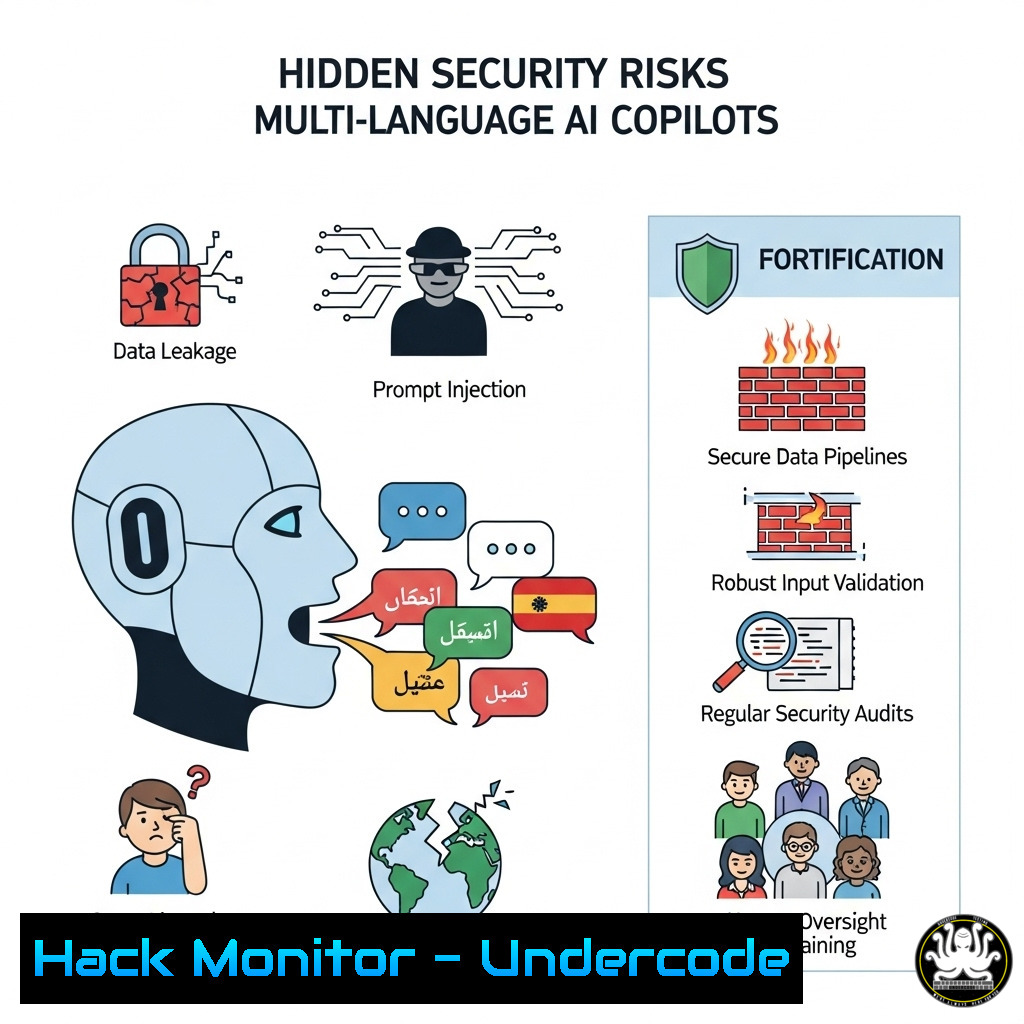
Introduction:
The integration of multi-language capabilities into AI copilots like Microsoft’s Copilot Studio is a significant leap for global business automation. However, this expansion of functionality introduces a new and complex attack surface, blending traditional application security threats with novel AI-specific vulnerabilities. This article deconstructs the cybersecurity implications of multi-language AI agents and provides a technical blueprint for securing them.
Learning Objectives:
- Understand the unique cybersecurity vulnerabilities introduced by multi-language processing in conversational AI systems.
- Learn practical commands and configurations to harden Azure and Copilot Studio environments against exploitation.
- Implement monitoring and auditing techniques to detect prompt injection attacks and data exfiltration attempts across different languages.
You Should Know:
1. Securing the Azure Foundation with CLI
The first line of defense is securing the Azure subscription that hosts your Copilot Studio resources. Misconfigured entitlements are a primary vector for initial access.
`az role assignment list –all –output table –query ‘[].{PrincipalName:principalName, Role:roleDefinitionName, Scope:scope}’`
This Azure CLI command lists all role assignments across your subscription. Run this regularly to audit for over-privileged service principals or user accounts. The `–all` parameter ensures you see assignments at the current scope and any children. Pipe the output to a file and use diff tools to detect suspicious changes over time, such as new accounts granted high-privilege roles like ‘Owner’ or ‘Contributor’.
2. Hardening App Service Configurations
Copilot Studio agents often leverage Azure App Service. These must be hardened against common web application attacks.
az webapp config show --name <your-app-name> --resource-group <your-rg> --query '{

<h2 style="color: yellow;">HTTPS:httpsOnly,</h2>

<h2 style="color: yellow;">FTPS:ftpsState,</h2>

<h2 style="color: yellow;">HTTPv2:http20Enabled,</h2>

<h2 style="color: yellow;">MinTLS:minTlsVersion,</h2>

<h2 style="color: yellow;">LinuxFx:linuxFxVersion</h2>

<h2 style="color: yellow;">}'
This command retrieves critical security configurations for your underlying App Service. Ensure `httpsOnly` is true, `minTlsVersion` is 1.2, and `ftpsState` is `AllAllowed` (or FtpsOnly) while disabling plain FTP. An outdated TLS version is a direct ticket to a man-in-the-middle attack.
3. Implementing Advanced API Security with OWASP Rules
Multi-language copilots consume internal and external APIs, making them susceptible to injection attacks.
`az apim api list –resource-group
Use this command to inventory all APIs registered in Azure API Management (APIM), which often fronts Copilot traffic. For each API, enforce a policy that includes the OWASP Core Rule Set (CRS) to automatically detect and block common web attacks like SQLi (SQL Injection) and XSS, which can be obfuscated in different unicode languages.
4. Auditing and Locking Down Key Vault Access
Secrets, keys, and connection strings are the crown jewels and must be stored in Azure Key Vault with strict access policies.
`az keyvault list –query ‘[].{Name:name, Enabled:properties.enabledForDeployment, DiskEncryption:properties.enabledForDiskEncryption, TemplateDeployment:properties.enabledForTemplateDeployment}’`
This command lists your vaults and critical permissions. enabledForDeployment, enabledForDiskEncryption, and `enabledForTemplateDeployment` should typically be `false` to prevent Azure resources from retrieving secrets that could be used in a lateral movement attack. Access should be granted via Azure RBAC on a principal-to-principal basis.
5. Detecting Prompt Injection Attacks with Log Analytics
Prompt injection is a primary AI-specific threat, where attackers use crafted language inputs to hijack the agent’s behavior.
`AzureDiagnostics
| where Category == “CopilotStudioAudit”
| where OperationName has “Message”
| extend UserInput = tostring(parse_json(tostring(parse_json(ResultDescription).request)).message)
| where UserInput matches regex @”(?i)(system|ignore|previous|assistant|prompt|execute|run|sudo|cmd)”
| project TimeGenerated, SessionId, UserInput, OperationName`
This Kusto Query Language (KQL) query for Azure Log Analytics scans Copilot Studio audit logs for high-risk keywords often used in prompt injection attacks. This is not a silver bullet but a starting point for building a heuristic detection system. Tune the regex pattern based on observed attack patterns in your environment and across different languages.
- Configuring Multi-Factor Authentication (MFA) for Azure AD via Conditional Access
Human administrators are a weak link. Enforcing MFA is non-negotiable.
`Get-MgIdentityConditionalAccessPolicy (Microsoft Graph PowerShell)`
While there’s no single CLI command to set MFA, use this PowerShell command from the Microsoft Graph module to list all Conditional Access policies. You must ensure a policy exists that requires MFA for all users, especially those with access to the Copilot Studio admin portal. A compromised admin account can lead to a complete takeover of your AI agents.
7. Penetration Testing with Language-Specific Payloads
Proactively testing your agent is crucial. Use tools like Burp Suite or OWASP ZAP with language-specific payloads.
` Example: Crafting a simple Unicode XSS test payload
Standard XSS:
Obfuscated XSS (using HTML entities): <script>alert(&39;XSS&39;)</script>
Multi-language social engineering: “请点击这里” (Chinese for “Please click here”) linked to a malicious domain.`
This is not a single command but a methodology. During penetration tests, feed your multi-lingual copilot payloads that use Unicode characters, right-to-left (RTL) override characters, and language-specific social engineering lures. This tests the agent’s sanitization filters and its ability to safely handle output encoding across different locales.
What Undercode Say:
- The Attack Surface Expands Exponentially. Every new language supported is not just a feature—it’s a new domain of unicode characters, linguistic nuances, and cultural contexts that attackers can exploit to bypass content filters and obfuscate malicious intent.
- Supply Chain Becomes a Critical Vector. The reliance on external translation APIs and language models introduces a software supply chain risk. A compromised or malicious API could poison training data or exfiltrate sensitive conversations.
The convergence of multi-language processing and AI creates a perfect storm for sophisticated social engineering and injection attacks. Security teams can no longer rely on simple keyword blocklists designed for English. Defense must shift to a behavioral and heuristic model, analyzing intent and sequence rather than just literal input. The integrity of the entire system hinges on the security of the underlying Azure infrastructure; a single misconfigured role or unpatched App Service can render all AI-level security controls useless. Proactive, language-aware penetration testing is now mandatory, not optional.
Prediction:
In the next 12-18 months, we will witness the first major breach originating from a multi-language prompt injection attack against a enterprise-grade AI copilot. This will not be a simple data leak but a complex, multi-stage attack that uses the copilot’s own permissions and API access to move laterally into corporate networks, exfiltrate data, and deploy ransomware. This event will force a industry-wide pivot from feature-focused AI development to security-by-design frameworks, making “AI Security” a standard budget line item and a mandatory skillset for cloud security professionals. Regulatory bodies will begin drafting specific guidelines for the auditing and compliance of intelligent agents, similar to GDPR or PCI DSS.
🎯Let’s Practice For Free:
IT/Security Reporter URL:
Reported By: Dewain Robinson – Hackers Feeds
Extra Hub: Undercode MoN
Basic Verification: Pass ✅


