
Listen to this Post
Introduction:
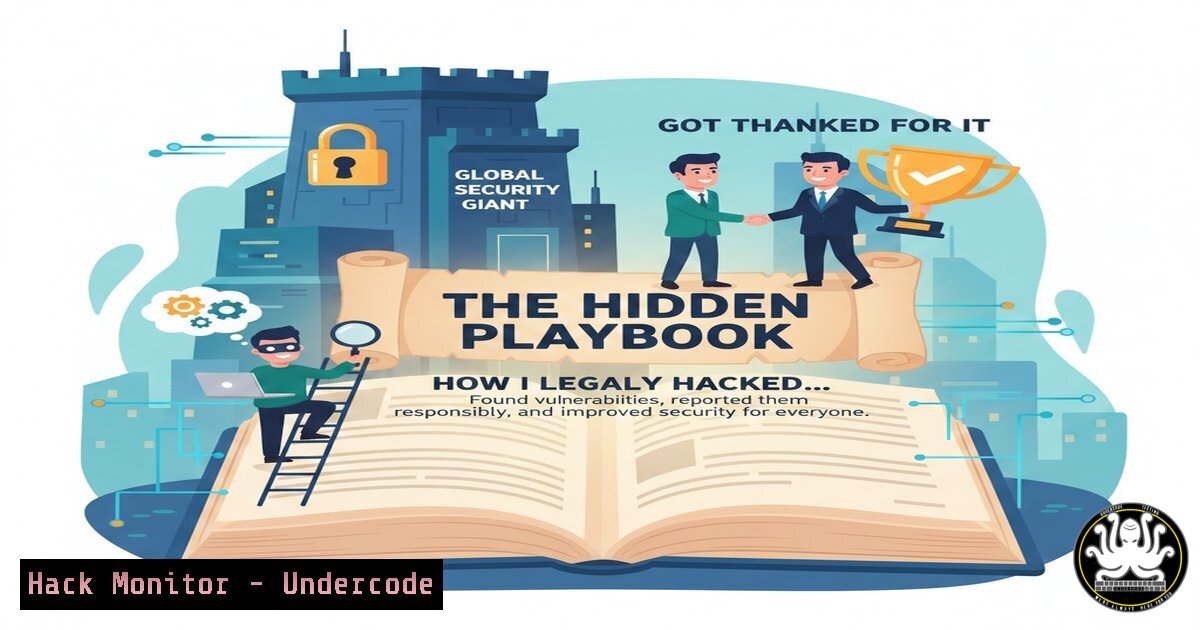
Responsible disclosure represents the ethical backbone of modern cybersecurity, transforming potential adversaries into collaborative allies. This process involves a security researcher privately reporting a discovered vulnerability to the affected organization, allowing for a fix before public exposure or malicious exploitation. As illustrated by a recent successful engagement with ASSA ABLOY Group, this framework not only protects digital ecosystems but also fosters a professional culture of trust and continuous improvement between researchers and enterprises.
Learning Objectives:
- Understand the end-to-end workflow of a responsible vulnerability disclosure process.
- Learn the technical reconnaissance methods for identifying responsible disclosure channels.
- Master the art of crafting a effective proof-of-concept (PoC) report and establishing secure communication.
You Should Know:
1. Reconnaissance: Finding the Right Door to Knock
Before writing a single line of a report, you must identify if and how an organization accepts vulnerability reports. This involves systematic reconnaissance to locate official security policies and contact points.
Step‑by‑step guide explaining what this does and how to use it.
1. Check for a Security.txt File: This is a standardized file (like robots.txt) that defines security policies. It is typically placed at `/.well-known/security.txt` or `/security.txt` at the root of a web domain.
Command (Linux cURL): `curl -s “https://targetdomain.com/.well-known/security.txt” || curl -s “https://targetdomain.com/security.txt”`
This command quietly fetches the file, looking for fields like Contact:, Encryption:, and Policy:.
- Examine the Main Website: Look for links titled “Security,” “Vulnerability Disclosure,” “Bug Bounty,” or “Report a Vulnerability” in the website’s footer or dedicated security page.
-
Query Public Bug Bounty Platforms: Use platforms like HackerOne, Bugcrowd, or YesWeHack to see if the organization runs a public or private program. Search by the company name.
-
Leverage WHOIS and DNS Records: Sometimes, a dedicated security contact email (e.g.,
[email protected]) is listed in domain registration records.
Command (Linux whois): `whois targetdomain.com | grep -i “abuse\|security\|contact”` - Proof-of-Concept Crafting: The Art of Clarity and Reproducibility
A good report is actionable. It must allow the vendor’s team to understand, replicate, and prioritize the issue quickly.
Step‑by‑step guide explaining what this does and how to use it.
1. Be concise. “Reflected XSS in /search.php via `q` parameter” is better than “Website Vulnerability Found.”
2. Summary: A one-paragraph executive summary of the risk.
3. Technical Details:
Vulnerability Type: (e.g., SQL Injection, Path Traversal).
Affected Component: Full URL and parameter.
Steps to Reproduce: A numbered, foolproof list.
Example: `1. Navigate to https://example.com/search?q=`
Request/Response Proof: Include raw HTTP requests and responses. Use tool output.
Command (Using Burp Suite or OWASP ZAP): These proxies automatically capture traffic. Copy the raw request.
Command (Linux with `nc` for simple PoC): `printf “GET /search?q= HTTP/1.1\r\nHost: example.com\r\n\r\n” | nc example.com 80`
4. Impact Analysis: Explain what an attacker could achieve (data theft, user compromise, etc.).
5. Suggested Remediation: Provide a informed fix (e.g., “Implement input validation and output encoding”).
3. Establishing Secure Communication
Never send sensitive vulnerability details over unencrypted email initially. Use the provided secure channel or propose one.
Step‑by‑step guide explaining what this does and how to use it.
1. Use Vendor-Preferenced Encryption: If they provide a PGP key, use it.
Command (Linux GnuPG): `echo “YOUR REPORT TEXT” | gpg –encrypt –armor -r recipient-key-id > report.asc`
2. Initial Contact: If no secure channel is obvious, send a brief, non-detailed initial email stating you have a security report and asking for secure delivery instructions.
3. Create a Secure Temporary Portal: For complex reports, you can use a password-protected, HTTPS-enabled note with a time-to-live. Mention the link and password in your initial (or encrypted) email.
4. The Waiting Game: Post-Submission Protocol
After submission, a structured timeline ensures professionalism.
- Send Report & Get Acknowledgement: Request a receipt confirmation.
- Follow-Up Gracefully: If you hear nothing in 5-7 business days, send a polite follow-up.
- Allow Reasonable Time for Triage and Fix: Complex issues can take weeks or months. Maintain patience and a collaborative tone in all communications.
5. Coordination and Public Disclosure
The process concludes with the vendor fixing the issue and potentially authorizing public disclosure.
1. Vendor Develops & Deploy Patch: You may be asked to test the fix in a staging environment.
2. Agree on Disclosure Details: Discuss a coordinated publication date (CVD – Coordinated Vulnerability Disclosure). This often includes a vendor security advisory and a researcher blog post.
3. Publish: Share your findings, highlighting the positive collaboration. This builds your reputation and educates the community.
What Undercode Say:
Key Takeaway 1: Responsible disclosure is a formal, technical process that requires as much skill as finding the bug itself. It hinges on meticulous documentation, secure communication, and professional etiquette.
Key Takeaway 2: The true “hack” isn’t just the exploit—it’s successfully navigating the human and procedural channels to ensure the vulnerability is silently neutralized, protecting users without causing unnecessary alarm or reputational damage.
The ASSA ABLOY case is a textbook example of the system working as intended. The researcher’s professional approach was met with an organized Product Security team, leading to a resolved risk and mutual public acknowledgment. This symbiotic relationship is critical in a landscape where software is ubiquitous and inherently flawed. It moves security from a reactive, adversarial model to a proactive, collaborative one. The alternative—full public disclosure or silent exploitation—creates chaos or danger. This framework turns researchers into an extended, outsourced security team for the entire digital world.
Prediction:
The future of responsible disclosure will be shaped by increased automation and AI. We will see the rise of AI-assisted vulnerability report drafting, automatically generating PoC code and impact analysis from a researcher’s notes. On the vendor side, AI-powered triage systems will instantly categorize incoming reports, match them against codebases, and even suggest preliminary fixes, drastically reducing time-to-remediation. Furthermore, blockchain-verified disclosure timelines could become standard, providing immutable records of good-faith research and vendor response, adding a layer of trust and accountability to the entire ecosystem. The human element of collaboration will remain, but it will be augmented by tools that make securing our world faster and more efficient.
▶️ Related Video (76% Match):
🎯Let’s Practice For Free:
IT/Security Reporter URL:
Reported By: Farhankhan85 Cybersecurity – Hackers Feeds
Extra Hub: Undercode MoN
Basic Verification: Pass ✅


