Listen to this Post
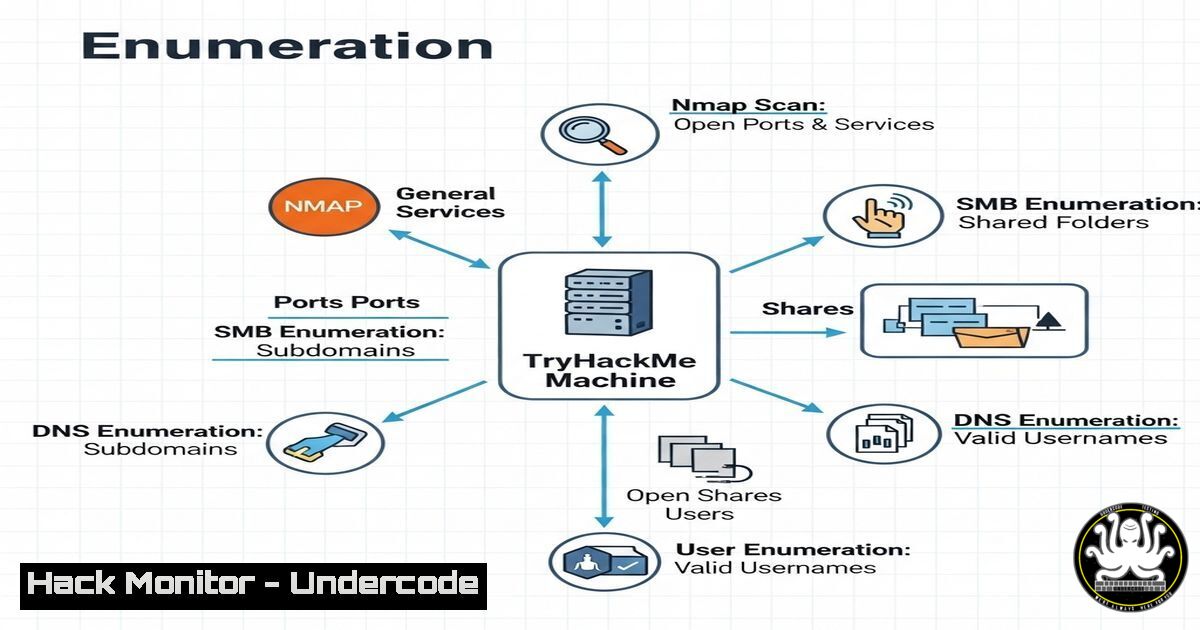
Introduction:
TryHackMe’s BreakMe machine is a masterclass in advanced enumeration, moving far beyond simple vulnerability scanning. This challenge forces penetration testers to abandon assumptions, embrace meticulous analysis, and develop the resilience required for real-world engagements, teaching that the most critical vulnerabilities are often hidden in plain sight.
Learning Objectives:
- Master advanced web and system enumeration techniques that go beyond automated tools.
- Develop the methodology to persist through complex, multi-layered penetration testing challenges.
- Understand and exploit common misconfigurations in WordPress and Linux privilege escalation vectors.
You Should Know:
1. Comprehensive Network Enumeration with Nmap
Verified command:
nmap -sC -sV -p- --min-rate 1000 -oA full_scan 10.10.10.10
Step‑by‑step guide:
This command initiates a comprehensive Nmap scan. The `-sC` flag runs default scripts, `-sV` probes open ports for service/version information, and `-p-` scans all 65,535 ports. The `–min-rate 1000` speeds up the scan by sending packets rapidly, while `-oA` outputs results in all major formats (normal, grepable, XML). Always run this as your initial reconnaissance to identify every possible entry point, including those high-numbered ports often missed by faster scans.
- Deep Web Directory and File Brute-Forcing with Gobuster
Verified command:
gobuster dir -u http://10.10.10.10 -w /usr/share/wordlists/dirbuster/directory-list-2.3-medium.txt -x php,txt,html,js,bak -t 50
Step‑by‑step guide:
Gobuster brute-forces directories and files on a web server. The `dir` mode specifies directory busting, `-u` defines the target URL, and `-w` points to your chosen wordlist. The critical `-x` flag checks for files with these extensions. Use `-t` to set threads (adjust based on server responsiveness). This often reveals hidden administration panels, backup files, or configuration files like `wp-config.php.bak` that are goldmines for attackers.
3. WordPress-Specific Enumeration with WPScan
Verified command:
wpscan --url http://10.10.10.10 --enumerate u,p,t --api-token YOUR_API_TOKEN --plugins-detection aggressive
Step‑by‑step guide:
WPScan is a dedicated WordPress security scanner. `–enumerate u,p,t` directs it to enumerate users (u), plugins (p), and themes (t). The `–api-token` (from the free WPScan API) provides vulnerability data from its database. `–plugins-detection aggressive` performs checks on all plugins, not just the popular ones. This is essential for finding outdated, vulnerable plugins that automated scanners might overlook.
- Analyzing WordPress User Enumeration and Author Post Listing
Verified technique:
Manipulate the `author` parameter in WordPress URL structures to enumerate users and discover their posts, which can contain clues or exposed data.
http://target.com/?author=1
http://target.com/?author=2
http://target.com/author/username/
Step‑by‑step guide:
WordPress often assigns sequential IDs to users. By incrementing the `author` parameter (e.g., ?author=1), the site may redirect you to the author’s archive page, revealing their username. Once you have a username, browse their post history (/author/username/) for any information leakage, such as names in images, hints in posts, or accidentally exposed data.
5. Password Attack Strategy with Custom Wordlist Generation
Verified command:
cewl http://10.10.10.10 -w site_words.txt && john --wordlist=site_words.txt --rules --stdout | hydra -l user -P - ssh://10.10.10.10
Step‑by‑step guide:
This pipeline creates a targeted attack. First, `cewl` (Custom Word List generator) spiders the target website and creates a dictionary (-w) from its text. This wordlist, filled with site-relevant terms, is then fed to `john` (John the Ripper) with the `–rules` flag to apply mangling rules (e.g., adding numbers, leetspeak). The output is piped (|) to `hydra` to perform a password spray attack against the SSH service (ssh://). This method is highly effective against weak, reused, or context-specific passwords.
6. Linux Privilege Escalation via SUID Binaries
Verified command:
find / -perm -4000 -type f 2>/dev/null
Step‑by‑step guide:
This `find` command searches the entire filesystem (/) for files with the SUID (Set User ID) permission bit set (-perm -4000). This permission means the file runs with the privileges of its owner (often root) rather than the user executing it. The `2>/dev/null` suppresses permission denied errors. Review the output for uncommon binaries. A known example is exploiting `env` to spawn a shell with retained permissions: ./bin-with-suid env /bin/sh -p.
7. Abusing Wildcard Misconfigurations for Privilege Escalation
Verified command & exploit:
echo 'echo "user ALL=(root) NOPASSWD: ALL" >> /etc/sudoers' > exploit.sh
touch /home/user/--checkpoint=1
touch /home/user/--checkpoint-action=exec=sh\ exploit.sh
Step‑by‑step guide:
This exploits a cron job running as root that uses `tar` with a wildcard (“) in a user-writable directory. The commands create a malicious shell script (exploit.sh) that adds the user to the sudoers file. Then, by creating files with names that are command-line flags for `tar` (--checkpoint=1 and --checkpoint-action=exec=sh exploit.sh), we trick `tar` into executing our script with root privileges when the cron job runs. This highlights the danger of insecure wildcard usage in scripts.
What Undercode Say:
- Persistence Over Power: The primary takeaway from BreakMe is that raw tooling power is useless without the analyst’s persistence and willingness to follow every lead, no matter how insignificant it seems. The machine is designed to punish impatience and reward meticulousness.
- The Depth of Enumeration: True enumeration is not running a single tool; it’s a cyclical process of scanning, analyzing results, formulating new questions, and scanning again with more precise parameters. BreakMe proves that the difference between failure and a root shell is often one more round of deep, thoughtful enumeration.
The BreakMe machine is less a technical puzzle and more a psychological test of a penetration tester’s resolve. It simulates a real-world environment where the low-hanging fruit has been patched, forcing the tester into the creative, labor-intensive process of chain exploitation. The technical lessons—abusing WordPress features, crafting targeted wordlists, and exploiting subtle Linux misconfigurations—are invaluable. However, the core analysis is that modern cybersecurity is an arms race where defensive tools have automated the detection of common exploits, elevating the value of human patience, creativity, and deep system knowledge. The machine’s difficulty underscores a critical industry truth: the attack surface has shifted from obvious vulnerabilities to nuanced misconfigurations and logical flaws.
Prediction:
The techniques highlighted by BreakMe—particularly the abuse of legitimate functionality (like WordPress author queries) and minor system misconfigurations (SUID, wildcards)—represent the immediate future of vulnerability exploitation. As software development increasingly relies on automated dependency checking and patching, blatant Remote Code Execution (RCE) vulnerabilities will become harder to find. Attackers will pivot towards chaining lower-severity issues, logical bugs, and configuration oversights to achieve the same impact. This will place a premium on offensive security professionals who possess deep system knowledge and methodological patience over those who rely solely on automated exploit tools. Defensively, this signals a need for more sophisticated auditing focused on configuration hardening and user privilege management, not just CVE patching.
🎯Let’s Practice For Free:
IT/Security Reporter URL:
Reported By: Theo Xongwana – Hackers Feeds
Extra Hub: Undercode MoN
Basic Verification: Pass ✅


