Listen to this Post
Introduction:
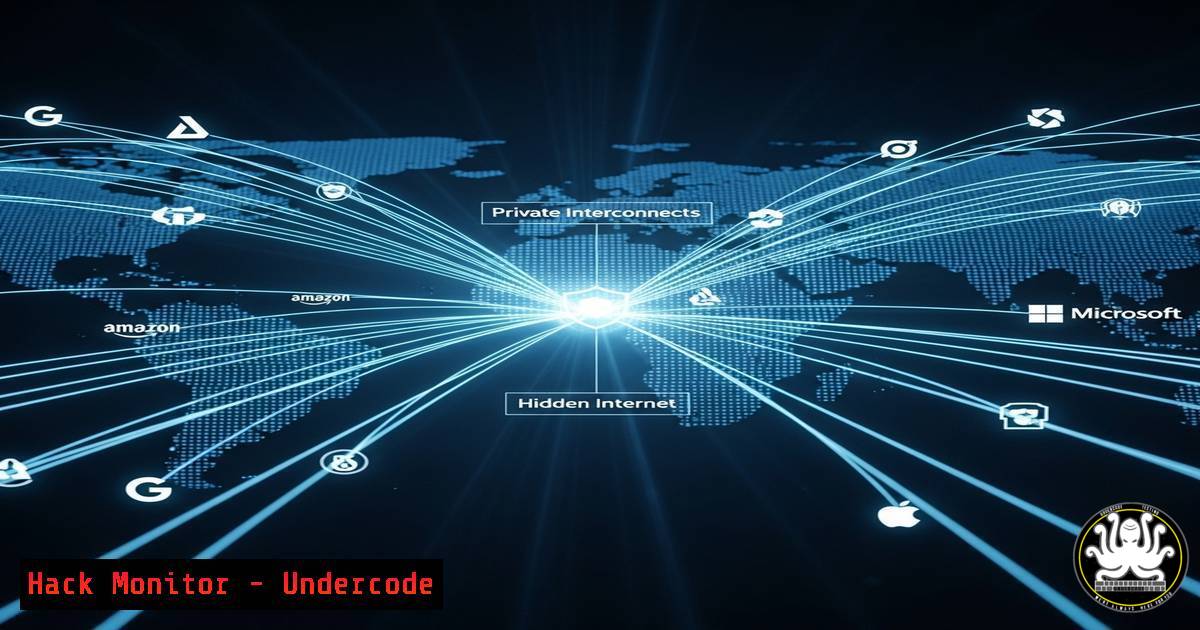
While consumers rely on the public internet, global enterprises operate on a hidden network of private interconnects. This infrastructure, housed within colossal data centers like those from Equinix, forms the backbone of modern cloud computing, finance, and AI, offering unparalleled speed, reliability, and security. Understanding this architecture is critical for any cybersecurity or IT professional securing enterprise-scale applications.
Learning Objectives:
- Understand the core concepts of Internet Exchange Points (IXPs) and private peering.
- Learn key network commands to map and diagnose both public and private network paths.
- Identify the security implications and hardening strategies for environments reliant on private cloud interconnects.
You Should Know:
1. Tracing the Path: Public vs. Private Routing
`traceroute 8.8.8.8`
`traceroute enterprise-app.corporate.com`
Step-by-step guide: The standard `traceroute` command reveals the path packets take across the public internet, showing every hop through various ISPs. When executed towards a major cloud provider’s public IP, the path is long and convoluted. In contrast, a traceroute to a service hosted within the same colocation facility (like an Equinix IBX) may show only a single hop or a direct path through a private peer, demonstrating the efficiency of a private interconnect. This is fundamental for diagnosing latency issues and understanding your traffic’s real path.
2. Mapping the Digital Terrain with Looking Glasses
`whois AS15169` Google’s Autonomous System Number (ASN)
`dig +short TXT o-o.myaddr.l.google.com @ns1.google.com` Google’s DNS-based lookup
Step-by-step guide: Large networks are identified by their Autonomous System Number (ASN). Using `whois` on a company’s ASN (e.g., AS15169 for Google) reveals their peering policy and public network information. Furthermore, many large providers operate “looking glass” servers or offer DNS-based commands (like Google’s above) that help you see the internet from their perspective, crucial for understanding BGP routing and diagnosing connectivity issues from the other side.
3. Interconnect Security: The AWS PrivateLink Example
`aws ec2 describe-vpc-endpoint-services` List available PrivateLink services
`aws ec2 create-vpc-endpoint –vpc-id vpc-123abc –service-name com.amazonaws.vpce.us-east-1.vpce-svc-123abc –vpc-endpoint-type Interface`
Step-by-step guide: Services like AWS PrivateLink exemplify the modern application of private interconnects. Instead of exposing a service to the entire internet, you create a VPC Endpoint within Amazon’s massive private network. The commands above first list available services and then create a secure network interface that allows private, scalable connectivity between your VPC and the service, without the data ever traversing the public web, drastically reducing the attack surface.
- BGP: The Protocol That Glues It All Together
`show ip bgp summary` Cisco IOS command to view BGP peer status
`netstat -rn` View the local routing table on Linux/Windows
Step-by-step guide: Border Gateway Protocol (BGP) is the language spoken between networks at these private peering points. On a network router, the command `show ip bgp summary` displays the status of all BGP peers, showing which other networks you are directly connected to. On an endpoint, `netstat -rn` shows the local routing table, indicating which gateway traffic will use. Misconfigured BGP is a prime source of outages and hijacking events, making understanding it non-negotiable.
5. Hardening Your Endpoints in a Hybrid World
`sudo ufw enable` Enable the Uncomplicated Firewall on Linux
`Get-NetFirewallProfile -Name Domain,Public,Private | Set-NetFirewallProfile -Enabled True` Enable all Windows Firewall profiles
Step-by-step guide: Even with private backbones, endpoint security is paramount. These commands activate the host-based firewalls. On Linux, UFW provides a simple interface for iptables. The PowerShell command ensures the Windows Firewall is active on all profiles. In a privately interconnected environment, a compromised endpoint can still traverse the private network, so segmenting access with strict firewall rules is essential.
- Validating Data in Transit: The Role of mTLS
`openssl s_client -connect secure-service.internal:443 -servername secure-service.internal` Test TLS connection
`keytool -list -v -keystore client-keystore.jks` List details in a Java keystore (for mTLS)
Step-by-step guide: Private networks aren’t inherently encrypted. Mutual TLS (mTLS) adds a critical layer of authentication and encryption, ensuring both client and server verify each other’s identity. The first command tests a standard TLS connection to a service. Implementing mTLS involves managing client and server certificates. The second command is used to inspect a Java keystore, a common way to store these credentials for applications, preventing impersonation within the trusted private network. -
Simulating a Private Cloud: Minikube for Internal Services
`minikube start –driver=docker` Start a local Kubernetes cluster
`kubectl create deployment nginx –image=nginx` Deploy a sample service internally
`kubectl expose deployment nginx –port=80 –type=ClusterIP` Expose it only on the internal cluster network
Step-by-step guide: Tools like Minikube allow you to simulate a private cloud environment on your local machine. These commands start a local Kubernetes cluster, deploy an NGINX web server, and then expose it only on the internal “pod” network (ClusterIP), making it inaccessible from the public internet. This models the principle of services living on a private, internal interconnect, just at a much smaller scale.
What Undercode Say:
- The public internet is merely the surface web; the real traffic of global commerce and data flows through a privileged, private layer.
- Security in this paradigm shifts from perimeter-based defense to a zero-trust model, where encryption and identity are enforced even on “trusted” private networks.
The emergence of private internet interconnects represents the largest unspoken stratification in digital infrastructure. It creates a two-tier system: one of latency, jitter, and exposure for the public, and one of speed, reliability, and security for premium enterprises. For professionals, this means the attack surface has not shrunk but moved and concentrated. A breach into a major colocation provider’s management system could yield access to the core infrastructure of hundreds of Fortune 500 companies simultaneously. The future of cybersecurity is less about defending a corporate firewall and more about securing identity and access management (IAM) across complex, multi-tenant cloud environments and the software-defined networks that power these private interconnections. The skills required are evolving from network administration to cloud-native security and automation.
Prediction:
The reliance on private interconnects will only intensify with the AI boom, as the massive datasets required for model training cannot feasibly move across the public internet. We will see the rise of “AI Exchange Points” within these same data centers, where proprietary models and training data are exchanged directly between entities. This will create new, high-value targets for state-sponsored actors, making supply chain attacks on these interconnection platforms one of the most critical cybersecurity threats of the next decade. The companies that control this physical layer will wield unprecedented influence over the global economy.
🎯Let’s Practice For Free:
IT/Security Reporter URL:
Reported By: Chuckkeith This – Hackers Feeds
Extra Hub: Undercode MoN
Basic Verification: Pass ✅


