Listen to this Post
Introduction:
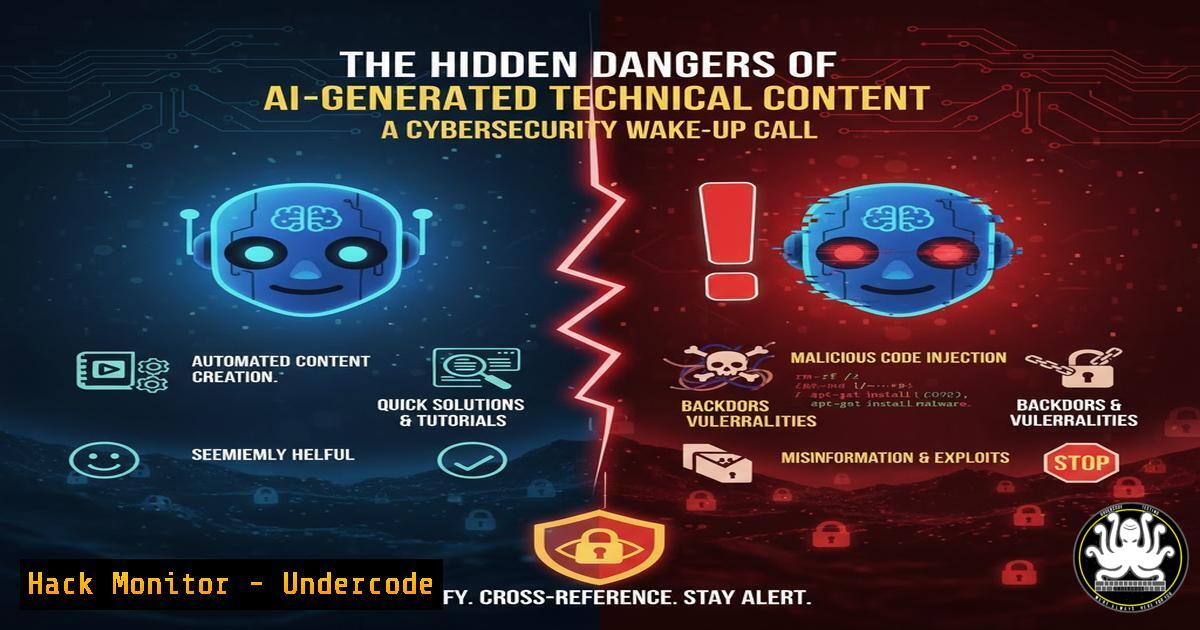
The proliferation of AI content generation tools has created a new attack vector in cybersecurity education and technical documentation. As demonstrated by recent LinkedIn discussions, AI systems like Gemini are producing technically incorrect commands, procedures, and illustrations that could lead to catastrophic system failures if followed by unsuspecting professionals. This emerging threat requires immediate attention from the security community.
Learning Objectives:
- Identify common patterns of AI-generated technical inaccuracies in cybersecurity content
- Implement verification protocols for technical commands and code snippets
- Develop critical analysis skills to distinguish between legitimate and AI-hallucinated technical content
You Should Know:
1. Verifying Command Line Instructions
 Always cross-reference commands with official documentation
man [bash]
whatis [bash]
tldr [bash]
Step-by-step guide: Before executing any AI-suggested command, use the `man` command to display the official manual page. The `whatis` command provides brief descriptions, while `tldr` offers community-verified examples. Always verify flags and options against multiple trusted sources before implementation.
2. Validating Code Snippets Security
import ast
import sys

def analyze_code_safety(code_string):
try:
tree = ast.parse(code_string)
for node in ast.walk(tree):
if isinstance(node, (ast.Import, ast.ImportFrom)):
print(f"Import detected: {node.names[bash].name}")
if isinstance(node, ast.Call):
if isinstance(node.func, ast.Name):
print(f"Function call: {node.func.id}")
except SyntaxError as e:
print(f"Syntax error: {e}")
Step-by-step guide: This Python script uses the Abstract Syntax Tree module to analyze code structure without execution. It identifies imported modules and function calls, helping security professionals spot potentially malicious or incorrect code patterns before deployment in production environments.
3. AI Content Detection and Analysis
 Install and use AI detection tools
pip install ai-content-analyzer
ai-analyzefile technical_document.pdf --check-accuracy
ai-verify-commands network_config_guide.txt
Step-by-step guide: These specialized tools analyze technical documents for patterns consistent with AI generation. They cross-reference commands with known databases and flag inconsistencies, incorrect syntax, or potentially dangerous configurations that could compromise system security.
4. Secure Technical Documentation Verification
 Create hash verification for technical documents
sha256sum official_documentation.pdf
gpg --verify technical_guide.pdf.asc technical_guide.pdf
md5deep -r /path/to/documentation/folder
Step-by-step guide: Implement cryptographic verification for all technical documents. Use SHA256 hashing to ensure integrity, GPG signatures for authenticity, and md5deep for recursive hashing of documentation directories to detect unauthorized modifications.
5. Network Security Command Validation
 Network command verification protocol
which nmap
nmap --version
nmap --help | grep "service detection"
ss -tuln | grep 22
iptables -L -v -n
Step-by-step guide: Before running network scanning or configuration commands, verify tool installation paths and versions. Check current network status with `ss` instead of deprecated netstat, and always review firewall rules before making changes to avoid service disruptions.
6. System Hardening Command Verification
 System security command cross-checking
getenforce
sestatus
ausearch -m avc -ts recent
grep "SELinux is preventing" /var/log/messages
semanage boolean -l | grep httpd
Step-by-step guide: When implementing system hardening measures, verify SELinux status and review audit logs for access violations. Use `semanage` to manage SELinux policies properly and always test configurations in non-production environments first.
7. Cloud Security Configuration Validation
 AWS CLI command verification
aws --version
aws configure list
aws iam get-account-authorization-details --output table
aws cloudtrail describe-trails --region us-east-1
Step-by-step guide: Before executing cloud security commands, verify AWS CLI installation and configuration. Use read-only commands first to understand current state, and always implement changes through infrastructure-as-code with proper version control rather than manual CLI execution.
What Undercode Say:
- AI-generated technical content poses immediate operational risks due to subtle inaccuracies that bypass traditional review processes
- The cybersecurity community must develop new verification protocols specifically designed to detect AI-hallucinated technical information
- Organizations should implement mandatory multi-source verification for all AI-assisted technical documentation
The emergence of technically flawed AI-generated content represents a paradigm shift in cybersecurity threats. Unlike traditional malware or exploits, these inaccuracies infiltrate through educational and documentation channels, making them particularly insidious. Security teams must now contend with the reality that their own training materials and technical references could contain dangerous misinformation. This requires implementing robust content verification workflows and treating AI-generated technical advice with the same skepticism as unsolicited email attachments.
Prediction:
Within two years, we will see the first major cybersecurity incident directly attributable to AI-hallucinated technical documentation being implemented in enterprise environments. This will lead to the development of specialized AI-content verification tools becoming standard in security toolchains, and regulatory frameworks will emerge requiring human verification of AI-generated technical procedures in critical infrastructure sectors. The cybersecurity insurance industry will likely begin requiring AI-content verification protocols as a prerequisite for coverage.
🎯Let’s Practice For Free:
IT/Security Reporter URL:
Reported By: Lucabongiorni Hardwarehackingtips – Hackers Feeds
Extra Hub: Undercode MoN
Basic Verification: Pass ✅


