Listen to this Post
Introduction:
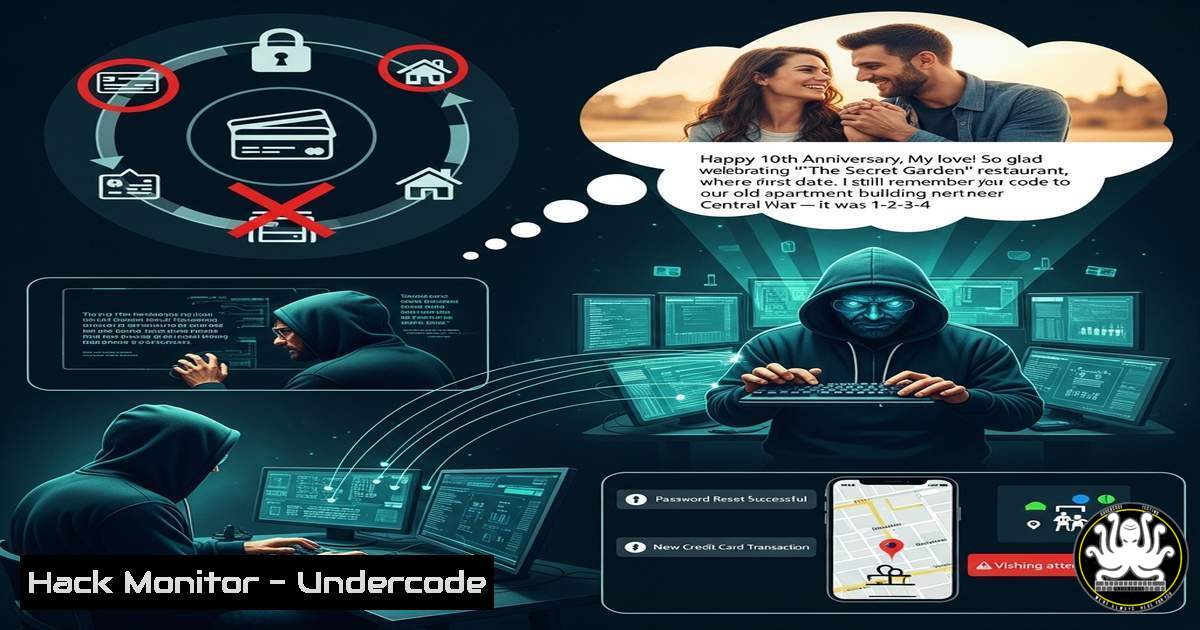
In an era of digital connection, sharing personal milestones on professional networks like LinkedIn is commonplace. However, such posts can inadvertently become a treasure trove for threat actors conducting reconnaissance. This article deconstructs the hidden risks in a typical celebratory post and provides actionable commands to fortify your digital footprint against social engineering and targeted attacks.
Learning Objectives:
- Identify Personally Identifiable Information (PII) and operational security (OPSEC) risks embedded in social media posts.
- Execute commands to audit and harden social media privacy settings and conduct personal digital footprinting.
- Implement monitoring techniques to detect doxing and credential stuffing attacks stemming from leaked data.
You Should Know:
1. Digital Footprint Reconnaissance with OSINT Frameworks
The first step for an attacker is to scrape all available data from a target’s public profile. Tools like the OWASP Amass framework can map digital surfaces.
amass intel -whois -d target-company.com
 This command performs reverse WHOIS lookups to discover domains associated with a specific email or name found in a profile.
Step-by-step guide:
- Install Amass via `sudo apt-get install amass` on Kali Linux.
- Identify key data points from a target post: full name, employer, location, anniversary date.
- Run the command, substituting `-d` with a discovered domain or `-active` for DNS enumeration.
- The output generates a list of associated domains and subdomains, providing initial targets for further probing.
2. Harvesting Email Addresses with theHarvester
An attacker can use a simple command to find email addresses associated with an individual or company, which are often used in phishing campaigns.
theharvester -d microsoft.com -l 500 -b google
Step-by-step guide:
1. Install via `sudo apt-get install theharvester`.
- The `-d` flag specifies the target domain. `-l` limits the number of results, and `-b` specifies the data source (google, linkedin, etc.).
- Execute the command to scrape publicly available emails from the specified sources.
- The resulting list can be used for credential stuffing attacks against corporate email portals.
3. LinkedIn Profile Data Extraction with LinkedInt
Specialized tools automate the scraping of LinkedIn data, turning a congratulatory comment section into a source of valuable organizational intelligence.
python3 LinkedInt.py -c "Tony Moukbel" -e
Step-by-step guide:
- Clone the LinkedInt tool from GitHub: `git clone https://github.com/vysecurity/LinkedInt.git`
2. Install Python dependencies: `pip3 install -r requirements.txt`
- The `-c` flag specifies a company or name to search for. The `-e` flag attempts to enumerate email formats.
- The tool outputs a list of potential employees and email addresses, effectively building a target list from a single post’s engagement.
4. Password Profiling with Crunch Using Personal Data
Anniversary dates, names, and locations are commonly used in weak passwords. Attackers use tools like Crunch to generate targeted wordlists.
crunch 8 12 -t @@@%%%^^^ -o custom_wordlist.txt
 Where @ represents a lowercase letter, % a number, and ^ an uppercase letter, based on discovered PII.
Step-by-step guide:
1. Install Crunch: `sudo apt-get install crunch`
- Analyze the post for keywords: name (“Jenee”), date (“8 year”), company (“Fox Pick”).
- The `-t` flag allows for pattern generation. For example, `Jenee1985` would use the pattern
@@@@%%%%. - The `-o` flag outputs the wordlist to a file. This custom list is then used with tools like Hydra or John the Ripper for password attacks.
-
Detecting Credential Stuffing Attacks with Zeek (formerly Bro)
If a corporate email is discovered, attackers will likely attempt credential stuffing. Monitoring network traffic for these attempts is crucial.zeek -C -r traffic.pcap frameworks/files/extract-all-files This command runs Zeek on a packet capture file to extract all files and analyze for brute-force patterns.
Step-by-step guide:
- Ensure Zeek is installed and configured on your network monitor.
- Capture network traffic or use a stored `.pcap` file.
- Run the command to analyze the traffic. Zeek will generate `http.log` and `notice.log` files.
- Inspect `http.log` for a high volume of POST requests to login pages from single IPs, indicating a stuffing attack.
6. Hardening LinkedIn Privacy Settings via API
Minimize data exposure by adjusting privacy settings. While often done manually, understanding the underlying API calls highlights what data is exposed.
 Example cURL command to check profile visibility via LinkedIn API (requires auth)
curl -H "Authorization: Bearer <ACCESS_TOKEN>" "https://api.linkedin.com/v2/me?projection=(id,firstName,lastName,profilePicture(displayImage~:digitalmediaAsset:vanityHeader))"
Step-by-step guide:
- This demonstrates the type of data an app with API access can request.
- To manually change settings, navigate to LinkedIn: Me > Settings & Privacy > Privacy.
- Set “Who can see your connections” to “Only you”.
4. Set “Profile visibility off LinkedIn” to “No”.
- Under “Data visibility”, review “Social data” and disable sharing.
-
Monitoring for Doxing with Google Alerts and Have I Been Pwned
Proactively monitor the web for exposures of your personal data.No direct command, but integrate Have I Been Pwned's API into a monitoring script: curl -H "hibp-api-key: YOUR_API_KEY" "https://haveibeenpwned.com/api/v3/breachedaccount/[email protected]"
Step-by-step guide:
- Create a Google Alert for your full name and email address to get notifications of new public mentions.
- For the HIBP API, acquire a key from their website.
- The cURL command will return a list of breaches your email has been found in.
- Automate this check with a simple Python script to run periodically and alert you via email if a new breach is detected.
What Undercode Say:
- The Illusion of Private Networks: Treat every professional network as public and adversarial. A post visible to “Anyone on or off LinkedIn” is indexable and scrapable, making it a permanent part of your digital shadow.
- The Ripple Effect of Engagement: The comment section of a benign post is a goldmine for organizational mapping. The congratulatory replies from a CISO, Penetration Tester, and OT/ICS Cybersecurity Fellow confirm affiliations and relationships, enabling highly convincing spear-phishing campaigns.
The analysis of this single post reveals a multi-layered OPSEC failure. The content itself provides a personal timeline (“8 year”) and context for potential password answers. The engagement is far more damaging, as it publicly confirms professional relationships between high-value targets (a CISO, a pentester) and the original poster. This social graph is instrumental for threat actors seeking to craft believable pretexts for whaling attacks. The platform’s default settings often maximize visibility for engagement at the expense of user privacy, creating a persistent risk that users inadvertently accept.
Prediction:
The convergence of AI and OSINT will exponentially increase this risk. AI-powered tools will soon automatically correlate scattered social data points across platforms in real-time, constructing comprehensive digital profiles without human intervention. This will lead to a rise in hyper-personalized, automated spear-phishing campaigns at an unprecedented scale. Deepfake audio and video technology, trained on public content like video podcasts or interview clips discovered from these profiles, will be used to create convincing fraudulent instructions, targeting financial and IT departments. The future of social engineering will be automated, personalized, and highly persuasive, forcing a fundamental rethink of “social” sharing in a professional context.
🎯Let’s Practice For Free:
IT/Security Reporter URL:
Reported By: Jeneerogers28 We – Hackers Feeds
Extra Hub: Undercode MoN
Basic Verification: Pass ✅


