Listen to this Post
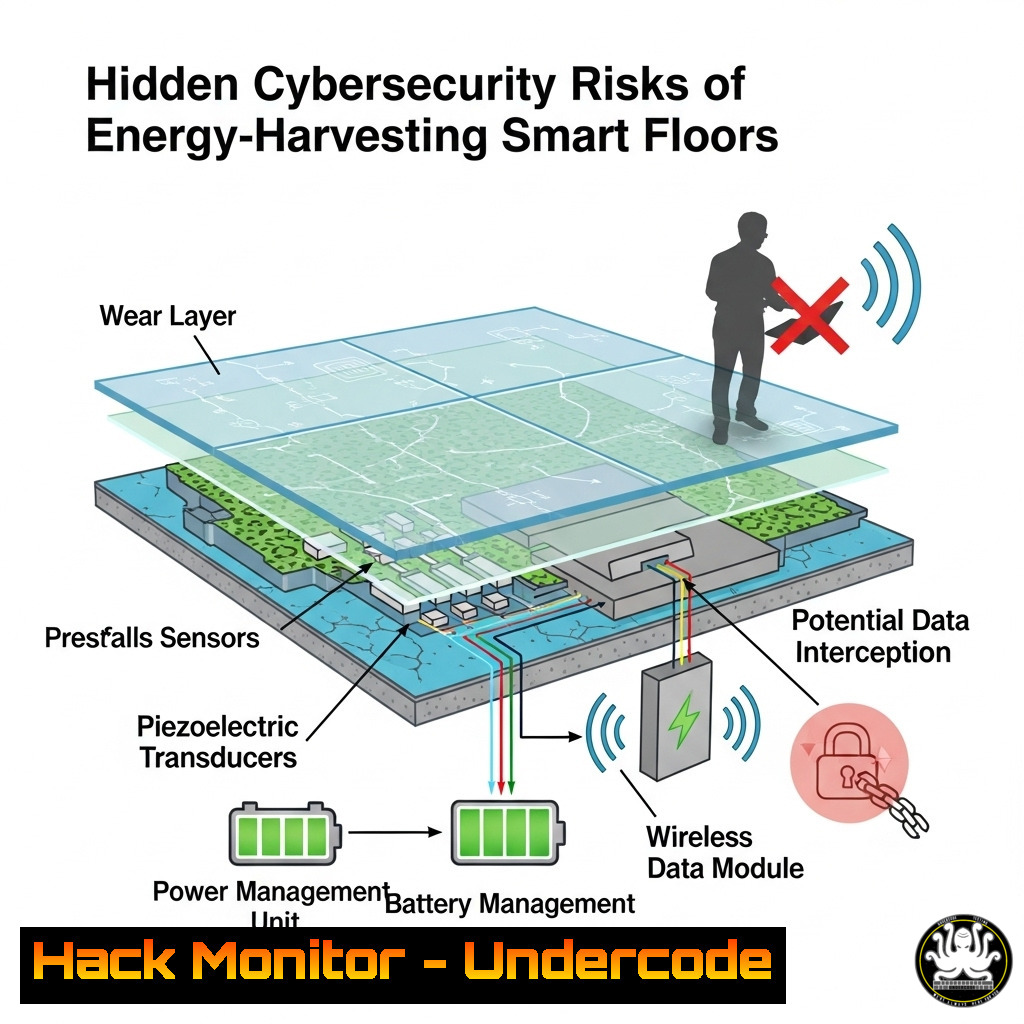
Introduction:
The emergence of energy-harvesting smart floors represents a monumental leap in sustainable technology, integrating the Internet of Things (IoT) and smart city infrastructure. However, this convergence of physical and digital systems introduces a complex new frontier of cybersecurity threats, from data interception to critical infrastructure manipulation.
Learning Objectives:
- Understand the core IoT and network protocols used in smart infrastructure and their inherent vulnerabilities.
- Learn to identify and mitigate attack vectors specific to kinetic energy harvesting systems and their data networks.
- Develop actionable skills for securing IoT sensor data, network communications, and cloud-based control systems.
You Should Know:
1. Mapping the IoT Network Architecture
Smart floors operate on a network of sensors and controllers. The first step in defense is understanding what’s on the network.
 Nmap command for discovering IoT devices on a network
nmap -sS -O -T4 192.168.1.0/24

Example output for a suspected sensor node
Nmap scan report for 192.168.1.105
Host is up (0.0030s latency).
Not shown: 998 closed ports
PORT STATE SERVICE
80/tcp open http
9100/tcp open jetdirect
MAC Address: AA:BB:CC:11:22:33 (Unknown)
Step-by-step guide: This Nmap command performs a SYN scan (-sS) and attempts OS detection (-O) on the specified subnet. Discovering devices with open ports like 80 (HTTP) or 9100 (often used for raw data printing/streaming) is common for IoT sensors. Regularly scan your operational technology (OT) network segments to inventory all connected devices and identify unauthorized or rogue nodes that could serve as entry points for attackers.
2. Intercepting Unencrypted Sensor Data
Data transmitted from floor sensors to collectors is often a primary target.
 Using tcpdump to capture network traffic on a specific interface
sudo tcpdump -i eth0 -w smart_floor_capture.pcap

Analyzing captured packets for MQTT traffic (common IoT protocol)
tshark -r smart_floor_capture.pcap -Y "mqtt"
Step-by-step guide: Capturing raw network traffic allows you to analyze the protocols in use. Many legacy or cost-optimized IoT devices use unencrypted protocols like MQTT or HTTP. If analysis with a tool like Wireshark or `tshark` reveals readable data payloads (e.g., sensor_id=FLR-105&pressure=120kPa), an attacker on the network can easily eavesdrop. Mitigate this by enforcing TLS encryption for all data in transit.
3. Hardening the MQTT Broker Configuration
MQTT is the de facto standard for IoT messaging. A misconfigured broker is a severe risk.
 Connecting to an MQTT broker anonymously (a common misconfiguration)
mosquitto_sub -h <BROKER_IP> -t "" -v

Securing mosquitto.conf configuration file
listener 8883
cafile /etc/mosquitto/ca_certificates/ca.crt
certfile /etc/mosquitto/certs/server.crt
keyfile /etc/mosquitto/certs/server.key
require_certificate true
Step-by-step guide: The first command attempts to subscribe to all topics (-t "") on a broker. If successful, it indicates a lack of authentication, allowing anyone to consume all sensor data. Secure your broker by configuring it to listen only on TLS ports (8883) and enforcing certificate-based authentication, as shown in the example configuration snippet.
4. Exploiting and Securing API Endpoints
Cloud-based dashboards control and display energy data via APIs.
 Testing for insecure direct object reference (IDOR) on a user API endpoint
curl -X GET http://api.smartgrid-tech.com/user/7356/profile

Securing an API endpoint with authentication middleware (Node.js/Express example)
app.get('/api/sensor-data/:id', authenticateToken, (req, res) => {
// Function logic to fetch sensor data
});

function authenticateToken(req, res, next) {
const authHeader = req.headers['authorization'];
const token = authHeader && authHeader.split(' ')[bash];
if (token == null) return res.sendStatus(401);
jwt.verify(token, process.env.ACCESS_TOKEN_SECRET, (err, user) => {
if (err) return res.sendStatus(403);
req.user = user;
next();
});
}
Step-by-step guide: The `curl` command tests if you can access another user’s data by simply changing the user ID in the URL—a classic IDOR vulnerability. The mitigation code shows how to protect an API route using JWT token verification middleware, ensuring users can only access their own authorized data.
5. Windows-Based SCADA Control System Hardening
Industrial Control Systems (ICS) often manage the energy distribution.
 PowerShell command to audit Windows services on a SCADA server
Get-Service | Where-Object {$<em>.Status -eq 'Running' -and $</em>.StartType -eq 'Automatic'} | Format-Table -AutoSize

Disabling an unnecessary and vulnerable service (e.g., SMBv1)
Stop-Service -Name LanmanServer -Force
Set-Service -Name LanmanServer -StartupType Disabled
Step-by-step guide: SCADA and ICS servers are high-value targets. Use the first PowerShell command to audit all running and automatic services. Identify and disable any non-essential services that broaden the attack surface, such as outdated SMB protocols. This reduces the number of potential entry points for ransomware or lateral movement.
6. Linux-Based Data Processor Security
The backend servers processing kinetic data must be locked down.
 Using auditd to monitor for unauthorized access to critical data files
sudo auditctl -w /opt/smartfloor/raw_data/ -p rwa -k smartfloor_data_access

Reviewing audit logs for access attempts
sudo ausearch -k smartfloor_data_access | aureport -f -i
Step-by-step guide: The `auditctl` command adds a watch (-w) on the directory containing raw sensor data, logging any read, write, or attribute change (-p rwa). The `ausearch` command then generates a report of all access attempts. This helps in detecting anomalous or unauthorized attempts to read or exfiltrate sensitive operational data.
7. Vulnerability Scanning for Embedded Controllers
The firmware on embedded piezoelectric controllers can contain known vulnerabilities.
 Using Nuclei to scan for known vulnerabilities in web interfaces
nuclei -u http://192.168.1.105 -t /path/to/embedded-devices-nuclei-templates/

Command to check current firmware version on a Linux-based controller
cat /etc/os-release
uname -a
Step-by-step guide: The `nuclei` command uses pre-built templates to scan the device’s web interface for thousands of known vulnerabilities. The subsequent commands check the OS and kernel version. Regularly scanning embedded devices and maintaining an asset inventory with firmware versions is critical for patching known exploits promptly.
What Undercode Say:
- The Attack Surface is Physical and Digital: The greatest risk is the bridge between the physical footstep and the digital cloud. Each sensor, data transmission, and API call is a potential pivot point for an attacker seeking to manipulate energy data or disrupt city power.
- Data Integrity is Paramount: While confidentiality is important, the integrity of the data is critical. Manipulated sensor readings could lead to incorrect energy billing, false grid load reports, or even engineered blackouts by misleading grid operators.
The convergence of kinetic energy harvesting with IoT creates a tantalizing target for state-sponsored actors and hacktivists. The technology is nascent, and security is often an afterthought in the race to market. A successful attack wouldn’t just steal data; it could destabilize the trust in a city’s critical infrastructure. Proactive security, zero-trust architecture, and continuous monitoring are not optional; they are fundamental requirements for any public-facing smart infrastructure project.
Prediction:
Within the next 3-5 years, we predict a major metropolitan smart city initiative will suffer a significant cyber-physical attack originating from a compromised smart infrastructure node, like energy-harvesting floors. This will not be a simple data breach but an attack on integrity and availability, causing widespread disruption and eroding public trust. The incident will trigger stringent new regulatory frameworks for IoT and smart city cybersecurity, mandating built-in encryption, mandatory penetration testing, and real-time anomaly detection for all public infrastructure projects. The industry will shift from viewing security as a cost center to recognizing it as the foundational pillar of resilient smart cities.
🎯Let’s Practice For Free:
IT/Security Reporter URL:
Reported By: Padamskafle What – Hackers Feeds
Extra Hub: Undercode MoN
Basic Verification: Pass ✅


