Listen to this Post
Introduction:
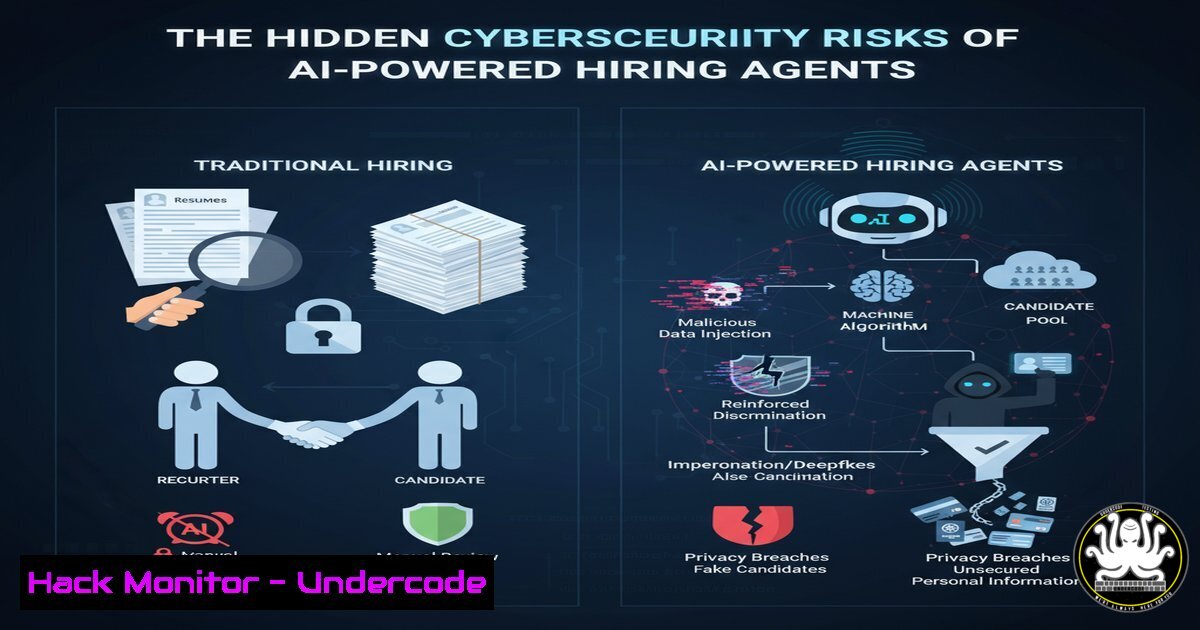
The integration of AI agents into critical business processes like hiring represents a new frontier in operational efficiency, but it also introduces a novel attack surface for social engineering and data exfiltration. When companies automate sensitive communications without robust security protocols, they risk not only eroding trust but also exposing themselves to sophisticated phishing and impersonation attacks. This article deconstructs the technical vulnerabilities inherent in poorly implemented AI hiring workflows and provides a security-focused hardening guide.
Learning Objectives:
- Identify common security misconfigurations in AI agent APIs and data handling pipelines.
- Implement secure logging, monitoring, and input sanitization for automated communication systems.
- Harden AI-driven workflows against prompt injection and data leakage attacks.
You Should Know:
1. Securing AI Agent API Endpoints
AI agents rely on APIs to function. An unsecured endpoint is a primary vector for attack.
 Example: Using curl to test an API endpoint for common security headers
curl -I -X GET https://api.company.com/hiring-agent/v1/send_rejection \
-H "Authorization: Bearer <token>"
Step-by-step guide:
This command tests the HTTP response headers of an API endpoint. A secure endpoint should return headers like `Strict-Transport-Security` (HSTS), X-Content-Type-Options: nosniff, and Content-Security-Policy. The absence of these headers indicates a potential misconfiguration that could lead to man-in-the-middle attacks or content sniffing vulnerabilities. Regularly audit all external-facing APIs used by your AI systems.
2. Logging and Monitoring for Anomalous Agent Activity
Without proper logging, malicious use of an AI agent can go undetected.
 Linux: Search system logs for a specific process (like a Python AI agent script) for high-volume activity
journalctl _COMM=python3 --since="1 hour ago" | grep "send_rejection" | wc -l
Step-by-step guide:
This command checks the systemd journal for logs from the `python3` command related to sending rejections over the past hour and counts the occurrences. An unusually high number could indicate that the agent has been compromised and is being used to spam candidates or exfiltrate data. Implement alerting thresholds for such activities.
3. Input Sanitization to Prevent Prompt Injection
AI agents are highly susceptible to prompt injection, where a malicious user manipulates the agent’s behavior.
 Python example: Basic input sanitization for user data fed to an LLM
import re

def sanitize_input(user_input):
 Remove potentially dangerous patterns or escape sequences
sanitized = re.sub(r'[{}|&;$<>`\]', '', user_input)
 Limit input length to prevent resource exhaustion
if len(sanitized) > 1000:
raise ValueError("Input length exceeds maximum allowed.")
return sanitized

Usage before passing data to the AI agent
candidate_feedback = get_candidate_data()
safe_feedback = sanitize_input(candidate_feedback)
Step-by-step guide:
This Python function demonstrates a basic level of sanitization by removing characters often used in command injection attacks and enforcing a length limit. Before any user-generated content (like application form data) is processed by the AI agent, it must be sanitized to prevent an attacker from injecting malicious prompts that could force the agent to reveal sensitive information or perform unauthorized actions.
4. Hardening the Data Pipeline for Candidate PII
Candidate data is highly sensitive Personally Identifiable Information (PII) and must be protected at rest and in transit.
-- Example SQL command to encrypt a database column containing candidate emails (PostgreSQL)
ALTER TABLE candidates ALTER COLUMN email_address SET ENCRYPTED WITH (COLUMN_ENCRYPTION_KEY = cek1, ENCRYPTION_TYPE = DETERMINISTIC, ALGORITHM = 'AEAD_AES_256_CBC_HMAC_SHA_256');
Step-by-step guide:
This SQL command alters a table to encrypt a specific column. Any AI system that stores candidate data must use encryption for PII at rest. Additionally, ensure that data in transit between the AI agent, its database, and any external services uses TLS 1.2 or higher. Access to this data should be governed by the principle of least privilege.
- Windows Security Audit for Processes Running AI Agents
On Windows servers hosting these agents, detailed auditing is crucial.PowerShell: Get a detailed list of processes including command-line arguments, useful for spotting suspicious AI agent instances Get-WmiObject Win32_Process | Select-Object Name, ProcessId, CommandLine | Where-Object {$_.Name -like "python"}
Step-by-step guide:
This PowerShell command queries all running processes and filters for those with “python” in the name, displaying their command-line arguments. An attacker who compromises an AI agent might run a malicious script disguised as a legitimate process. Regular auditing of command-line arguments helps identify unauthorized changes or injected code.
6. Network Segmentation for AI Workflows
Isolate the network segment where AI agents operate to limit the blast radius of a potential breach.
 Linux iptables example to restrict traffic from an AI agent's server to only necessary services on specific ports
iptables -A OUTPUT -p tcp --dport 443 -d smtp.provider.com -j ACCEPT
iptables -A OUTPUT -p tcp --dport 5432 -d database.internal.com -j ACCEPT
iptables -A OUTPUT -j DROP
Step-by-step guide:
These iptables rules create a restrictive outgoing firewall policy. The AI agent server is only allowed to connect to its email provider on port 443 (SMTP over TLS) and its internal database on port 5432. All other outgoing connections are dropped. This prevents a compromised agent from being used as a hop point to attack other internal systems.
7. Vulnerability Mitigation: Regular Dependency Scanning
AI agent codebases rely on numerous third-party libraries, which can introduce vulnerabilities.
 Using OWASP Dependency-Check to scan a Python project for known vulnerabilities
dependency-check.sh --project "MyHiringAgent" --scan ./path/to/requirements.txt --out ./reports
Step-by-step guide:
This command runs the OWASP Dependency-Check tool on a project’s `requirements.txt` file. It cross-references the listed libraries with databases of known vulnerabilities (CVEs). Integrate this scan into your CI/CD pipeline to automatically fail builds that include libraries with critical vulnerabilities, forcing developers to update to secure versions before deployment.
What Undercode Say:
- Key Takeaway 1: The core failure is a security culture issue, not just a technical one. Automating a high-trust human interaction without considering the threat model is a fundamental governance flaw.
- Key Takeaway 2: AI agents are not “set and forget” systems. They require continuous security monitoring, much like any other critical infrastructure, to prevent them from becoming tools for attackers.
The automation of rejection letters is a symptom of a larger problem: the blind integration of AI into sensitive workflows without a corresponding investment in security hardening. The primary risk isn’t just a PR misstep; it’s that these systems, if compromised, have direct access to vast amounts of PII and can be manipulated to cause reputational damage or worse. The “lazy prompt” is indicative of a lazy security posture. Organizations must apply the same rigorous security frameworks—encryption, access control, logging, and network segmentation—to their AI agents as they do to their core databases and user management systems. Treating AI workflows as second-class citizens in the security landscape is an invitation for a breach.
Prediction:
The casual deployment of AI agents in business-critical functions will lead to a new wave of social engineering attacks in the next 12-18 months. We will see a rise in incidents where attackers use prompt injection or API compromises to manipulate these agents into sending fraudulent communications, leaking candidate data, or even initiating fraudulent financial transactions. This will force a regulatory response, potentially leading to new compliance standards specifically governing the security and auditability of automated decision-making systems. Companies that proactively harden these systems today will avoid significant financial and reputational costs tomorrow.
🎯Let’s Practice For Free:
IT/Security Reporter URL:
Reported By: Kachave Whats – Hackers Feeds
Extra Hub: Undercode MoN
Basic Verification: Pass ✅


