Listen to this Post
Introduction:
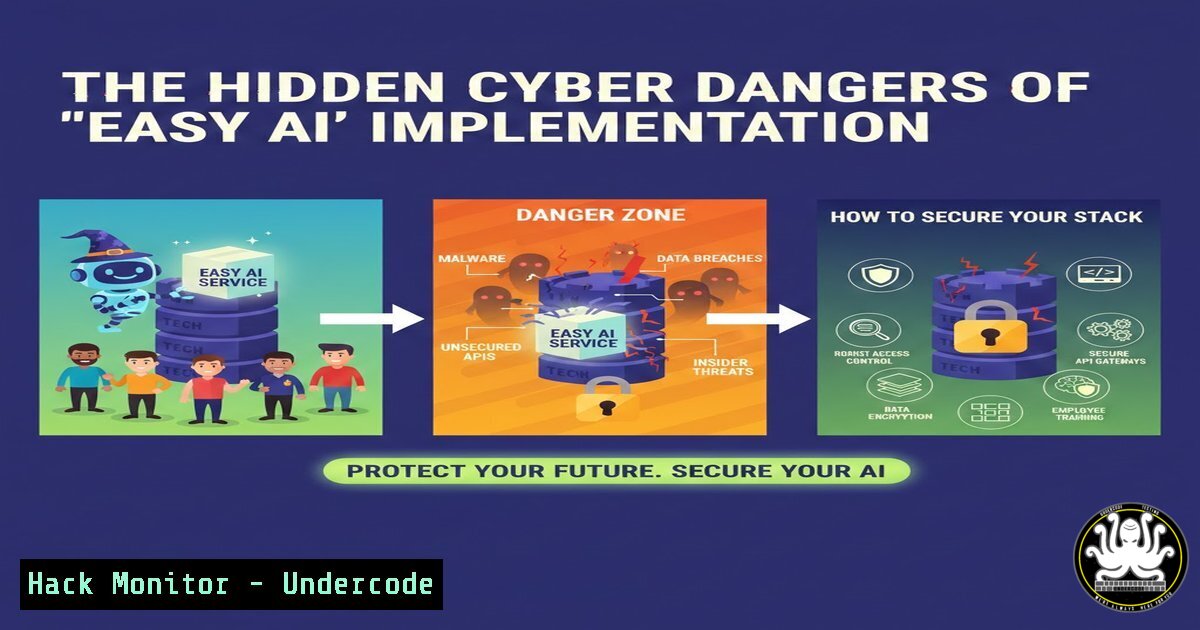
The burgeoning trend of offering AI implementation-as-a-service, as popularized by entrepreneurial figures, presents a significant but overlooked attack surface. While businesses rush to automate operations and lead generation with existing AI tools, they often deploy these solutions without basic security hardening, exposing sensitive data and infrastructure. This article deconstructs the technical risks inherent in rapid AI integration and provides a security-first framework for safe implementation.
Learning Objectives:
- Identify the top five security vulnerabilities introduced by plug-and-play AI automation tools.
- Implement hardening measures for common AI deployment environments (e.g., cloud APIs, chatbot containers).
- Establish monitoring and auditing protocols for AI-driven business processes.
You Should Know:
1. Insecure API Integrations: The Primary Attack Vector
Most “off-the-shelf” AI implementations rely heavily on connecting services via APIs (e.g., OpenAI, Google Gemini, CRM platforms). Exposed keys and unauthenticated endpoints are low-hanging fruit for attackers.
Step‑by‑step guide:
Audit & Secure API Keys: Never hardcode keys in scripts or front-end code. Use environment variables or secret management services.
Linux/Mac: Use `export OPENAI_API_KEY=”your-key”` in shell profiles, but better yet, use a vault.
Tool: Use `gitleaks` to scan your code repositories for accidentally committed keys: `gitleaks detect –source . -v`
Implement API Gateway Security: Use a gateway to manage quotas, authentication, and logging. For cloud deployments (AWS/Azure/GCP), enable IAM roles and resource policies.
Command Example (AWS CLI to check overly permissive policies):
aws iam list-policies --query "Policies[?PolicyName=='AI-ExecutionPolicy']"
aws iam get-policy-version --policy-arn <policy_arn> --version-id <v_id>
2. Unsecured AI Model Containers & Sandbox Escape
Many AI tools are deployed via Docker containers. Default, unhardened images can be compromised.
Step‑by‑step guide:
Harden Your Docker Daemon: Follow the principle of least privilege.
Run containers as a non-root user: In your Dockerfile, add USER 1000.
Use read-only filesystems where possible: `docker run –read-only
Scan for Vulnerabilities: Integrate static analysis.
Tool: Use `trivy` to scan images: `trivy image
Network Segmentation: Isolate the AI service container network.
docker network create --internal ai-internal-net
docker run --network ai-internal-net --name ai-service <image>
3. Data Poisoning & Manipulation in Training Pipelines
If your implementation involves fine-tuning models on company data, the pipeline is a target. Corrupted training data leads to flawed, biased, or malicious AI outputs.
Step‑by‑step guide:
Validate & Sanitize Input Data: Implement pre-processing checks.
Use tools like `Great Expectations` for data quality.
Hash and sign your training datasets to ensure integrity.
Secure the Training Environment: Ensure it’s air-gapped from production networks and requires multi-factor authentication for access.
Log All Data Interactions: Maintain immutable logs of what data was used, by whom, and when for audit trails.
4. Cloud Infrastructure Misconfiguration
Rapid deployment often leads to public S3 buckets, open database ports, and unpatched virtual machines hosting AI tools.
Step‑by‑step guide:
Automate Configuration Checks:
Tool: Use `Prowler` for AWS (prowler aws --checks extra79) or `Scout Suite` for multi-cloud audits.
Enforce Security Hardening Baselines: Apply CIS Benchmarks to your VMs.
Linux Example (Partial):
 Disable root login via SSH
sudo sed -i 's/^PermitRootLogin yes/PermitRootLogin no/' /etc/ssh/sshd_config
 Install and configure a host-based firewall (UFW)
sudo ufw allow ssh
sudo ufw --force enable
Implement Infrastructure as Code (IaC) Security: Scan Terraform/CloudFormation templates with `checkov` or `tfsec` before deployment.
- Insecure AI Output Handling (Prompt Injection & Data Leakage)
AI chatbots or content generators can be manipulated via crafted prompts to reveal system instructions, internal data, or perform unauthorized actions.
Step‑by‑step guide:
Implement Output Sanitization and Validation: Treat AI output as untrusted user input.
Use allow-lists for actions the AI can trigger (e.g., only certain API calls).
Deploy a “Guardrail” Layer: Use a secondary classifier model to check outputs for sensitive data leakage or policy violations before they reach the user.
Monitor for Anomalous Prompts: Log all prompts and flag those with unusual length, special characters, or keywords indicative of injection attempts.
What Undercode Say:
- Key Takeaway 1: The democratization of AI through implementation services has created a shadow IT crisis, where business-critical processes run on infrastructure that rarely meets basic security standards. The rush to automate has prioritized functionality over fundamental security hygiene.
- Key Takeaway 2: The attack surface is multidimensional, spanning from insecure cloud permissions and API keys to the novel threats of prompt injection and data poisoning. Defenders must secure the entire pipeline—the infrastructure hosting the AI, the data it consumes, and the outputs it generates.
Analysis:
The trend discussed in the source post is not merely business advice; it’s a blueprint for widespread systemic risk. Each new “AI implementation agency” that lacks security expertise is potentially deploying dozens of vulnerable endpoints for clients. The convergence of IT and AI security is now unavoidable. Security teams must proactively engage with business units pursuing these solutions, shifting from a block mentality to an enablement one by providing the secure patterns and tools—like secret management, hardened containers, and output validation—necessary for safe innovation. The financial opportunity highlighted is real, but the concomitant risk is a data breach waiting to happen.
Prediction:
Within the next 12-18 months, we will see a major breach publicly attributed to an insecure third-party AI integration, likely via leaked API keys or a prompt injection attack leading to data exfiltration. This will trigger a rapid maturation of the “AI Implementation” market, with security becoming a primary differentiator. Demand will surge for professionals who possess dual expertise in AI/ML operations and cybersecurity, leading to new certified specializations and tools designed specifically for securing AI-assisted business workflows. Regulations will begin to outline specific requirements for AI system security, moving beyond general data protection principles.
▶️ Related Video (78% Match):
🎯Let’s Practice For Free:
IT/Security Reporter URL:
Reported By: Oscarhoole Im – Hackers Feeds
Extra Hub: Undercode MoN
Basic Verification: Pass ✅


