
Listen to this Post
Introduction:
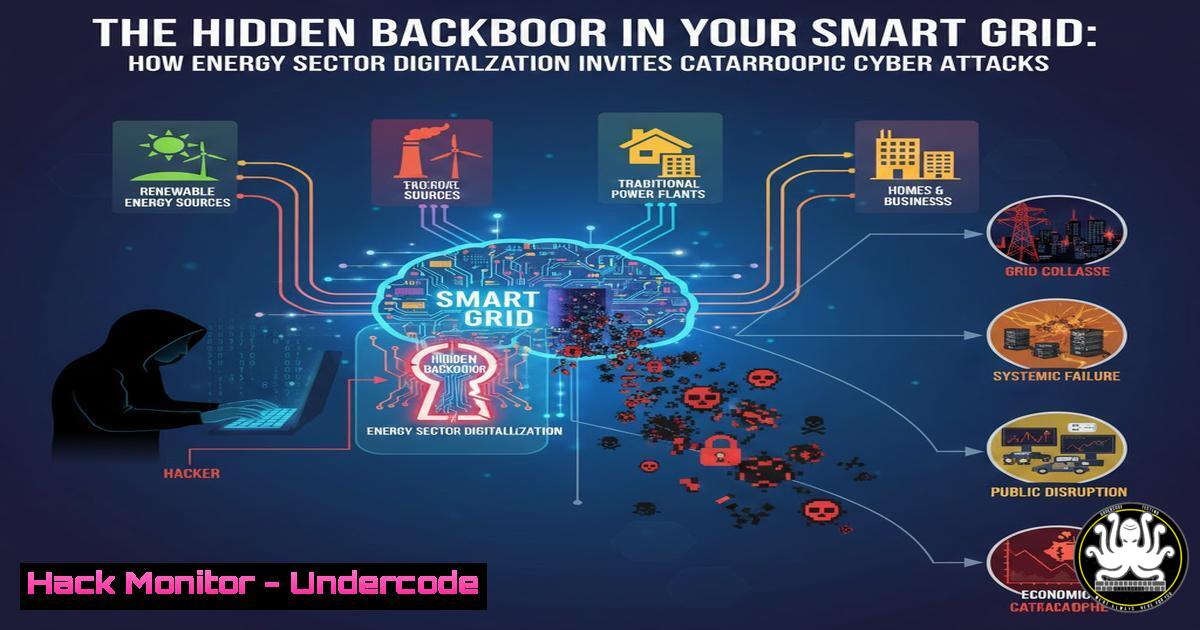
The rapid digitalization of critical energy infrastructure, from oil supply chains to integrated power systems, is revolutionizing efficiency and sustainability. However, this convergence of Operational Technology (OT) and Information Technology (IT) dramatically expands the attack surface for nation-state actors and cybercriminals. This article deconstructs the cybersecurity implications behind modern energy solutions and provides a technical blueprint for defending these complex, internet-connected industrial control systems (ICS).
Learning Objectives:
- Understand the critical vulnerabilities introduced by IT/OT convergence in energy infrastructure.
- Learn practical steps for asset discovery, network segmentation, and hardening industrial networks.
- Implement monitoring and incident response protocols tailored to SCADA and ICS environments.
You Should Know:
- Asset Discovery: The First Step in Securing a Digitalized Energy Network
The foundation of any industrial cybersecurity program is knowing exactly what is on your network. Legacy OT assets and new IIoT (Industrial Internet of Things) sensors are often deployed without security considerations.
Step‑by‑step guide:
- Deploy a Passive Network Monitor: Use a tool like `zeek` (formerly Bro) on a SPAN port to passively identify assets without disrupting operations.
Install zeek on a Linux-based monitoring appliance
sudo apt-get update && sudo apt-get install zeek -y
- Configure zeek for OT Protocols: Modify `/opt/zeek/share/zeek/site/local.zeek` to analyze MODBUS, DNP3, and IEC 60870-5-104 traffic.
@load policy/protocols/modbus
@load policy/protocols/dnp3
- Generate Asset Inventory: Zeek will log all discovered endpoints and protocols into `conn.log` and specific protocol logs. Use these to build a dynamic asset map.
-
Network Segmentation: Building the “Air Gap” That No Longer Exists
The assumed “air gap” is a myth. Segmentation is mandatory to prevent lateral movement from a compromised corporate IT network into mission-critical OT environments.
Step‑by‑step guide:
- Design a Purdue Model Architecture: Enforce zones (Levels 0-5) using next-generation firewalls (NGFWs) between each layer.
- Configure Deep Packet Inspection (DPI) Rules: On your firewall (e.g., Palo Alto Networks), create security policies that only allow explicit OT protocols.
Example rule concept: Allow only MODBUS/TCP from Engineering Station to PLC
Source Zone: IT-Supervisory
Destination Zone: OT-Control
Application: modbus-tcp
Destination Port: 502
Action: Allow
-
Implement One-Way Data Diodes: For true unidirectional data flow from OT to IT for analytics, use hardware-based data diodes, not just firewall rules.
-
API Security: The Vulnerable Heart of Digital Solutions
Digital solutions for energy rely heavily on APIs for data aggregation and control. Unsecured APIs are a prime entry point.
Step‑by‑step guide:
- Inventory ALL APIs: Use tools like `Amass` or `OWASP ZAP` in passive mode to discover internal and external APIs.
zap-api-scan.py -t http://internal-energy-api:8080/openapi.json -f openapi -r report.html
- Enforce Strict Authentication & Rate Limiting: Implement OAuth 2.0 with short-lived tokens and rate limiting on every API endpoint using an API gateway.
- Input Validation & Sanitization: For every API parameter, enforce strict schema validation to prevent injection attacks targeting backend historians (e.g., OSIsoft PI).
4. Vulnerability Management in a 24/7 Operation
Patching a Windows server is straightforward; patching a turbine control system requires a careful, phased approach to avoid downtime.
Step‑by‑step guide:
- Risk-Based Prioritization: Use an ICS-focused scanner like Claroty or Tenable.ot to identify vulnerabilities. Prioritize based on CVSS score, exploit availability, and operational criticality.
- Establish a Secure Patch Testing Environment: Maintain a physically isolated replica of critical control loops to test patches before deployment.
- Deploy Patches During Planned Maintenance Windows: Follow a strict change management process. Always have a documented and tested rollback procedure.
5. Incident Detection & Response for ICS
Traditional IT SIEMs miss OT-specific attack signatures. You need specialized detection rules.
Step‑by‑step guide:
- Deploy an OT-Specific IDS: Use Snort or Suricata with rules from Digital Bond’s `QuickDraw` or Dragos’s community rules to detect malicious PLC commands.
Example Suricata rule to detect Siemens S7 STOP CPU command
alert tcp any any -> $OT_NETWORK 102 (msg:"S7 COMM STOP CPU Command"; flow:to_server; content:"|01 00 00 1c 00 00 00 00 00 f0 00 00 01 00 01 03 c0 01 0a 29 00 00 00 00 00 00 00|"; sid:1000001;)
- Correlate IT and OT Logs: Feed OT IDS alerts and Windows event logs from HMI workstations into a central SIEM. Create correlation rules to detect IT-originating attacks that pivot to OT.
- Develop a Playbook for “Cyber-Physical” Incidents: Your IR playbook must include procedures coordinated with physical operators, including safe manual override processes.
What Undercode Say:
- The “Digital Solution” is the New Primary Threat Vector. The very technologies driving efficiency—cloud analytics, remote monitoring APIs, IIoT—are creating pathways for attackers to cause physical damage or catastrophic downtime.
- Security Cannot Be an Afterthought in “Rewriting the Equation.” Integrating security into the design phase (Security by Design) of new energy solutions is non-negotiable. Retrofitting security is costly and less effective.
Prediction:
The convergence of IT/OT in the energy sector will lead to a rise in “blended-impact” cyber attacks within the next 2-3 years. We will see attacks that simultaneously encrypt IT data and manipulate OT processes (like pressure or voltage setpoints) to maximize ransom leverage or cause silent, cumulative physical damage. Defending against this requires a new breed of cross-trained engineers who understand both the `Python` of the security operations center and the `ladder logic` of the plant floor. The organizations that invest in this integrated skillset and architecture today will be the only ones truly positioned to deliver on promises of safe, reliable, and sustainable energy.
▶️ Related Video (78% Match):
🎯Let’s Practice For Free:
IT/Security Reporter URL:
Reported By: Rahul Wagh – Hackers Feeds
Extra Hub: Undercode MoN
Basic Verification: Pass ✅


