Listen to this Post
Introduction:
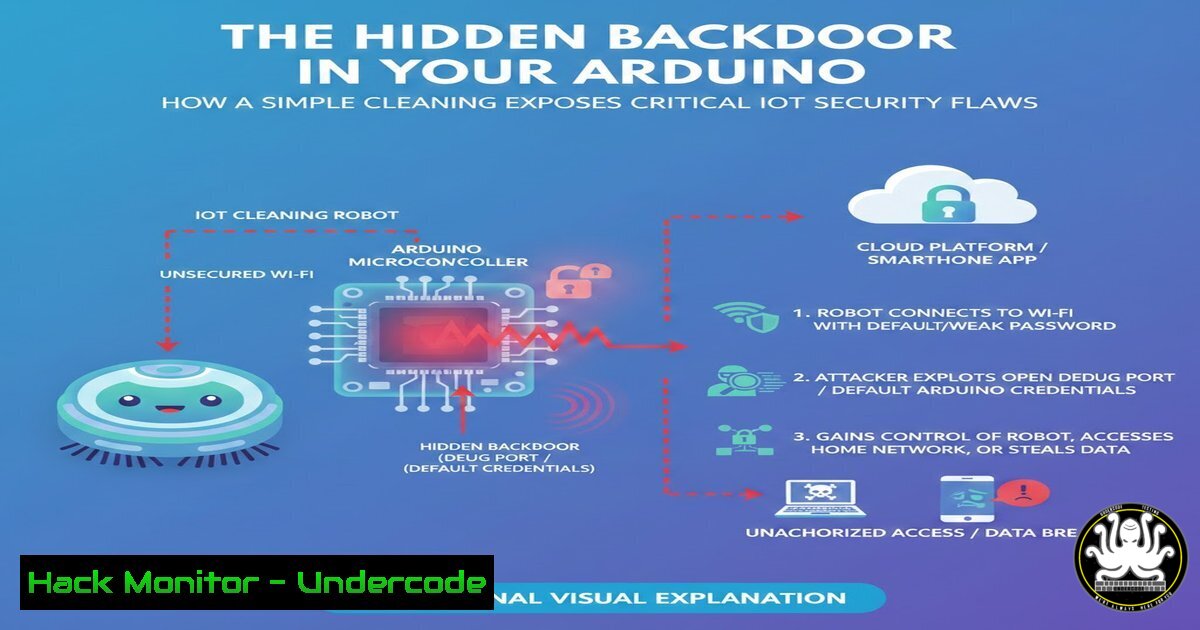
The proliferation of Internet of Things (IoT) devices has seamlessly integrated embedded systems like Arduino-based projects into our daily lives, from smart homes to industrial automation. However, this convenience often comes at the cost of security, creating a vast and vulnerable attack surface. A simple autonomous cleaning robot, while an impressive engineering feat, serves as a stark reminder of the critical cybersecurity hygiene often overlooked in embedded development, leaving systems open to firmware exploitation, sensor hijacking, and unauthorized physical control.
Learning Objectives:
- Understand the core cybersecurity vulnerabilities inherent in Arduino and similar microcontroller-based IoT projects.
- Learn practical steps to harden an Arduino device against common attacks, including secure boot, communication encryption, and sensor data validation.
- Develop a security-first mindset for embedded systems development, moving from functionality to resilient design.
You Should Know:
1. The Illusion of Air-Gapped Security
A common misconception is that devices not connected to the public internet are safe. This “air-gap” can be bypassed. An attacker with brief physical access can implant a backdoor, or a compromised SD card used for data logging can serve as an initial infection vector.
Step‑by‑step guide explaining what this does and how to use it.
The Threat: An attacker gains temporary physical access to your robot and uploads a malicious firmware sketch that looks legitimate but contains a hidden payload.
The Mitigation: Implement Secure Boot and Firmware Signing.
While native Arduino Uno lacks secure boot, you can implement a basic version using a bootloader like Optiboot and add an external cryptographic chip (e.g., ATECC608A) for signature verification.
Conceptual Code Snippet (Verification in setup()):
include <sha256.h>
include "expected_firmware_hash.h" // Your pre-computed hash

void setup() {
// ... other setup code

// Compute hash of the current firmware in flash memory
uint8_t computed_hash[bash];
compute_firmware_hash(computed_hash); // You'd write this function

// Compare against the trusted, expected hash
if (memcmp(computed_hash, expected_firmware_hash, 32) != 0) {
// Firmware is compromised! Do not execute.
halt_device(); // Enter a safe, non-operational state
}
// Otherwise, proceed normally
}
How to Use: This code concept checks the integrity of the firmware upon every boot. If the hash doesn’t match the known-good value, the device halts, preventing a malicious firmware from running.
2. Exploiting Sensor Spoofing for Physical Sabotage
The HC-SR04 ultrasonic sensor measures distance by sending a pulse and listening for the echo. This operation can be maliciously influenced.
Step‑by‑step guide explaining what this does and how to use it.
The Threat: An attacker can use a second ultrasonic transmitter to send a “spoofed” echo pulse before the real one returns. This tricks the sensor into reporting a fake, shorter distance, making the robot believe an obstacle is nearby when it is not, potentially causing it to drive off a ledge or avoid a specific area.
The Mitigation: Implement Sensor Data Validation and Redundancy.
Do not trust a single sensor reading. Implement filters and use multiple sensor types.
Arduino Code Snippet (Data Validation):
const long MAX_TRUSTED_DISTANCE = 200; // cm
const int NUM_READINGS = 5;

long getValidatedDistance() {
long readings[bash];
for (int i = 0; i < NUM_READINGS; i++) {
readings[bash] = readSensor(); // Your existing sensor read function
delay(10); // Small delay between readings
}

// Sort and take the median to filter outliers (like spoofed pulses)
sort(readings, NUM_READINGS);
long medianReading = readings[NUM_READINGS / 2];

// Validate against a physical maximum
if (medianReading > MAX_TRUSTED_DISTANCE) {
return MAX_TRUSTED_DISTANCE; // Cap the value
}
return medianReading;
}
How to Use: Replace your direct `readSensor()` call with getValidatedDistance(). This filters out obvious outliers and spoofing attempts by taking the median of multiple readings and capping physically impossible values.
3. Intercepting and Jamming L298N Motor Driver Signals
The communication between the Arduino and the L298N motor driver is typically done via simple Digital Write commands. These signals are unencrypted and unauthenticated.
Step‑by‑step guide explaining what this does and how to use it.
The Threat: By probing the pins connecting the Arduino to the L298N, an attacker can map the control scheme. They could then use a targeted Electromagnetic Interference (EMI) pulse to temporarily jam or flip a digital signal, causing the robot to move erratically or damage itself.
The Mitigation: Add Signal Integrity Checks.
Implement a simple “heartbeat” and checksum protocol for motor commands.
Conceptual Implementation:
Instead of sending digitalWrite(IN1, HIGH);, you would send a structured command packet from a dedicated control function.
struct MotorCommand {
uint8_t command_id;
uint8_t in1_state;
uint8_t in2_state;
uint8_t checksum; // Simple XOR checksum
};

void sendMotorCommand(uint8_t in1, uint8_t in2) {
static uint8_t cmd_id = 0;
MotorCommand cmd;
cmd.command_id = cmd_id++;
cmd.in1_state = in1;
cmd.in2_state = in2;
cmd.checksum = cmd.command_id ^ cmd.in1_state ^ cmd.in2_state;

// A function on the motor driver side would verify the checksum
// before applying the command. This requires a more advanced driver (e.g., another microcontroller).
}
How to Use: This moves control from simple, easily-jammable GPIO to a packet-based system. While not unbreakable, it raises the difficulty for an attacker significantly.
4. Securing the Development & Deployment Pipeline
The security of the final device is directly tied to the security of the development environment. A compromised IDE or library can inject vulnerabilities into otherwise secure code.
Step‑by‑step guide explaining what this does and how to use it.
The Threat: An attacker compromises a public Arduino library you are using or infects your computer with malware that alters your code as you compile it.
The Mitigation: Harden Your Development Workstation.
This is done at the OS level on your development machine (Windows/Linux).
Linux/Mac Commands (Verifying File Integrity):
 Generate a SHA-256 hash of your compiled firmware.hex file after a "clean" build.
sha256sum firmware.hex > firmware.hex.sha256

Before uploading, verify the hash hasn't changed.
sha256sum -c firmware.hex.sha256
Windows PowerShell Command:
Get-FileHash -Path .\firmware.hex -Algorithm SHA256 | Export-Cipher -Path .\firmware.hex.sha256
How to Use: Integrate this hash generation and verification into your build script. If the hash check fails, it indicates the compiled firmware has been unexpectedly altered, potentially by malware.
5. The Risk of Future Connectivity
Many proof-of-concept projects later get upgraded with Wi-Fi or Bluetooth modules for remote control and monitoring, inheriting all the original code’s vulnerabilities.
Step‑by‑step guide explaining what this does and how to use it.
The Threat: Adding an ESP8266 Wi-Fi module exposes the robot to network-based attacks. Default credentials, unencrypted communication, and buffer overflows in the network handling code are common entry points.
The Mitigation: Implement Secure Network Practices from the Start.
Even in the initial phase, write code as if it will be connected.
Arduino Code Snippet (Secure Credential Storage Concept):
// BAD: Hard-coded credentials
// const char ssid = "MyWiFi";
// const char password = "password123";

// BETTER: Read from external, secured EEPROM or crypto chip
include <Wire.h>
include "ATECC608A.h" // Hypothetical secure element library

void connectToWiFi() {
char ssid[bash];
char password[bash];
// Functions to securely retrieve SSID and PASS from crypto chip
secureElement.getSecuredString("wifi_ssid", ssid, sizeof(ssid));
secureElement.getSecuredString("wifi_pass", password, sizeof(password));

WiFi.begin(ssid, password);
}
How to Use: By designing with a secure element (like the ATECC608A) from the beginning, you avoid the hard-coded credential anti-pattern and are prepared for secure, future connectivity.
What Undercode Say:
- Functionality is the Antithesis of Security. Building a device that works as intended is only half the battle. The relentless focus on functionality in academic and hobbyist projects creates a systemic blind spot for threat modeling and defensive design, leaving a trail of vulnerable devices in its wake.
- The Physical World is the New Attack Surface. This project is a microcosm of a much larger problem: the convergence of cyber and physical systems. An attack is no longer limited to data theft; it can result in kinetic, real-world consequences, from a cleaning robot driving down stairs to, in a more critical context, an industrial robot arm being manipulated to cause damage.
The analysis of this student project reveals a foundational flaw in the IoT ecosystem: security is an afterthought. The skills demonstrated—integrating sensors, motors, and microcontrollers—are crucial, but they represent a bygone era of development. The next generation of engineers must be taught that writing code for a connected device is a security-critical task on par with writing a web server’s authentication module. The simplicity of the Arduino platform makes it the perfect place to instill these principles early. Failing to do so ensures we will continue to build a world of smart, but profoundly vulnerable, things.
Prediction:
The “smart but insecure” paradigm exposed by this simple robot will have cascading effects as IoT and robotics converge with AI. We will see the emergence of the first widespread, AI-powered “botnet of things,” where compromised embedded devices—from home appliances to agricultural sensors—are not just used for DDoS attacks but are manipulated en masse to cause coordinated physical disruption. This could manifest as thousands of devices simultaneously malfunctioning to overload power grids, disrupt logistics by spoofing GPS signals, or simply creating chaos by manipulating their physical environments in sync. The foundational vulnerabilities being built into today’s prototypes are the sleeper agents of tomorrow’s hybrid cyber-physical attacks.
🎯Let’s Practice For Free:
IT/Security Reporter URL:
Reported By: Khaoula Errachidi – Hackers Feeds
Extra Hub: Undercode MoN
Basic Verification: Pass ✅


