Listen to this Post
Introduction:
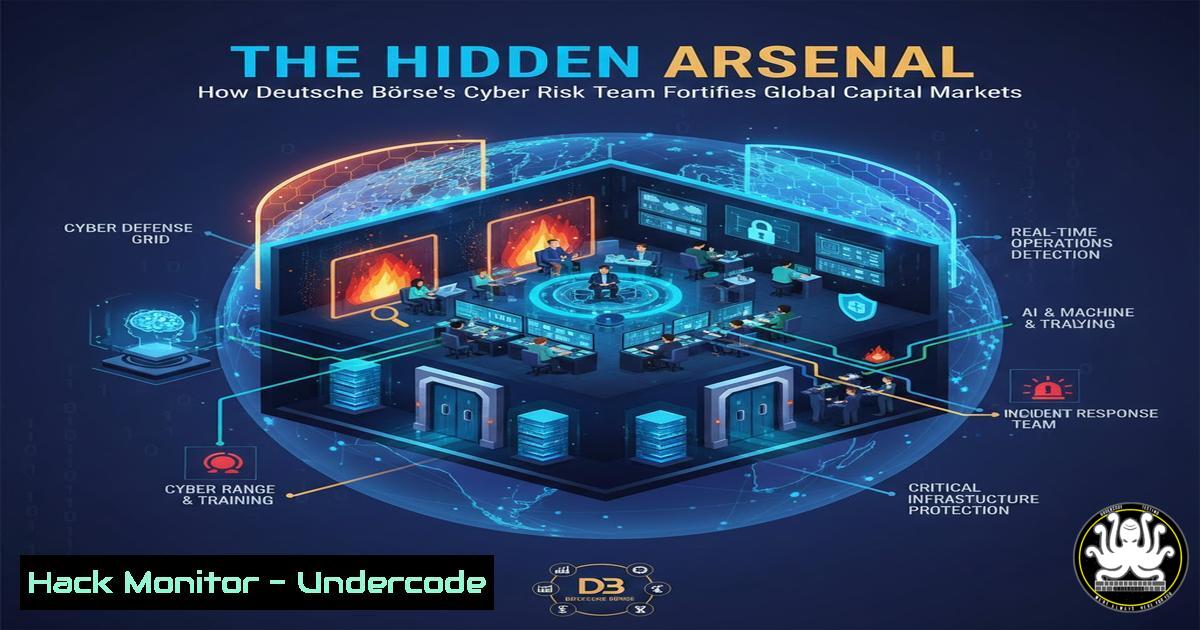
In the high-stakes world of financial infrastructure, cybersecurity risk management is the linchpin of digital resilience, blending threat intelligence, regulatory compliance, and proactive defense. Deutsche Börse Group, as a capital markets engineer, exemplifies how institutional frameworks like IS Risk Management safeguard trading platforms and data integrity against evolving cyber threats, from ransomware to API exploits, ensuring global economic stability.
Learning Objectives:
- Master the core methodologies for information security risk assessment in financial environments, including quantitative and qualitative approaches.
- Implement technical controls and monitoring tools across hybrid infrastructure, using Linux/Windows commands and cloud-native solutions.
- Develop and execute incident response plans with hands-on steps for vulnerability exploitation mitigation, log analysis, and recovery.
You Should Know:
- Risk Assessment Frameworks: Quantifying Threats in Capital Markets
Step‑by‑step guide explaining what this does and how to use it.
Risk assessment identifies, analyzes, and prioritizes risks to assets like trading systems or customer data. In financial institutions, frameworks like NIST SP 800-30 or ISO 27005 are used to evaluate threats such as DDoS attacks or insider breaches. Start by asset inventory, then threat modeling, followed by impact-likelihood matrices. For example, use Linux commands to scan network segments for exposed services: `nmap -sV 192.168.1.0/24` to identify open ports, or on Windows, use PowerShell to list critical assets:Get-WmiObject -Class Win32_Service | Select-Object Name, State, StartMode. Integrate results into a risk register using tools like GRC platforms, ensuring alignment with regulations like GDPR or MiFID II. -
Implementing Technical Controls: Firewalls, IDS/IPS, and Access Management
Step‑by‑step guide explaining what this does and how to use it.
Technical controls enforce security policies through hardware and software. Deploy next-generation firewalls (NGFW) to filter traffic and intrusion detection systems (IDS) like Snort for real-time monitoring. On Linux, set up iptables for basic firewall rules: `sudo iptables -A INPUT -p tcp –dport 22 -j ACCEPT` to allow SSH, or on Windows, configure Windows Defender Firewall via PowerShell:New-NetFirewallRule -DisplayName "Block RDP" -Direction Inbound -Protocol TCP -LocalPort 3389 -Action Block. For access management, implement role-based access control (RBAC) using Active Directory or LDAP, and enforce multi-factor authentication (MFA) for all privileged accounts, especially in cloud environments like AWS IAM.
3. Vulnerability Management: Scanning and Patching Critical Systems
Step‑by‑step guide explaining what this does and how to use it.
Vulnerability management involves continuous scanning, prioritization, and remediation of weaknesses. Use tools like OpenVAS on Linux for open-source scanning: `sudo openvas-start` to launch the scanner, then analyze reports for CVSS scores. On Windows, utilize Nessus or built-in tools like `Windows Update` for patches. Automate patch deployment with scripts: for Linux, `sudo apt update && sudo apt upgrade -y` for Debian-based systems, or for Windows, schedule updates via wuauclt /detectnow. Prioritize based on risk, focusing on critical systems like database servers, and validate fixes with rescanning. Integrate with SIEM solutions like Splunk for logging: index=security sourcetype=nessus | top vulnerability_id.
4. Incident Response Planning: From Detection to Recovery
Step‑by‑step guide explaining what this does and how to use it.
An incident response plan ensures swift action during breaches, minimizing downtime. Develop phases: preparation, detection, containment, eradication, recovery, and lessons learned. Use command-line tools for investigation: on Linux, analyze logs with `grep “Failed password” /var/log/auth.log` for brute-force attempts, or on Windows, examine Event Viewer via Get-EventLog -LogName Security -Newest 50. For containment, isolate affected systems using network segmentation: sudo iptables -A INPUT -s <malicious_ip> -j DROP. Employ forensic tools like Autopsy or Volatility for memory analysis. Test plans through tabletop exercises, simulating phishing attacks or ransomware scenarios, and update playbooks based on findings.
- Cloud Security Hardening: AWS and Azure for Financial Data
Step‑by‑step guide explaining what this does and how to use it.
Cloud hardening secures financial data in hybrid or public clouds. Start with identity and access management (IAM): in AWS, use policies to least privilege, and enable CloudTrail for logging:aws cloudtrail lookup-events --lookup-attributes AttributeKey=EventName,AttributeValue=ConsoleLogin. For Azure, configure NSG rules to restrict traffic:az network nsg rule create --nsg-name MyNSG --name DenyInternet --priority 100 --access Deny --protocol Tcp --direction Inbound --source-address-prefix Internet --destination-port-range 3389. Encrypt data at rest and in transit using AWS KMS or Azure Key Vault, and implement compliance checks with AWS Config or Azure Policy. Regularly audit configurations with tools like Scout Suite:python scout.py aws --report-dir ./report. -
API Security in Financial APIs: OAuth, Rate Limiting, and Monitoring
Step‑by‑step guide explaining what this does and how to use it.
Financial APIs, used for trading or data feeds, require robust security to prevent exploits like injection or abuse. Implement OAuth 2.0 for authentication, using libraries like Spring Security for Java or Auth0 for Python. Add rate limiting to mitigate DDoS: with Nginx, configure `limit_req_zone` in/etc/nginx/nginx.conf. Monitor API logs for anomalies: use ELK stack to ingest logs, with queries like `index=api response_code=500` to detect errors. Test APIs with tools like Postman or OWASP ZAP for vulnerabilities: `zap-cli quick-scan –self-contained http://api.example.com`. Ensure TLS 1.3 encryption and validate inputs to prevent SQL injection, especially in REST endpoints.7. Security Awareness Training: Building a Human Firewall
Step‑by‑step guide explaining what this does and how to use it.
Human error is a major risk; training programs reduce phishing susceptibility and promote best practices. Develop modules on password hygiene, social engineering, and incident reporting. Use platforms like KnowBe4 for simulated phishing campaigns, tracking metrics like click rates. Reinforce with regular drills: send test emails and provide feedback. For technical reinforcement, include hands-on tutorials, such as recognizing malicious attachments via file analysis: on Linux, use `fileor `stringsGet-FileHash -Algorithm SHA256 C:\Downloads\file.exe`. Integrate training with compliance requirements, ensuring annual certifications for staff in roles like IS Risk Management.` to inspect, or on Windows, use PowerShell to check file hashes:
What Undercode Say:
- Key Takeaway 1: Cybersecurity risk management in financial institutions is not just about tools but a holistic culture integrating technology, processes, and people, as seen in Deutsche Börse’s emphasis on digital resilience and team collaboration.
- Key Takeaway 2: Proactive measures like vulnerability management and incident response planning are critical for mitigating real-world threats, requiring continuous adaptation to cloud and API security challenges.
Analysis: The post highlights how top-tier organizations prioritize IS Risk Management to protect critical infrastructure. In capital markets, a single breach can cascade into systemic risk, making frameworks like NIST essential. However, the human element—evident in team onboarding—is equally vital for fostering vigilance. As threats evolve, leveraging AI for threat detection and automated response will become standard, but foundational practices remain key. The integration of training with technical controls ensures a defense-in-depth approach, mitigating both external attacks and insider risks.
Prediction:
The future of cybersecurity in financial markets will be shaped by AI-driven threat intelligence and quantum-resistant cryptography, with institutions like Deutsche Börse leading adoption. As digital assets and decentralized finance grow, risk management will expand to cover blockchain vulnerabilities and cross-border regulatory hurdles. Expect increased automation in incident response, reducing mean time to recovery, but also sophisticated AI-powered attacks targeting API ecosystems. Collaborative defenses, such as sector-wide threat sharing, will become norms, hardening global capital markets against next-generation cyber warfare.
▶️ Related Video (82% Match):
🎯Let’s Practice For Free:
IT/Security Reporter URL:
Reported By: Rajcani Cybersecurity – Hackers Feeds
Extra Hub: Undercode MoN
Basic Verification: Pass ✅


