Listen to this Post
Introduction:
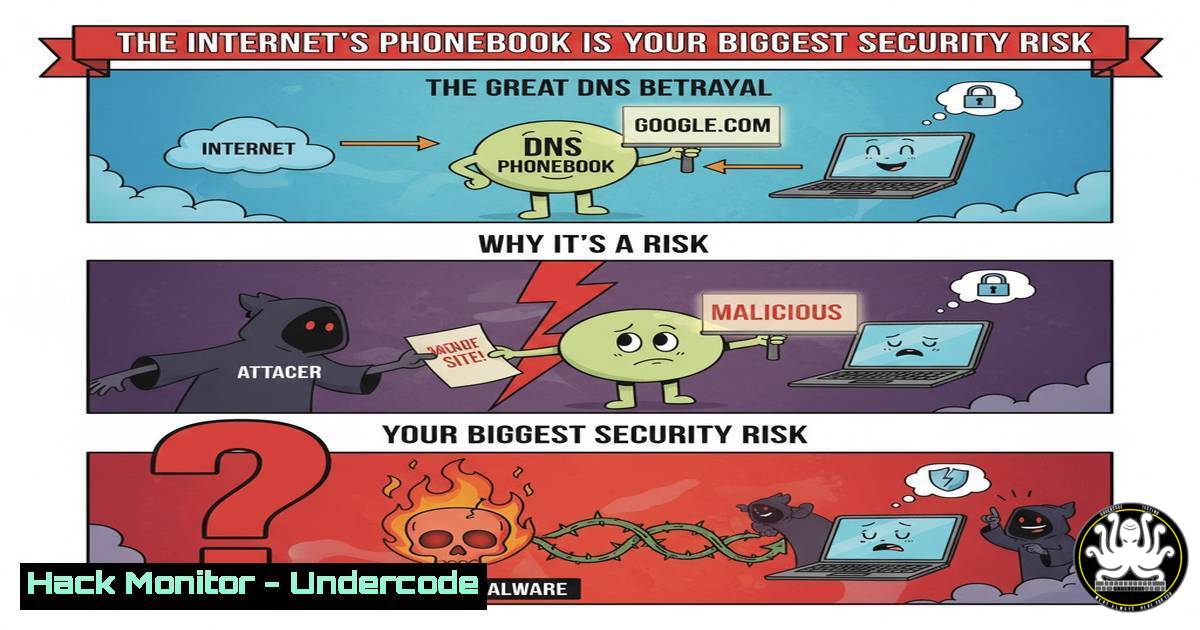
The foundational protocols of the internet, particularly the Domain Name System (DNS), were architected for a trusted environment, not the modern threat landscape. Recent outages at tech giants like Google, AWS, and Microsoft expose a systemic vulnerability, revealing how compliance theater and a lack of accountability have left critical infrastructure perilously exposed. This article provides the technical commands and strategies to understand, audit, and harden your DNS infrastructure against these pervasive threats.
Learning Objectives:
- Understand the core vulnerabilities within DNS and associated protocols like DNSSEC.
- Learn to audit your organization’s DNS records and configurations for common missteps.
- Implement hardening techniques for both Linux and Windows DNS servers and clients.
You Should Know:
1. Interrogating DNS for Reconnaissance
The first step in securing DNS is understanding the attack surface it presents. Adversaries use these same tools for reconnaissance.
Commands:
– `dig ANY target-domain.com`
– `nslookup -type=ANY target-domain.com`
– `whois target-domain.com`
– `dnsrecon -d target-domain.com`
– `fierce –domain target-domain.com`
Step-by-step guide:
The `dig` command is a powerful tool for querying DNS servers. Using `dig ANY` requests all record types associated with a domain, potentially revealing mail servers (MX), name servers (NS), text records (TXT), and more. This is often the first step in mapping a target’s external infrastructure. `dnsrecon` and `fierce` automate this process, attempting zone transfers and brute-forcing subdomains to uncover hidden or forgotten entry points.
2. Validating DNSSEC Integrity
DNSSEC (Domain Name System Security Extensions) adds a layer of cryptographic verification to DNS responses, preventing cache poisoning and man-in-the-middle attacks. However, its adoption is inconsistent.
Commands:
– `dig DNSKEY target-domain.com`
– `dig DS target-domain.com @8.8.8.8`
– `delv target-domain.com`
– `dig +sigchase target-domain.com`
Step-by-step guide:
Use `dig DNSKEY` to retrieve the public signing keys for a domain. The `delv` command is designed specifically to perform DNSSEC validation, tracing the chain of trust from the root zone down to the target domain. A successful `delv` query ending in “fully validated” confirms the DNS records are authentic. A failure may indicate a misconfiguration or an ongoing attack.
3. Hardening a Linux DNS Resolver (Unbound)
Securing your internal resolvers is critical. Unbound is a popular, secure, open-source option.
Configuration Snippets (`/etc/unbound/unbound.conf`):
server:
 Deny queries from non-legitimate IP ranges
access-control: 10.0.0.0/8 allow
access-control: 192.168.0.0/16 allow
access-control: 0.0.0.0/0 refuse

Use DNS-over-TLS for upstream queries to prevent eavesdropping
forward-zone:
name: "."
forward-addr: [email protected]
forward-addr: [email protected]

Enable DNSSEC validation
auto-trust-anchor-file: "/var/lib/unbound/root.key"
val-override-date: ""

Minimize information leakage
hide-identity: yes
hide-version: yes
harden-dnssec-stripped: yes
Step-by-step guide:
After installing Unbound, edit its configuration file. The `access-control` directives limit which clients can use your resolver, preventing it from being used as an open relay. Configuring `forward-zone` with `@853` forces all upstream queries to use DNS-over-TLS, encrypting traffic between your resolver and the root servers. The `harden-` options provide additional protection against specific protocol attacks.
4. Securing Windows DNS Server
Windows DNS servers are ubiquitous in corporate environments and require specific hardening.
PowerShell Cmdlets and Configurations:
– `Get-DnsServerDiagnostics`
– `Set-DnsServerDiagnostics -LoggingLevel All -Answers $true`
– `Set-DnsServerResponseRateLimiting -ResponsesPerSec 10`
– `Add-DnsServerResourceRecord -ZoneName “corp.com” -Name “_domaincontroller” -Type TLSA -Port 389 -CertificateUsage DomainIssued -CertificateAssociationData “xyz”`
Step-by-step guide:
Enable detailed logging using `Set-DnsServerDiagnostics` to monitor for anomalous queries. Implement Response Rate Limiting (RRL) to mitigate DNS amplification attacks against your server. For critical services like LDAP, consider deploying TLSA records, which bind a server certificate to a DNS name using DANE, preventing certificate spoofing.
5. Leveraging DNS for Threat Intelligence and Blocking
DNS can be weaponized for defense by blocking communication with known malicious domains.
Commands & Scripts (for a Pi-hole or similar sinkhole):
– `pihole -g` (Updates gravity – the blocklist database)
– `dig A malware-domain.com @
– Custom blocklist entry in /etc/pihole/custom.list:
`0.0.0.0 tracking-beacon.evil.com`
Step-by-step guide:
Deploy a DNS sinkhole like Pi-hole. It acts as your network’s DNS server and compares every request against curated blocklists of malicious, tracking, and advertising domains. The `pihole -g` command fetches the latest threat intelligence. Queries for blocked domains will return a non-routable IP address (e.g., 0.0.0.0), effectively neutralizing the threat.
6. Auditing for Zone Transfer Vulnerabilities
A misconfigured DNS server may permit zone transfers (AXFR), allowing an attacker to dump all its records.
Commands:
– `dig AXFR @ns1.target-domain.com target-domain.com`
– `nslookup -> server ns1.target-domain.com -> ls -d target-domain.com`
– `dnsrecon -a -d target-domain.com`
Step-by-step guide:
An AXFR request is a standard DNS query type meant for replicating DNS data between primary and secondary servers. If an administrator has incorrectly configured access controls, anyone can request a full copy of the zone file using dig AXFR. This provides a complete blueprint of the organization’s internal network. All public-facing name servers must be configured to reject AXFR requests from unauthorized IPs.
7. Implementing Client-Side DNS Security
Endpoints must be configured to use secure DNS resolvers to bypass local network poisoning.
Windows (Command Prompt / Group Policy):
– `netsh interface ipv4 set dns name=”Ethernet” static 1.1.1.1`
– `netsh interface ipv4 add dns name=”Ethernet” 1.0.0.1 index=2`
Linux (systemd-resolved):
- Edit
/etc/systemd/resolved.conf:
`DNS=1.1.1.1cloudflare-dns.com 9.9.9.9dns.quad9.net`
`DNSOverTLS=yes`
– `systemctl restart systemd-resolved`
Step-by-step guide:
Forcing endpoints to use encrypted DNS providers like Cloudflare (1.1.1.1) or Quad9 (9.9.9.9) ensures that DNS queries are resistant to eavesdropping and manipulation on the local network. On Linux with systemd-resolved, the `DNSOverTLS=yes` directive encrypts the entire communication channel, providing a higher level of privacy and security than traditional DNS.
What Undercode Say:
- Compliance is Not Security: FedRAMP, CMMC, and GDPR checkboxes do not equate to a resilient architecture. The recent outages prove that even the most “compliant” organizations can suffer catastrophic DNS failures. True security requires going beyond the audit checklist to address fundamental architectural weaknesses.
- The Leadership Vacuum is the Root Cause: As the original post asserts, this is a “cowardice problem.” Technical solutions for DNS hardening exist and are well-documented. The failure to universally implement them stems from a lack of accountability and a corporate culture that prioritizes feature velocity over foundational integrity. Billions are spent on reactive security products while the core protocol that connects everything remains vulnerable.
The systemic neglect of DNS security represents a profound failure of governance. Until executives and board members are held technically and legally accountable for the resilience of their digital infrastructure, rather than just their compliance status, the “house of cards” will remain standing—until the next gust of wind knocks it over.
Prediction:
The continued fragility of global DNS will catalyze two major shifts. First, we will see a rapid, forced adoption of DNS-over-HTTPS (DoH) and DNS-over-TLS (DoT) at the regulatory level, as governments attempt to mandate basic hygiene. Second, a catastrophic, state-level DNS hijacking or poisoning event will occur, not just causing outages but enabling widespread, undetected espionage. This event will be a “digital Pearl Harbor” that finally forces a wholesale, internet-wide migration to a more secure, post-DNS naming and resolution architecture, likely based on decentralized technologies like blockchain, rendering the current trusted model obsolete.
🎯Let’s Practice For Free:
IT/Security Reporter URL:
Reported By: Andy Jenkinson – Hackers Feeds
Extra Hub: Undercode MoN
Basic Verification: Pass ✅


