
Listen to this Post
Introduction:
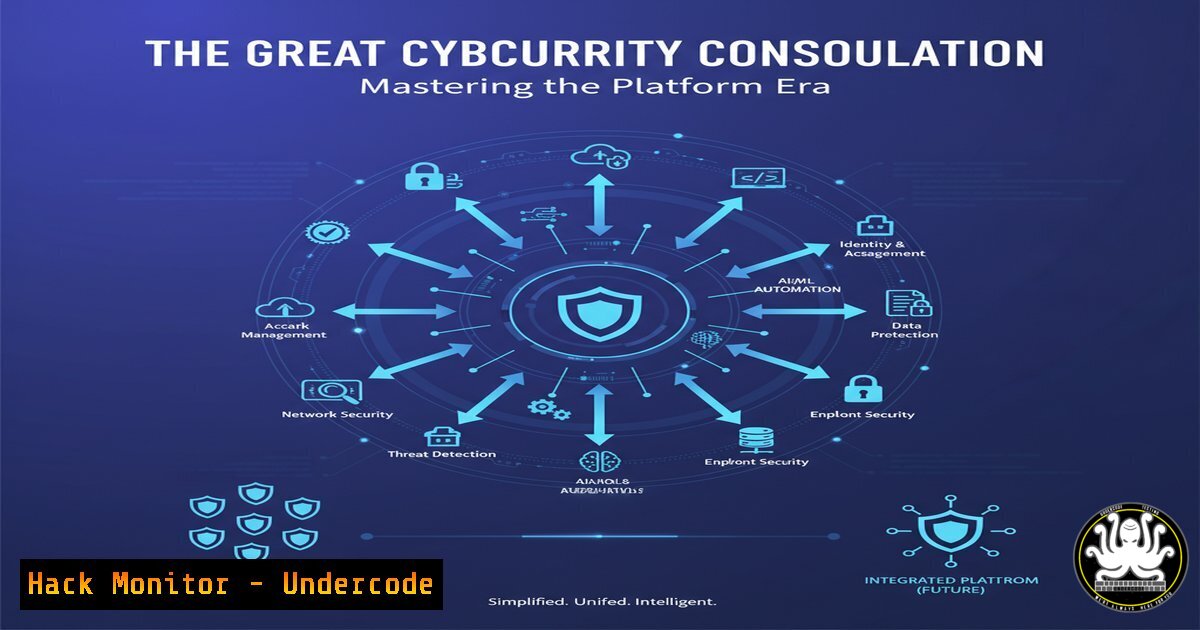
The cybersecurity market has reached a pivotal milestone with Palo Alto Networks becoming the first vendor to capture double-digit market share. This signals a massive industry shift towards platformization, where enterprises consolidate point solutions into integrated platforms to improve efficacy and reduce complexity. For professionals, this consolidation mandates a mastery of core technologies that underpin these dominant platforms.
Learning Objectives:
- Understand the key drivers behind cybersecurity market consolidation and the “platformization” trend.
- Develop hands-on skills with command-line tools and configurations central to major vendor platforms.
- Learn to implement security hardening and monitoring techniques relevant to a consolidated architecture.
You Should Know:
1. Platform Integration via API
The dominance of platforms like CrowdStrike and Palo Alto Networks hinges on their API-driven architecture, enabling automation and centralized management.
`curl -X GET “https://api.crowdstrike.com/devices/queries/devices/v1” -H “Authorization: Bearer $TOKEN”`
This CrowdStrike API call, using your authenticated token ($TOKEN), queries all devices monitored by the platform. First, obtain an OAuth2 token using your client ID and secret. This command is the foundation for automating asset discovery and management within a consolidated security platform.
2. Network Security Policy Management
Platform growth is fueled by unified policy management. Automating policy deployment is critical at scale.
`az network nsg create –name MyPlatformNSG –resource-group MyResourceGroup –location eastus`
This Azure CLI command creates a Network Security Group (NSG), a fundamental component of Microsoft’s cloud security platform. After creating the NSG, you can define and apply granular rules to control traffic flow, embodying the platform approach to network security.
3. Centralized Logging and Analysis
Consolidation requires aggregating logs from diverse sources into a central platform like a SIEM.
`sudo grep “Accepted password” /var/log/auth.log | awk ‘{print $11}’ | sort | uniq -c | sort -nr`
This Linux command chain parses the authentication log to identify source IP addresses with successful SSH logins, counts them, and sorts them by frequency. In a platform context, this data would be forwarded to a central analytics engine for correlation and threat detection across the entire enterprise.
4. Endpoint Detection and Response (EDR) Query
Platform vendors like CrowdStrike leverage EDR for deep visibility. Querying endpoint data is a key skill.
`Get-CimInstance -Namespace root/SecurityCenter2 -ClassName AntivirusProduct`
This Windows PowerShell command queries the Security Center to list all installed antivirus and EDR products. In a consolidated environment, ensuring the correct platform agent is installed and active is a fundamental compliance check.
5. Cloud Security Posture Management (CSPM)
Misconfigurations are a primary cloud risk. CSPM tools within platforms automatically check for deviations from best practices.
`gcloud compute networks list –format=”table(name, subnetworks, IPv4Range)”`
This gcloud command lists all VPC networks in Google Cloud Platform, displaying their names, subnets, and IP ranges. A platform’s CSPM module would continuously monitor this configuration against policies to flag overly permissive networks.
6. Vulnerability Management Integration
Platforms integrate vulnerability scanning to prioritize risks based on asset criticality and exploitability.
`nmap –script vuln -sV `
This Nmap command launches a vulnerability scan against a target IP using the NSE vuln script library. While a point solution, the results would be ingested into a security platform like Tenable.io or Qualys VMDR to be contextualized with other threat data.
7. Automated Incident Response Playbooks
Platforms enable automated response, drastically reducing mean time to respond (MTTR).
`sudo iptables -A INPUT -s -j DROP`
A basic but critical Linux iptables command to immediately block a malicious IP address. In a platform like Palo Alto Networks Cortex XSOAR, this action would be triggered automatically by a playbook upon confirmation of a threat, containing an incident before it spreads.
What Undercode Say:
- Specialization is Not Dead, It’s Evolving. The consolidation of point products does not eliminate the need for deep technical expertise. Instead, it elevates the value of professionals who can leverage specialized knowledge to configure, automate, and maximize the value of these complex platforms. The command-line proficiency demonstrated above is the language of this deep integration.
- The AI Acceleration is Real. Artificial Intelligence is the engine accelerating platform dominance. AI-powered features for threat correlation, anomaly detection, and automated response are becoming key differentiators that point solutions struggle to match. The future belongs to those who can work symbiotically with these AI-driven systems.
The trend towards platformization, now quantifiably led by Palo Alto Networks, is a direct response to the overwhelming complexity of managing thousands of discrete security alerts. The promise of a consolidated platform is a unified view, reduced administrative overhead, and more intelligent, automated defense. For cybersecurity practitioners, this shift demands a move from being a tool operator to becoming a platform engineer—someone who can script, automate, and interrogate these extensive systems through their APIs and command-line interfaces. The depth of your technical skills will determine your ability to harness the full power of the platform.
Prediction:
The cybersecurity market will see accelerated acquisition activity as major platforms aggressively acquire niche AI startups and point solutions to fill capability gaps and fuel growth. Within three years, the top 5 vendors will control over 40% of the market. This will create a “superplatform” landscape where defense is increasingly automated and predictive, but also raises concerns about vendor lock-in and the potential for single points of failure. For defenders, the focus will shift from tool procurement to mastering the data flows and automation workflows within their chosen platform ecosystem.
🎯Let’s Practice For Free:
IT/Security Reporter URL:
Reported By: Mthomasson A – Hackers Feeds
Extra Hub: Undercode MoN
Basic Verification: Pass ✅


