Listen to this Post
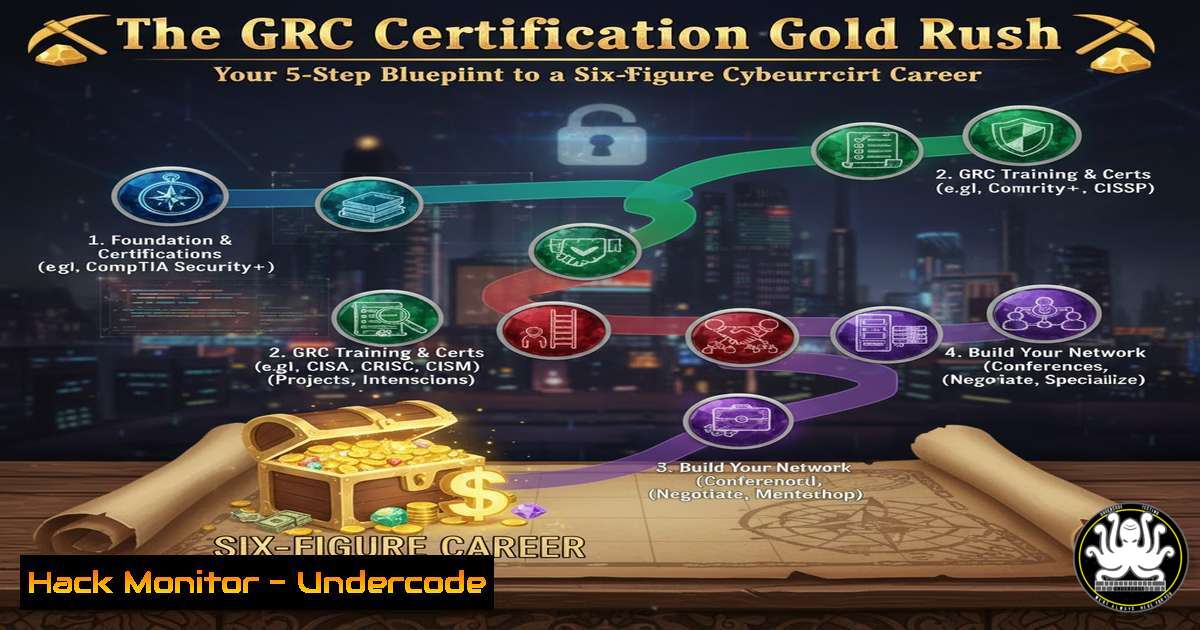
Introduction:
Governance, Risk, and Compliance (GRC) is the backbone of a mature cybersecurity program, and the demand for skilled professionals is skyrocketing. Navigating the complex landscape of certifications can be daunting, but a strategic path exists to validate your expertise and accelerate your career. This guide provides a tactical roadmap, from foundational knowledge to the world’s most recognized credentials, complete with the technical commands you need to master.
Learning Objectives:
- Understand the strategic progression of GRC certifications from foundational to expert level.
- Learn essential technical commands for security auditing, log analysis, and system hardening relevant to GRC roles.
- Develop a practical plan for leveraging certifications to advance your career and command a higher salary.
You Should Know:
1. Foundational Framework Mastery with ISO 27001
The ISO 27001 Lead Implementer certification is the cornerstone, teaching you how to build an Information Security Management System (ISMS). A GRC professional must understand the technical controls that underpin these policies.
`grep -r “Password” /etc/ | wc -l` (Linux) – This command recursively searches for the string “Password” in the entire `/etc` directory and counts the occurrences. It’s a quick way to audit configuration files for potential password-related policy violations.
`auditpol /get /category:` (Windows) – Displays the current audit policy for all subcategories. This is critical for verifying compliance with logging requirements mandated by standards like ISO 27001.
`find / -type f -perm -o+w 2>/dev/null | head -20` (Linux) – Finds files that are world-writable, a significant security finding that violates the principle of least access. The `2>/dev/null` suppresses error messages for a cleaner output.
`Get-LocalUser | Where-Object { $_.Enabled -eq $True }` (Windows PowerShell) – Lists all enabled local user accounts, essential for user access reviews.
- Risk Management Methodology: EBIOS RM & ISO 27005
Risk management is the “R” in GRC. EBIOS RM is the French national method, while ISO 27005 is its international counterpart. Both require a deep understanding of asset identification and vulnerability context.
`nmap -sV -O 192.168.1.0/24` (Linux) – A foundational network discovery and security auditing command. It identifies live hosts, their services, and operating systems, providing the asset inventory critical for a risk analysis.
`nessuscli scan –list` (Linux – Tenable Nessus) – Lists available scans on a Nessus scanner. Using a vulnerability scanner like Nessus is non-negotiable for quantifying technical risk.
`Get-WmiObject -Class Win32_Product` (Windows PowerShell) – Retrieves a list of installed software, crucial for identifying unauthorized or vulnerable applications during a risk assessment.
`ss -tuln` (Linux) – A modern replacement for netstat, this command shows all listening TCP and UDP ports, helping to identify potentially exposed services.
3. Cloud Security Control Verification
Modern GRC extends into the cloud. Understanding how to verify cloud security posture is a mandatory skill.
`aws iam generate-credential-report` (AWS CLI) – Generates a credential report that details the status of all IAM users in an AWS account, including password policies and access key ages.
`aws s3api list-buckets –query “Buckets[].Name”` (AWS CLI) – Lists all S3 buckets. The follow-up command `aws s3api get-bucket-acl –bucket BUCKET_NAME` is used to check the access control list for public exposure.
`az vm list -o table` (Azure CLI) – Lists all virtual machines in an Azure subscription in a readable table format for resource inventory.
`gcloud compute firewall-rules list –format=”table(name,network,allowed[].map().firewall_rule().join(‘,’):label=ALLOWED)”` (Google Cloud SDK) – Lists Google Cloud firewall rules to verify network segmentation controls.
4. Advanced Security Management with CISM
The Certified Information Security Manager (CISM) bridges technical knowledge and management. It focuses on governing and managing an enterprise infosec program.
`wmic /namespace:\\root\secmt2 path antivirusproduct get displayName, productState, pathToSignedProductExe` (Windows Command Line) – A powerful WMIC command to query the installed antivirus solution across the enterprise, a key control for a security manager to monitor.
`Get-Service | Where-{$_.Status -eq ‘Stopped’ -and $_.StartType -eq ‘Automatic’}` (Windows PowerShell) – Finds services that are set to start automatically but are currently stopped, which could indicate a system issue or control failure.
`logrotate -f /etc/logrotate.conf` (Linux) – Forces log rotation. Understanding and managing log files and SIEM ingestion is a core CISM domain for incident detection and response.
5. Attaining Expert Status with the CISSP
The CISSP is the pinnacle, demonstrating deep, broad technical and managerial knowledge across eight domains. It requires verifiable experience and a commitment to ongoing education.
`iptables -L -n -v` (Linux) – Lists all iptables firewall rules with numerical output and verbose packet/byte counts. A CISSP must understand network security controls at this level.
`openssl s_client -connect example.com:443 -servername example.com | openssl x509 -noout -text` (Linux) – A comprehensive command to connect to a server and output the full details of its SSL/TLS certificate, crucial for assessing cryptographic controls.
`reg query “HKLM\SOFTWARE\Microsoft\Windows\CurrentVersion\Policies\System” /v Audit` (Windows Command Line) – Queries the Windows registry to check the system audit policy, demonstrating a deep understanding of where Windows stores its security configuration.
`rkhunter –check` (Linux) – Runs a Rootkit Hunter scan. A CISSP should be familiar with advanced threat detection and mitigation techniques.
`sqlmap -u “http://testphp.vulnweb.com/artists.php?artist=1” –batch` (SQLMap) – Demonstrates an automated SQL injection attack tool. A CISSP must understand the mechanics of common web application vulnerabilities to effectively manage risk.
`john –format=raw-md5 hash.txt –wordlist=/usr/share/wordlists/rockyou.txt` (John the Ripper) – Performs a dictionary attack on an MD5 hash. Understanding password cracking techniques is key to enforcing strong password policies.
6. Continuous Monitoring and Log Analysis
Certifications require maintaining Continuing Professional Education (CPE) credits. The technical skill of log analysis is a perpetual source of learning and critical for security operations.
`journalctl -u ssh.service –since “1 hour ago”` (Linux) – Views logs for the SSH service from the last hour, essential for monitoring authentication attempts.
`Get-EventLog -LogName Security -InstanceId 4625 -Newest 10` (Windows PowerShell) – Retrieves the 10 most recent failed logon events (Event ID 4625) from the Security log.
`tail -f /var/log/apache2/access.log | grep -v “200”` (Linux) – Follows the Apache access log in real-time, filtering out successful (200 status) requests to highlight errors or attacks.
`awk ‘{print $1}’ /var/log/auth.log | sort | uniq -c | sort -nr` (Linux) – A powerful `awk` one-liner to count and sort unique IP addresses that have attempted authentication, quickly identifying brute-force attacks.
7. Scripting for GRC Automation
The modern GRC professional uses scripting to automate compliance checks and evidence collection, moving beyond manual processes.
<
h2 style=”color: yellow;”> `!/bin/bash
Check for world-writable files in sensitive directories
for dir in /etc /var/log /home; do
find $dir -type f -perm -0002 2>/dev/null
done` (Linux Bash Script) – A simple script to automate a common compliance check.
<
h2 style=”color: yellow;”> ` PowerShell: Check for Local Admin Accounts
Get-LocalGroupMember -Group “Administrators” | Format-Table Name, ObjectClass` (Windows PowerShell Script) – A PowerShell snippet to quickly list all members of the local administrators group for a user access review.
What Undercode Say:
- Certifications are a Force Multiplier, Not a Silver Bullet. They provide a structured knowledge framework and instant credibility, but their true value is unlocked when combined with hands-on, practical experience. They get you the interview; your skills get you the job.
- The GRC Field is Evolving from Policy Writers to Technically-Adept Strategists. The most successful GRC professionals are those who can converse fluently with technical teams, understand the output of security tools, and translate technical risk into business terms for executive leadership.
The analysis from Ana Griman’s post and the subsequent discussion reveals a clear market signal. While experience and interview skills are paramount (as noted by Sylvain Denizet), the consensus among top-tier professionals like Ana and Corentin Ducottet is that certifications systematically open doors and build trust with clients and recruiters. The progression from foundational (ISO 27001) to managerial (CISM) and finally to expert (CISSP) creates a compelling narrative of career growth. The key is to not see certifications as an end goal, but as a component of a broader strategy that includes applying the learned concepts in real-world environments. The technical commands outlined above are the practical embodiment of that knowledge, bridging the gap between theory and practice.
Prediction:
The value of GRC certifications will continue to appreciate, but the market will increasingly demand demonstrable technical proficiency alongside them. We will see a convergence of roles, where GRC professionals are expected to use scripting and automation tools to scale compliance efforts and interact directly with cloud security APIs. Future certifications will likely incorporate more hands-on, lab-based testing to validate this practical skillset, moving beyond pure theory to ensure that certified individuals can not only design a secure framework but also technically verify its implementation.
🎯Let’s Practice For Free:
IT/Security Reporter URL:
Reported By: Ana Griman – Hackers Feeds
Extra Hub: Undercode MoN
Basic Verification: Pass ✅


