Listen to this Post
Introduction:
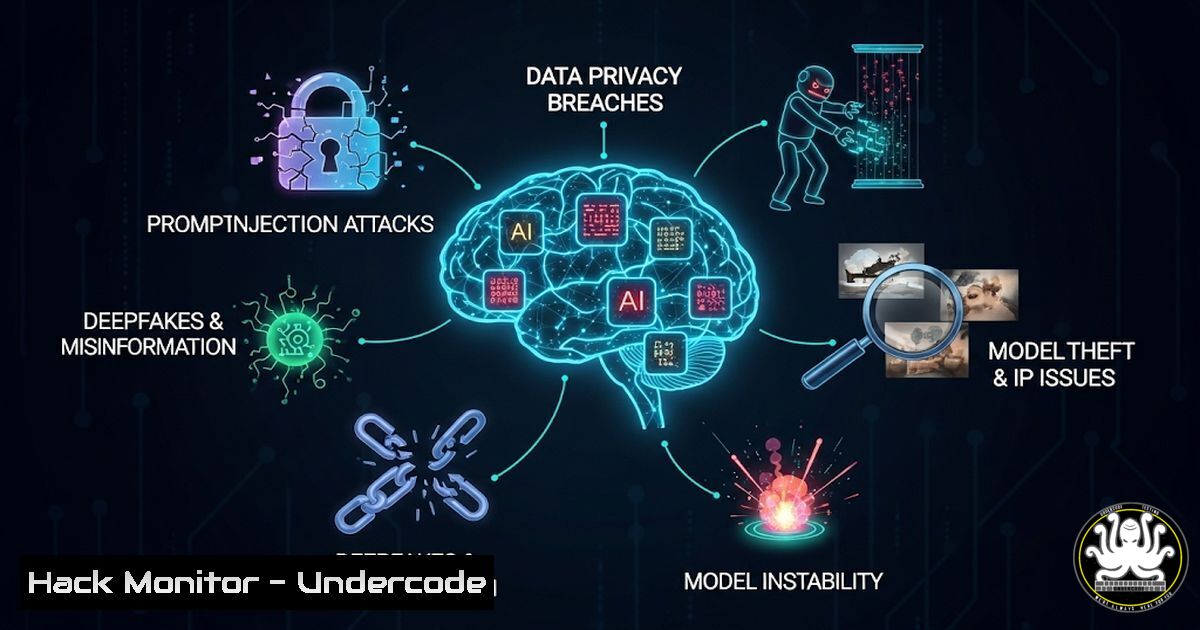
The recent surge in generative AI (GenAI) stock valuations, exemplified by Oracle’s meteoric rise, signals a market driven by speculation rather than substance. This environment creates a fertile ground for unprecedented cybersecurity threats, from AI-powered attacks to the exploitation of hastily built and poorly secured new infrastructure. Security professionals must now navigate a landscape where hype outpaces actual security maturity.
Learning Objectives:
- Understand the new attack vectors introduced by the rapid and often reckless adoption of GenAI technologies.
- Learn practical commands and techniques to harden cloud environments, detect AI-generated phishing, and secure APIs against automated threats.
- Develop a strategy for critical thinking and measured risk assessment in a market saturated with AI hype.
You Should Know:
1. Hardening Cloud AI Service Configurations
The rush to deploy AI services often leads to misconfigured cloud storage and compute instances, exposing sensitive training data and models.
 AWS S3 Bucket Security Check & Remediation
aws s3api get-bucket-policy --bucket my-ai-model-bucket  Check if a policy exists
aws s3api put-bucket-policy --bucket my-ai-model-bucket --policy file://secure-policy.json
 Enable Bucket Encryption
aws s3api put-bucket-encryption --bucket my-ai-model-bucket --server-side-encryption-configuration '{"Rules": [{"ApplyServerSideEncryptionByDefault": {"SSEAlgorithm": "AES256"}}]}'
Step-by-step guide:
Publicly accessible S3 buckets are a primary vector for data exfiltration. First, use the `get-bucket-policy` command to audit the existing access policy. If none exists or it is overly permissive, create a `secure-policy.json` file that explicitly denies all public access and allows only specific IAM roles or IP ranges. Apply it using the `put-bucket-policy` command. Finally, enforce encryption-at-rest for all objects using the `put-bucket-encryption` command with SSE-S3 (AES256). Regularly audit all buckets with `aws s3api list-buckets` and `aws s3api get-bucket-policy` for each.
2. Detecting AI-Generated Phishing and Social Engineering
GenAI can create highly convincing phishing emails and deepfakes. Defenders must look for new technical indicators.
 Using CLI Email Header Analyzers (like 'messageheader' or manual analysis)
curl -s https://api.abuseipdb.com/api/v2/check --data-urlencode "ipAddress=$SUSPICIOUS_IP" -H "Key: $YOUR_API_KEY" -H "Accept: application/json" | jq .data.abuseConfidenceScore

Python snippet to detect linguistic markers of AI-generated text (using heuristics)
import re
def check_ai_linguistic_marks(text):
markers = {
'overly_formal': r'\b(utilize|facilitate|therefore|however)\b',
'low_perplexity_pattern': r'(\w+ ){5,}\w+[.]'  Simple repetition pattern
}
score = 0
for key, pattern in markers.items():
if re.search(pattern, text, re.IGNORECASE):
score += 1
return score
Step-by-step guide:
AI-generated phishing content often has a distinct linguistic style—overly formal, grammatically perfect, and sometimes strangely repetitive. The provided Python function offers a basic heuristic check for these markers. For a more robust defense, integrate threat intelligence. The `curl` command queries the AbuseIPDB API to check the reputation of an IP address found in an email header. An high `abuseConfidenceScore` is a strong indicator of malice. Combine these technical checks with user training focused on the new quality of AI-generated lures.
3. Securing AI Model APIs and Endpoints
APIs serving LLMs (like OpenAI’s) are high-value targets for data scraping, model poisoning, and denial-of-wallet attacks.
 Kubernetes Network Policy to restrict API pod ingress
apiVersion: networking.k8s.io/v1
kind: NetworkPolicy
metadata:
name: allow-only-ingress-from-frontend
spec:
podSelector:
matchLabels:
app: ai-inference-api
policyTypes:
- Ingress
ingress:
- from:
- podSelector:
matchLabels:
app: frontend-service
ports:
- protocol: TCP
port: 8000

Rate Limiting with NGINX Ingress Annotation
nginx.ingress.kubernetes.io/limit-rpm: "100"  Requests per minute per client
nginx.ingress.kubernetes.io/limit-rps: "5"  Requests per second
Step-by-step guide:
A “denial-of-wallet” attack occurs when an attacker abuses a metered API, incurring massive costs. To mitigate, first implement strict network segmentation. The provided Kubernetes NetworkPolicy ensures your inference API pod only accepts traffic from the specific frontend service pod, blocking direct external access. Second, enforce stringent rate limiting. Configure your NGINX Ingress Controller with annotations like `limit-rpm` and `limit-rps` to throttle requests from any single IP, preventing automated scraping and abuse. Always require API keys and implement rigorous quota management on the application layer.
- Auditing and Controlling AI Tool Usage on Corporate Networks
Shadow IT using GenAI tools poses data leakage and malware risks. You must gain visibility and control.
 Windows PowerShell: Audit installed software
Get-WmiObject -Class Win32_Product | Select-Name, Version, Vendor | Where-Object {$<em>.Name -like "AI" -or $</em>.Vendor -like "OpenAI"}

Zeek (Bro) Network Logger to detect AI service domains
 In /opt/zeek/share/zeek/site/local.zeek
redef Site::local_nets += { 192.168.0.0/16 };
@load policy/tuning/log-all-dns.zeek
event dns_request(c: connection, msg: dns_msg, query: string, qtype: count, qclass: count)
{
if (c$id$resp_h in Site::local_nets && /(openai|anthropic|bard|huggingface).com$/ in query)
{
print fmt("AI Service DNS Query: %s from %s", query, c$id$orig_h);
}
}
Step-by-step guide:
Employees may install unauthorized AI chatbots or code-generation tools that transmit proprietary code to external servers. Use the PowerShell command on Windows endpoints to inventory installed applications that may be related to AI. For network-level visibility, configure the Zeek (Bro) network security monitor. The provided script logs all DNS requests to known AI service domains from your internal network (192.168.0.0/16). This data allows you to identify widespread use of unauthorized services, assess the risk, and create tailored policies for approved and blocked tools.
5. Exploiting and Mitigating AI Supply Chain Vulnerabilities
AI projects rely on complex stacks of open-source libraries (TensorFlow, PyTorch) and pre-trained models, which can be poisoned or contain vulnerabilities.
 Snyk CLI to scan for vulnerabilities in Python AI projects
snyk test --file=requirements.txt --package-manager=pip --severity-threshold=high

SBOM Generation with Syft
syft packages python:latest --output spdx-json > sbom.json

Checksum verification for downloaded models
sha256sum downloaded_model.bin | grep -c "expected_sha256_hash_here"
Step-by-step guide:
A poisoned model or a compromised library can lead to a complete system compromise. Start by generating a Software Bill of Materials (SBOM) using Syft to list all components in your container. Use `snyk test` to actively scan your project’s dependencies (requirements.txt) for known vulnerabilities with a high severity threshold. Most critically, never trust a downloaded pre-trained model. Always verify its integrity against a trusted, published SHA256 hash using the `sha256sum` command. A mismatch means the model is corrupted or maliciously modified.
What Undercode Say:
- The Hype is the Vulnerability: The pressure to “do AI” quickly is the primary security risk, leading to skipped audits, misconfigurations, and the use of untrusted third-party tools. The market’s irrationality directly creates technical debt and exploitable conditions.
- Shift in Attack Methodology: Offensive security must now incorporate prompts and direct model hacking (e.g., prompt injection, data extraction) into its playbook, while defenders must monitor for a new class of threats that look like legitimate API traffic.
The frenzy described in the source post isn’t just a financial concern; it’s a security one. When investment and strategy are driven by speculation rather than technological maturity, security becomes an afterthought. This creates a massive attack surface of poorly implemented services, rushed code, and over-permissioned cloud assets. The professional’s role is to inject critical thinking and rigorous security fundamentals into this hype cycle, focusing on the tangible risks: data leakage, model compromise, and supply chain attacks. The bubble may burst financially, but the cybersecurity repercussions will linger long after.
Prediction:
The impending market correction for overvalued GenAI firms will trigger a wave of security incidents. As funding evaporates, many startups will shutter operations without proper decommissioning protocols, leaving exposed APIs, unencrypted model repositories, and sensitive training data unattended on cloud platforms. This “AI graveyard” will become a primary target for attackers, leading to massive, concentrated data breaches. Furthermore, the failure of high-profile projects will eruster trust in AI security, forcing a industry-wide pivot towards explainability, auditability, and stronger regulatory compliance for any AI deployment.
🎯Let’s Practice For Free:
IT/Security Reporter URL:
Reported By: Malwaretech Oracles – Hackers Feeds
Extra Hub: Undercode MoN
Basic Verification: Pass ✅


