Listen to this Post
Introduction
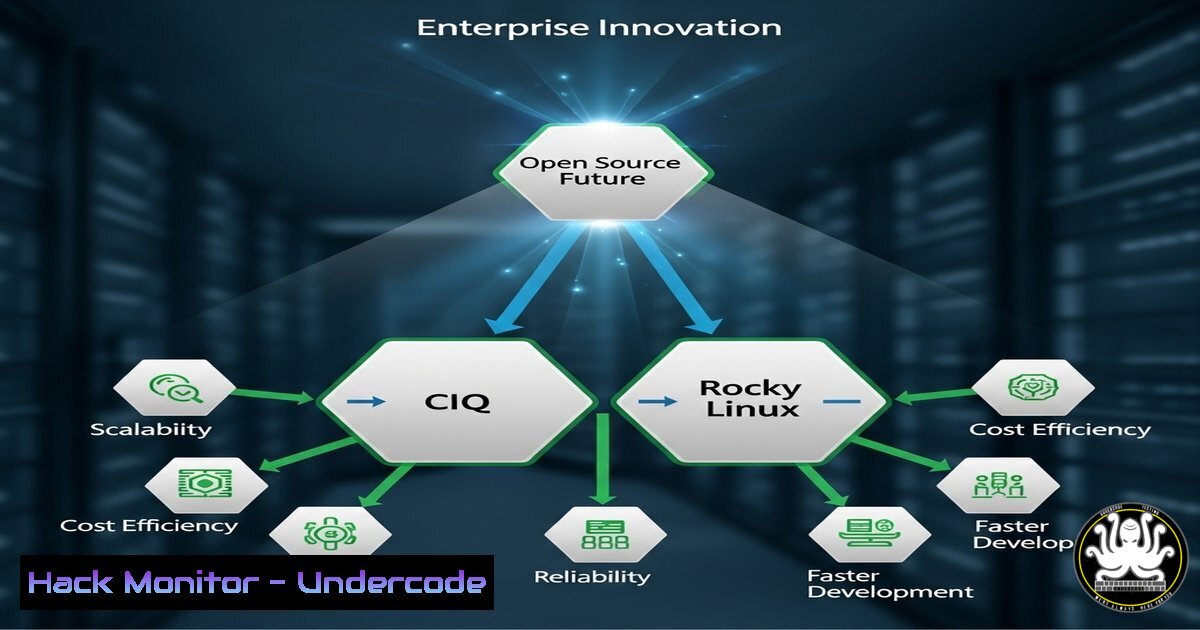
Open-source software continues to revolutionize enterprise IT, with projects like Rocky Linux and Apptainer (formerly Singularity) leading the charge. Gregory Kurtzer, CEO of CIQ and founder of these critical open-source initiatives, highlights the importance of teamwork and speed in driving innovation. This article explores key cybersecurity, Linux, and AI advancements tied to CIQ’s mission.
Learning Objectives
- Understand Rocky Linux’s role in enterprise-grade Linux security
- Learn key Linux commands for system hardening
- Explore AI integration in high-performance computing (HPC) with Apptainer
- Discover CIQ’s contributions to open-source cybersecurity
You Should Know
1. Securing Rocky Linux: Essential Hardening Commands
Rocky Linux, a CentOS alternative, is widely adopted for its stability and security. Here are critical commands to harden your system:
 Enable automatic security updates
sudo dnf install dnf-automatic -y
sudo systemctl enable --now dnf-automatic.timer

Enable firewalld
sudo systemctl enable firewalld --now
sudo firewall-cmd --set-default-zone=public
Why this matters: Automatic updates and a configured firewall reduce vulnerability to exploits.
2. Container Security with Apptainer (Singularity)
Apptainer is crucial for secure, high-performance containerization in AI/HPC environments.
 Build a secure container from a definition file
sudo apptainer build my_container.sif my_recipe.def

Run container in isolated mode
apptainer exec --containall my_container.sif python3 my_script.py
Why this matters: `–containall` enforces strict isolation, preventing privilege escalation.
3. Vulnerability Scanning with OpenSCAP
CIQ integrates OpenSCAP for compliance checks in Rocky Linux.
 Install OpenSCAP
sudo dnf install openscap-scanner scap-security-guide -y

Scan system for vulnerabilities
sudo oscap xccdf eval --profile stig --results scan_results.xml /usr/share/xml/scap/ssg/content/ssg-rl8-ds.xml
Why this matters: Automated compliance scanning helps meet NIST and STIG benchmarks.
4. Kernel Hardening with sysctl
Optimize Linux kernel security with these `sysctl` tweaks:
 Disable IP forwarding (prevent MITM attacks)
echo "net.ipv4.ip_forward = 0" | sudo tee -a /etc/sysctl.conf

Enable SYN flood protection
echo "net.ipv4.tcp_syncookies = 1" | sudo tee -a /etc/sysctl.conf

Apply changes
sudo sysctl -p
Why this matters: These settings mitigate network-based attacks.
- AI Workload Security in HPC with Slurm & CUDA
CIQ’s expertise in AI/HPC includes securing GPU workloads.
 Check GPU permissions (ensure non-root access is restricted)
nvidia-smi -L

Secure Slurm job submissions
sacctmgr modify user $USER set DefaultQOS=high_sec
Why this matters: Restricting GPU access prevents unauthorized compute resource abuse.
What Undercode Say
- Key Takeaway 1: Rocky Linux and Apptainer are critical for secure, scalable enterprise infrastructure.
- Key Takeaway 2: Automated security hardening (OpenSCAP, firewalld) is essential for compliance.
Analysis: CIQ’s open-source contributions bridge the gap between performance and security, particularly in AI and cloud environments. As cyber threats evolve, CIQ’s focus on hardened Linux distributions and container security will shape the future of enterprise IT.
Prediction
With the rise of AI-driven cyberattacks, CIQ’s work on secure HPC and containerization will become indispensable. Expect tighter integration between Rocky Linux, AI frameworks, and zero-trust security models in the next five years.
🎯Let’s Practice For Free:
IT/Security Reporter URL:
Reported By: Gmkurtzer Ive – Hackers Feeds
Extra Hub: Undercode MoN
Basic Verification: Pass ✅


