Listen to this Post
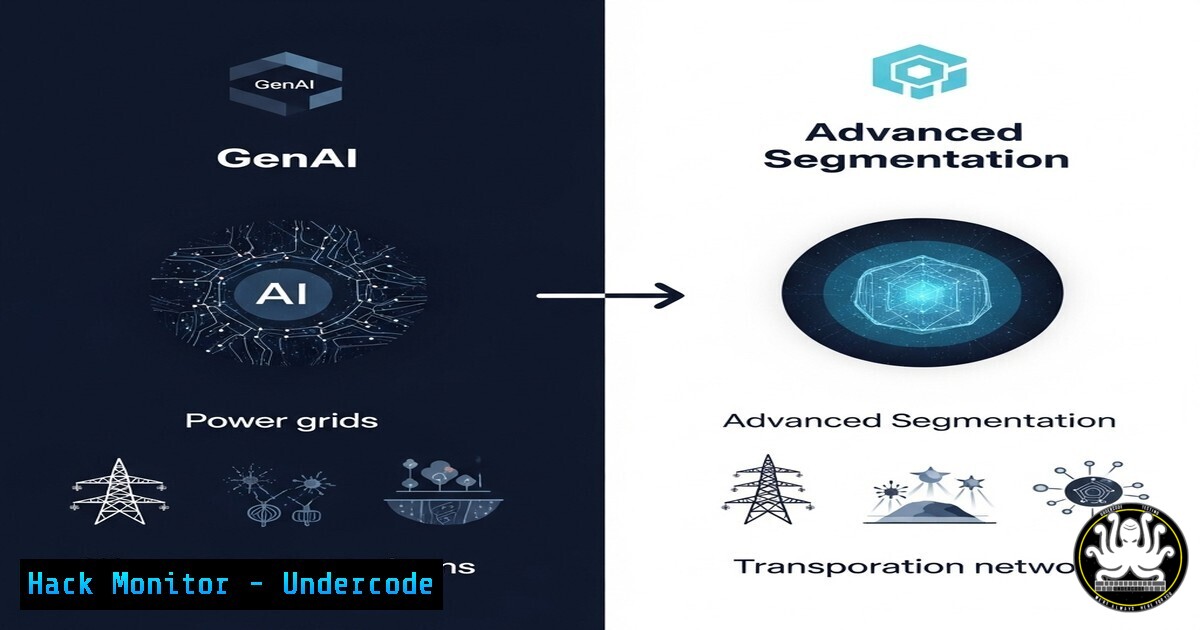
Introduction:
The convergence of Information Technology (IT) and Operational Technology (OT) has expanded the attack surface for critical infrastructure. The recent Industrial OT Cybersecurity Foundation training, led by industry luminaries, highlighted the pivotal shift from reactive to proactive, intelligence-driven defense strategies. This article distills their advanced insights into actionable technical commands and configurations for securing industrial control systems.
Learning Objectives:
- Implement and validate network segmentation rules to isolate critical control system assets.
- Leverage Generative AI (GenAI) to automate threat detection and response playbooks in an OT environment.
- Master asset discovery and management techniques that go beyond traditional IP scanning to encompass proprietary industrial protocols.
You Should Know:
1. Building a Robust OT Remote Access Framework
Secure remote access is the cornerstone of modern OT security, moving beyond vulnerable VPNs towards zero-trust architectures.
`sudo apt-get install openvpn` On Ubuntu-based jump hosts
`ssh-keygen -t ed25519 -f ~/.ssh/ot_jump_key` Generate dedicated key pair for OT access
Step-by-step guide:
The first command installs OpenVPN, a common starting point for building a secure tunnel. However, for a more robust solution, generate a unique SSH key pair exclusively for accessing the OT network jump host (ot_jump_key). Never use personal or corporate keys. Configure the SSH server on the jump host to only accept certificate-based authentication and enforce strong ciphers (e.g., `Ciphers [email protected]` in /etc/ssh/sshd_config). This creates a hardened entry point.
2. Leveraging GenAI for ICS Threat Intelligence Parsing
GenAI models can process vast amounts of unstructured threat reports and logs to identify OT-relevant indicators of compromise (IOCs).
`python3 -m pip install openai langchain` Install AI library and framework
`jq ‘.patterns[] | select(.type == “process_creation” and .command_line | contains(“powershell”))’ sigma_rules.json` Filter Sigma rules for PowerShell
Step-by-step guide:
After installing necessary Python libraries, use a tool like `jq` to filter a Sigma rule repository for specific OT threats. For instance, this command extracts rules related to suspicious PowerShell activity—a common IT attack technique that could pivot to OT. Feed these curated IOCs and rules into a GenAI-powered tool to generate plain-English summaries and actionable mitigation steps for SOC analysts unfamiliar with OT nuances.
3. Control-Centric Network Segmentation with ACLs
Segmentation in OT isn’t just about IPs; it’s about controlling specific industrial protocols and function codes.
`show access-list CONTROL_NETWORK_IN` Cisco IOS – View ACL applied to OT interface
`permit tcp host 10.10.5.21 host 10.10.10.50 eq 44818` Example ACL line allowing specific HMI-to-PLC communication
Step-by-step guide:
On a network device segmenting a control zone, use the `show access-list` command to audit existing rules. The example ACL line demonstrates precise segmentation: it only allows the HMI (10.10.5.21) to communicate with the specific PLC (10.10.10.50) over port 44818 (Allen-Bradley EtherNet/IP). Explicitly deny all other traffic. This prevents lateral movement and contains breaches to a single cell.
4. Deep Asset Discovery Beyond IP Scanning
Many critical OT assets do not respond to ping or operate on non-IP protocols. Passive discovery is key.
`sudo npcap-0.9996.exe /loopback_support=no /winpcap_mode=no` Install Npcap for Windows packet capture
`zeek -i eth0 -C local “Site::local_nets += { 192.168.1.0/24 }”` Start Zeek passive monitoring on OT network
Step-by-step guide:
Install a library like Npcap on a Windows engineering workstation to enable packet capture capabilities for tools. Then, deploy a passive monitoring tool like Zeek. The command starts Zeek on interface eth0, disables checksum verification (-C) for unusual OT traffic, and defines the local network. Zeek will silently observe and log all devices communicating on the wire, identifying assets by their network behavior rather than their response to scans.
5. Hardening PLCs against Unauthorized Programming Changes
Prevent unauthorized or malicious logic downloads to controllers, which could cause physical damage.
`logix5000 –ip 10.10.10.50 –get-property ProgramWriteProtection` Using a Python library to query PLC protection state
`Set-ItemProperty -Path “HKLM:\SOFTWARE\Rockwell Automation\FactoryTalk Linx” -Name “SecurityPolicy” -Value “High”` PowerShell to enforce stricter Rockwell security
Step-by-step guide:
Use vendor-specific tools or scripts to interrogate PLCs directly. The first example (conceptual) checks if program write protection is enabled on a Allen-Bradley PLC. On the engineering workstation, use PowerShell to modify the Windows registry, enforcing a higher security policy for the Rockwell software suite, which can help prevent unauthorized program changes by requiring elevated credentials.
6. Exploiting and Mitigating Common OT Protocol Vulnerabilities
Understand how attackers manipulate industrial protocols to engineer mitigations.
`python3 -m pip install pycomm3` Install Python library for EtherNet/IP
`from pycomm3 import LogixDriver; with LogixDriver(‘10.10.10.50’) as plc: print(plc.get_plc_info())` Script to anonymously query PLC info
Step-by-step guide:
This Python code uses the `pycomm3` library to open a connection to a PLC and retrieve its information (name, firmware, etc.) without authentication. Many OT protocols lack basic security features, allowing this. Mitigation involves implementing network segmentation (see Section 3) to ensure only authorized HMIs and engineering stations can communicate with controllers, as patching may not be feasible.
- Implementing Logging and Anomaly Detection for OT Protocols
You can’t defend what you can’t see. Logging OT-specific traffic is critical for detection.`sudo tcpdump -i eth0 -nn -s0 -w ot_capture.pcap port 2222 or port 44818` Capture Modbus TCP & EtherNet/IP traffic
`zeek -C -r ot_capture.pcap scripts/policy/protocols/modbus/` Zeek script to parse Modbus traffic & detect anomalies
Step-by-step guide:
Use `tcpdump` to capture raw OT protocol traffic to a file (ot_capture.pcap), specifying common ports like 2222 (EtherNet/IP) and 502 (Modbus TCP). Then, use Zeek to analyze this offline capture. Zeek’s Modbus parsing script will generate detailed logs of every function code (e.g., Read Coils, Write Register) executed, making it easy to spot malicious commands that deviate from normal operational patterns.
What Undercode Say:
- The Human Firewall is the Last Layer of Defense. While the technical commands above are critical, the training emphasized that sustained education for engineers and operators is what ultimately prevents a social engineering attack from bypassing all technical controls.
- Generative AI is a Double-Edged Sword. Its ability to automate defense and explain complex events is revolutionary. However, its potential use by threat actors to craft hyper-realistic phishing campaigns targeting plant personnel is an emerging, severe threat that must be prepared for now.
+ analysis around 10 lines.
The insights from Ginter, Holcomb, and team reveal a sector in rapid transition. The old paradigm of air-gapping is obsolete, replaced by a need for intelligent, granular control and deep visibility. The technical steps provided are not just academic; they are the foundational actions required to build a resilient OT security posture. The emphasis on GenAI is particularly prescient—it will be the force multiplier that allows understaffed OT security teams to keep pace with sophisticated adversaries. The key takeaway is that a strategy blending advanced technology, continuous training, and protocol-specific expertise is no longer optional for protecting the critical infrastructure that society depends on.
Prediction:
The integration of GenAI into offensive cybersecurity tools will lead to a surge in automated, targeted attacks against ICS/OT systems within the next 18-24 months. Attackers will use AI to analyze passively gathered network data to automatically generate functional exploit code for specific PLC and DCS models, dramatically lowering the barrier to entry for causing disruptive physical effects. This will force a corresponding and rapid adoption of AI-powered defensive tools that can predict attack paths and auto-generate segmentation rules and incident response playbooks, fundamentally changing the speed and scale of cyber-physical security operations.
🎯Let’s Practice For Free:
IT/Security Reporter URL:
Reported By: Instituteofcybersecurityexcellence Otsecurity – Hackers Feeds
Extra Hub: Undercode MoN
Basic Verification: Pass ✅


