Listen to this Post
Introduction:
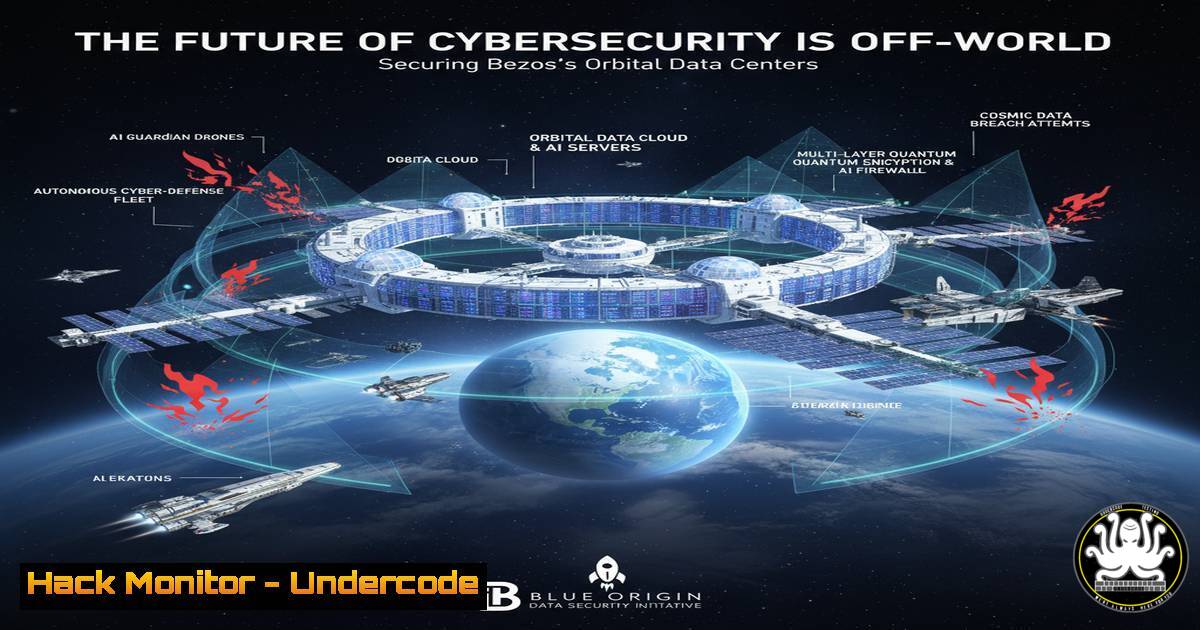
Jeff Bezos’s vision of space-based data centers promises unlimited solar power and global scalability for the burgeoning demands of AI. However, this extraterrestrial shift introduces a radical new frontier for cybersecurity, where traditional terrestrial threats are compounded by the unique vulnerabilities of space-based infrastructure. This article explores the critical security frameworks and commands necessary to harden these orbital assets.
Learning Objectives:
- Understand the unique threat landscape of space-based data center infrastructure.
- Learn key Linux, Windows, and cloud security commands for hardening systems against advanced persistent threats (APTs).
- Develop incident response and forensic capabilities tailored for an isolated, orbital environment.
You Should Know:
1. Orbital Infrastructure Hardening with Linux
Securing the underlying Linux OS on a space-based server is the first line of defense. The following commands form a foundational hardening checklist.
 1. Update the system and remove unnecessary packages
sudo apt update && sudo apt upgrade -y
sudo apt autoremove --purge

<ol>
<li>Harden SSH configuration (Edit /etc/ssh/sshd_config)
sudo sed -i 's/PasswordAuthentication yes/PasswordAuthentication no/' /etc/ssh/sshd_config
sudo sed -i 's/PermitRootLogin prohibit-password/PermitRootLogin no/' /etc/ssh/sshd_config</p></li>
<li><p>Configure and enable Uncomplicated Firewall (UFW)
sudo ufw default deny incoming
sudo ufw default allow outgoing
sudo ufw allow from <GROUND_CONTROL_IP_CIDR> to any port 22
sudo ufw --force enable</p></li>
<li><p>Install and configure an Intrusion Detection System (AIDE)
sudo apt install aide -y
sudo aideinit
sudo cp /var/lib/aide/aide.db.new /var/lib/aide/aide.db
This guide ensures your base operating system is patched, remote access is restricted to key-based authentication from specific ground control IP ranges, and a file integrity monitoring system is in place to detect unauthorized changes—a critical capability when physical inspection is impossible.
2. Windows Server Core Hardening for Orbital Modules
Many legacy enterprise applications may require Windows-based modules. These systems require rigorous hardening.
 1. Enable and configure Windows Defender Antivirus with advanced threat rules
Set-MpPreference -DisableRealtimeMonitoring $false -ExclusionPath $null
Add-MpPreference -AttackSurfaceReductionRules_Ids <Rule_ID> -AttackSurfaceReductionRules_Actions Enabled

<ol>
<li>Harden the Windows Firewall with advanced rules
New-NetFirewallRule -DisplayName "Block_All_Inbound_Except_Ground" -Direction Inbound -Action Block -RemoteAddress NotLocalSubnet
New-NetFirewallRule -DisplayName "Allow_Ground_Control_IP" -Direction Inbound -Action Allow -RemoteAddress <GROUND_CONTROL_IP> -Protocol TCP -LocalPort 3389,5985</p></li>
<li><p>Disable unnecessary services and SMBv1 for vulnerability reduction
Get-Service -Name Spooler, Telnet, lmhosts | Set-Service -StartupType Disabled
Disable-WindowsOptionalFeature -Online -FeatureName SMB1Protocol -NoRestart</p></li>
<li><p>Enable detailed audit and logon logging
auditpol /set /category:"Account Logon","Logon/Logoff" /success:enable /failure:enable
This PowerShell script hardens a Windows server by enabling advanced antivirus protections, configuring a strict firewall, disabling high-risk legacy services, and enabling comprehensive auditing to track all access attempts.
3. Quantum-Resistant Cryptographic Key Management
With the long lifespan of orbital assets, preparing for quantum computing attacks is essential. This involves transitioning to post-quantum cryptography (PQC).
 Using OpenSSL to generate a hybrid (Classical + PQC) certificate request
openssl genpkey -algorithm x25519 -out /etc/ssl/private/orbital_key.pem
openssl req -new -key /etc/ssl/private/orbital_key.pem -out /etc/ssl/certs/orbital_csr.pem -subj "/C=US/O=OrbitalDC/CN=orbital-datacenter.space"

(Conceptual) Using OpenSSH with PQC algorithms for ground-to-orbit communication
 Edit /etc/ssh/sshd_config to prioritize PQC key exchange and host key algorithms
KexAlgorithms [email protected]
HostKeyAlgorithms [email protected]
This process involves generating keys with modern, quantum-resistant algorithms (like X25519) and configuring services to prefer these strong ciphers, ensuring that ground-to-orbit communications remain secure against future cryptanalytic attacks.
4. Container Security for Isolated AI Workloads
AI training workloads in space will likely be containerized. Securing the container runtime is paramount.
 1. Run a container with enhanced security profiles and resource limits
docker run -d --name ai-training \
--cap-drop ALL \
--cap-add NET_BIND_SERVICE \
--memory="4g" \
--cpus="2.0" \
--security-opt no-new-privileges:true \
-v /opt/ai-model:/app/model:ro \
my-ai-training-image:latest

<ol>
<li>Scan the container image for vulnerabilities using Trivy
trivy image my-ai-training-image:latest</p></li>
<li><p>Generate a Dockerfile that creates a non-root user
FROM ubuntu:22.04
RUN groupadd -r myuser && useradd -r -g myuser myuser
USER myuser
COPY --chown=myuser:myuser . /app
This guide ensures containers run with the least privileges necessary, have limited resources to prevent denial-of-service, are scanned for known vulnerabilities before deployment, and operate as a non-root user to minimize the impact of a breakout.
5. API Security for Ground-to-Orbit Data Transfer
APIs will be the primary conduit for data. They must be secured against injection and abuse.
 Using curl to test API security headers from a ground station
curl -I https://api.orbital-datacenter.space/v1/telemetry

Expected security headers in the response:
 Strict-Transport-Security: max-age=31536000; includeSubDomains
 X-Content-Type-Options: nosniff
 X-Frame-Options: DENY
 Content-Security-Policy: default-src 'self'

Example NGINX configuration to enforce these headers
server {
listen 443 ssl;
add_header Strict-Transport-Security "max-age=31536000; includeSubDomains" always;
add_header X-Content-Type-Options "nosniff" always;
add_header X-Frame-Options "DENY" always;
location /v1/ {
limit_req zone=api burst=100 nodelay;
proxy_pass http://ai-workload-backend;
}
}
This focuses on validating and enforcing critical HTTP security headers that prevent common web-based attacks like man-in-the-middle, MIME sniffing, and clickjacking, while also implementing rate limiting to protect against volumetric attacks.
6. Zero-Trust Network Access (ZTNA) for Ground Control
Assuming the internal orbital network is already compromised, a Zero-Trust model is non-negotiable.
 Example commands for a ZTNA client (like ZScaler) to establish a secure connection
sudo zsclient start
sudo zsclient --status
 The client enforces policies such as:
 - User and device authentication before granting ANY access.
 - Micro-segmentation to limit lateral movement.
 - Continuous verification of device posture.

Complementary iptables rule on an internal server to enforce principle of least privilege
iptables -A INPUT -p tcp -s ztna-trusted-ip-pool --dport 5432 -m state --state NEW,ESTABLISHED -j ACCEPT
iptables -A INPUT -p tcp --dport 5432 -j DROP
This model ensures that every access request is authenticated, authorized, and encrypted, regardless of its source. Ground control operators must continuously prove their identity and device integrity to access orbital management systems.
- Incident Response and Forensic Data Collection in Orbit
When a breach is suspected, automated forensic data collection is critical for analysis from Earth.
 A script to capture critical forensic data upon alert
!/bin/bash
TIMESTAMP=$(date +%Y%m%d-%H%M%S)
LOGDIR="/forensics/incident-$TIMESTAMP"
mkdir -p $LOGDIR
 Capture network connections
netstat -tulnpa > $LOGDIR/netstat.txt
 Capture running processes
ps auxef > $LOGDIR/processes.txt
 Capture user logins
last > $LOGDIR/last_logins.txt
 Create a memory dump (if tools are available)
sudo dd if=/proc/kcore of=$LOGDIR/memory.dump bs=1M count=1024
 Tar and encrypt the data for secure transmission to Earth
tar -czf - $LOGDIR | openssl enc -e -aes256 -out $LOGDIR.tar.gz.enc
This incident response script automates the collection of volatile system data like network connections, running processes, and user logins, creating a snapshot for ground-based security teams to analyze, all while ensuring the data is encrypted for its journey back to Earth.
What Undercode Say:
- The attack surface is redefined, not eliminated. Space-based infrastructure introduces new threat vectors, such as compromised supply chains for satellite components and the potential for signal jamming or spoofing, that are absent in terrestrial data centers.
- Terrestrial security tools are insufficient. The extreme latency, bandwidth constraints, and physical inaccessibility of orbital data centers demand a new class of autonomous, self-healing security systems capable of operating for extended periods without human intervention.
The paradigm shift to orbital data centers is not merely a relocation of existing technology; it is a fundamental change that breaks traditional cybersecurity models. Perimeter defense becomes meaningless when the “perimeter” is a radio signal traveling through a hostile medium. Security must be baked into every component, from the hardware supply chain to the AI workloads, with an assumption that any part of the system can and will be targeted by state-level actors. The high cost of failure—both financially and in terms of creating orbital debris—elevates cybersecurity from a business concern to a mission-critical, existential one.
Prediction:
The successful deployment of secure orbital data centers will create a definitive stratification in the global tech landscape, granting nations and corporations that master off-world cybersecurity an unassailable advantage in AI compute power and data sovereignty. Conversely, a major cybersecurity breach in a pioneering orbital data center within the next decade is highly probable, potentially triggering a “Kessler Syndrome” cyber-event that could cripple critical space-based infrastructure and lead to the first-ever digital cold war fought in the exosphere. This will catalyze a multi-trillion-dollar industry focused on autonomous space cyber-defense, fundamentally merging aerospace engineering with cybersecurity expertise.
🎯Let’s Practice For Free:
IT/Security Reporter URL:
Reported By: Mohamed Fazil – Hackers Feeds
Extra Hub: Undercode MoN
Basic Verification: Pass ✅


